We Can't Live Without You | Synanthropic Animals
TL;DR
Many animals, such as spiders, purple martins, dung beetles, granary weevils, webbing clothes moths, and Anopheles albitarsis mosquitoes, have adapted to living closely with humans and rely on them for survival.
Transcript
if you see a spider in your house hopefully you don't reach for a shoe you carefully caps the little fella and put it outside because that's where spiders belong well actually the best thing you could do is leave it alone it turns out that many of the spiders you find in your home have adapted to living in houses and they might actually die if they... Read More
Key Insights
- 🕸️ Sinanthropic species, such as spiders, purple martins, dung beetles, granary weevils, webbing clothes moths, and Anopheles albitarsis mosquitoes, have adapted to living with humans and rely on them for survival.
- 🧑🏭 Spiders act as effective pest control in homes, consuming insects like flies, mosquitoes, and cockroaches.
- 🪆 Purple martins rely on human-provided nest boxes, as natural nesting habitats have decreased.
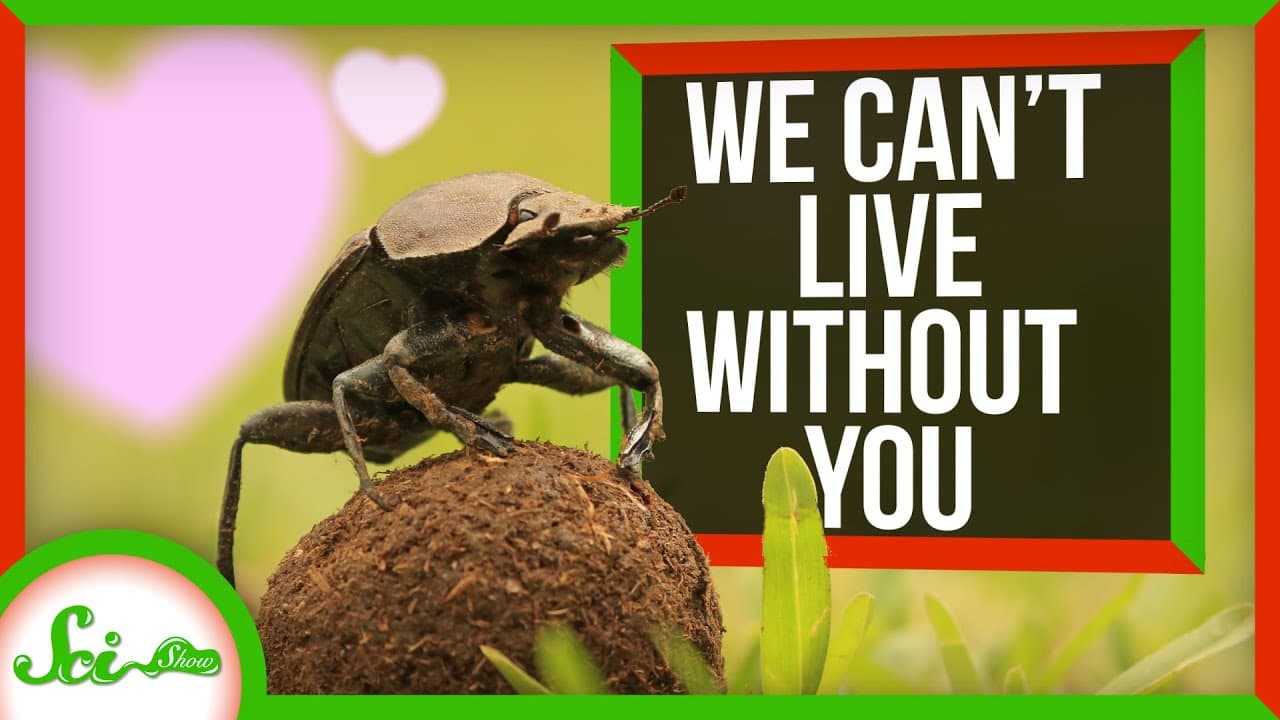
- 🪲 Dung beetles in Iceland rely on human-provided livestock for their preferred breeding habitats.
- ❓ Granary weevils have become entirely dependent on humans for movement and survival.
- 👪 Webbing clothes moths have adapted to living in human homes since the invention of indoor heating.
- 💅 Anopheles albitarsis mosquitoes have developed a preference for man-made wetlands and thrive in environments created by humans.
Install to Summarize YouTube Videos and Get Transcripts
Explore YouTube Video Summarizer or Get YouTube Transcript Extractor
Questions & Answers
Q: Why are spiders commonly found in homes, and should we try to remove them?
Spiders, such as house spiders and cow-house spiders, are sinanthropic species that have adapted to living in human homes due to the specific conditions and limited access to food and water. Removing them from our homes may not be beneficial, as spiders act as effective pest control by consuming insects like flies, mosquitoes, and cockroaches.
Q: Why do purple martins rely on humans for nest sites?
Purple martins have come to rely on humans for nest boxes because we have provided them with suitable habitats by putting out nest boxes and encouraging the birds to hang around. The practice has been ongoing for centuries, and without human-provided homes, the martins may not be able to revert back to their natural nesting habits.
Q: Why are granary weevils found in dried grains?
Granary weevils have evolved to live in dried grains because they have lost the ability to fly, and their wings have become hard fused structures that protect them inside bags of food. They rely on humans to transport them through bags of rice or other dry food products, and without us, they would likely die out.
Q: How have webbing clothes moths become dependent on humans?
Webbing clothes moths have only been living in human homes since the invention of indoor heating. They originally hail from Central or southern Africa, where the climate is warm and dry. With the availability of heated homes, these moths saw an opportunity to thrive and now depend on human homes for suitable habitats.
Summary & Key Takeaways
-
Some spiders, like house spiders and cow-house spiders, have adapted to living in human homes and structures, and rely on the specific conditions and limited access to food and water that these environments provide.
-
Purple martins, a species of swallow, have come to depend on humans for nest sites, as natural nesting habitats have decreased. However, martins in western US can still nest naturally.
-
Dung beetles in Iceland rely on human-provided livestock for their preferred breeding habitats, and if domesticated animals were to disappear, the beetles would disappear as well.
-
Granary weevils have become entirely dependent on humans for movement and survival, as they rely on humans to transport them through bags of dried grains.
-
Webbing clothes moths have adapted to living in human homes since the invention of indoor heating, and now rarely live outdoors.
-
Anopheles albitarsis mosquitoes have developed a preference for man-made wetlands, such as rice paddies, and large populations of humans provide ample blood sources for them.
Read in Other Languages (beta)
Share This Summary 📚
Summarize YouTube Videos and Get Video Transcripts with 1-Click
Try YouTube Summary with ChatGPT & Claude or YouTube Transcript Generator
Explore More Summaries from SciShow 📚
Summarize YouTube Videos and Get Video Transcripts with 1-Click
Try YouTube Summary with ChatGPT & Claude or YouTube Transcript Generator