A Visual History of Human Knowledge | Manuel Lima | TED Talks
TL;DR
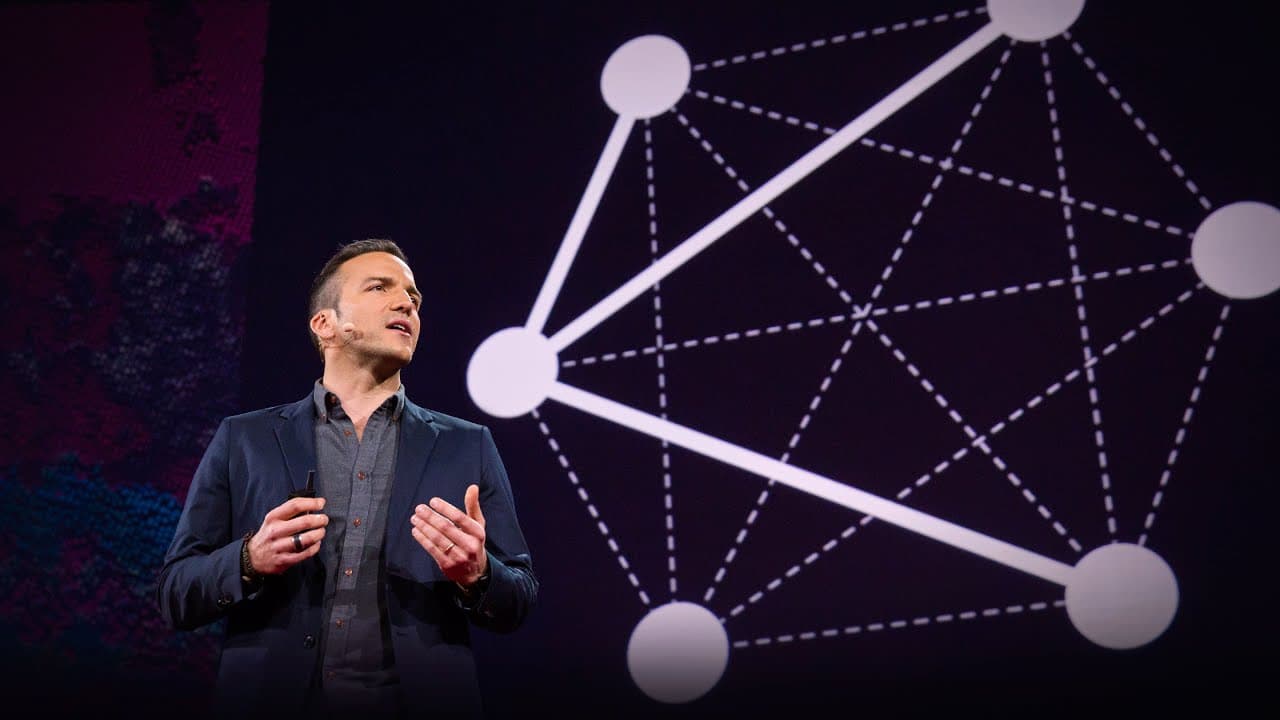
This content discusses the shift from using tree diagrams to network diagrams as a metaphor to visualize complex systems of knowledge.
Transcript
Over the past 10 years, I've been researching the way people organize and visualize information. And I've noticed an interesting shift. For a long period of time, we believed in a natural ranking order in the world around us, also known as the great chain of being, or "Scala naturae" in Latin, a top-down structure that normally starts with God at t... Read More
Key Insights
- 🌳 The concept of organizing information through tree diagrams has been prevalent for centuries, merging categorization and visualization.
- 🌱 However, the complexity of modern challenges requires a new metaphor to understand and analyze various systems of knowledge, leading to the emergence of the network metaphor.
- 🌳 Trees were used to map morality, consanguinity, genealogy, law, and the classification of species, while networks offer a more interconnected and intricate representation.
- 🧠 The shift from trees to networks can be seen in the understanding of the brain as a modular organ to a symphony of interconnected neurons.
- 🌳 Traditional trees of knowledge are being replaced by the interconnectedness seen in Wikipedia, reflecting the vast web-like structure of human knowledge.
- 🌍 Ecosystems are also depicted more accurately as networks rather than simplified predator-prey relationships.
- 🔗 Networks have not only become a scientific metaphor but also an influential force in art, giving rise to the movement of networkism.
- 🌌 Networks embody decentralization, interconnectedness, and interdependence, offering a new way of thinking critical for solving complex problems in various fields from neuroscience to cosmology.
Install to Summarize YouTube Videos and Get Transcripts
Explore YouTube Video Summarizer or Get YouTube Transcript Extractor
Questions & Answers
Q: How did the concept of organizational hierarchy evolve over time?
The concept of organizational hierarchy evolved from the belief in a natural ranking order known as the great chain of being or "Scala naturae" in Latin. This order, based on Aristotle's ontology, classified all things into opposing categories and was originally presented as a top-down structure starting with God at the very top, followed by angels, noblemen, common people, animals, and so on.
Q: How did the metaphor of a tree become a powerful tool in mapping systems of knowledge?
The metaphor of a tree became a powerful tool in mapping systems of knowledge because it embodied the human desire for order, balance, unity, and symmetry. It was used to map various systems, such as morality, consanguinity, genealogy, law, and the classification of species. The branching scheme of a tree provided a visually intuitive way to convey complex information.
Q: What is the new metaphor that is replacing the tree in visualizing systems of knowledge?
The new metaphor that is replacing the tree in visualizing systems of knowledge is the metaphor of the network. This shift from trees to networks can be observed in various domains of knowledge, such as understanding the brain, conceptualizing human knowledge, mapping social ties, comprehending terrorism, classifying species, and depicting ecosystems.
Q: How are networks influencing traditional art fields like painting and sculpture?
Networks are influencing traditional art fields like painting and sculpture by inspiring a new art movement called "networkism." Artists are incorporating network visualizations and metaphors into their works, creating paintings, sculptures, and installations that reflect the interconnectedness and complexity of networks. This cross-pollination between science and art is resulting in visually stunning and thought-provoking pieces.
Summary & Key Takeaways
-
The idea of organizing information in a top-down structure, like a tree, is being replaced by the metaphor of a network.
-
Networks are being used to understand complex systems, such as the brain, human knowledge, social ties, terrorism, and ecosystems.
-
Networks are not just a scientific metaphor, they are also influencing traditional art fields and driving the emergence of a new art movement called "networkism."
Read in Other Languages (beta)
Share This Summary 📚
Summarize YouTube Videos and Get Video Transcripts with 1-Click
Try YouTube Summary with ChatGPT & Claude or YouTube Transcript Generator
Explore More Summaries from TED 📚



Summarize YouTube Videos and Get Video Transcripts with 1-Click
Try YouTube Summary with ChatGPT & Claude or YouTube Transcript Generator