Data types | Pre-defined type & Scalar type | Part-2/2 | Digital IC Design | Lec-11
TL;DR
This video explores various data types in VHDL, including scalar and composite types.
Transcript
hi everyone in this video I'm continuing the data types in vhdl so in the previous video I have started these data types so data types it may be a predefined data types scalar data types composite data types access data types or it may be a file data type so we have seen up to the scalar data types so predefined data types are nothing but bit to bi... Read More
Key Insights
- 🅰️ Predefined data types in VHDL include scalar and composite types, essential for creating effective designs.
- 🅰️ Scalar data types are further divided into enumeration, integer, floating-point, and physical types, each serving unique functions in programming.
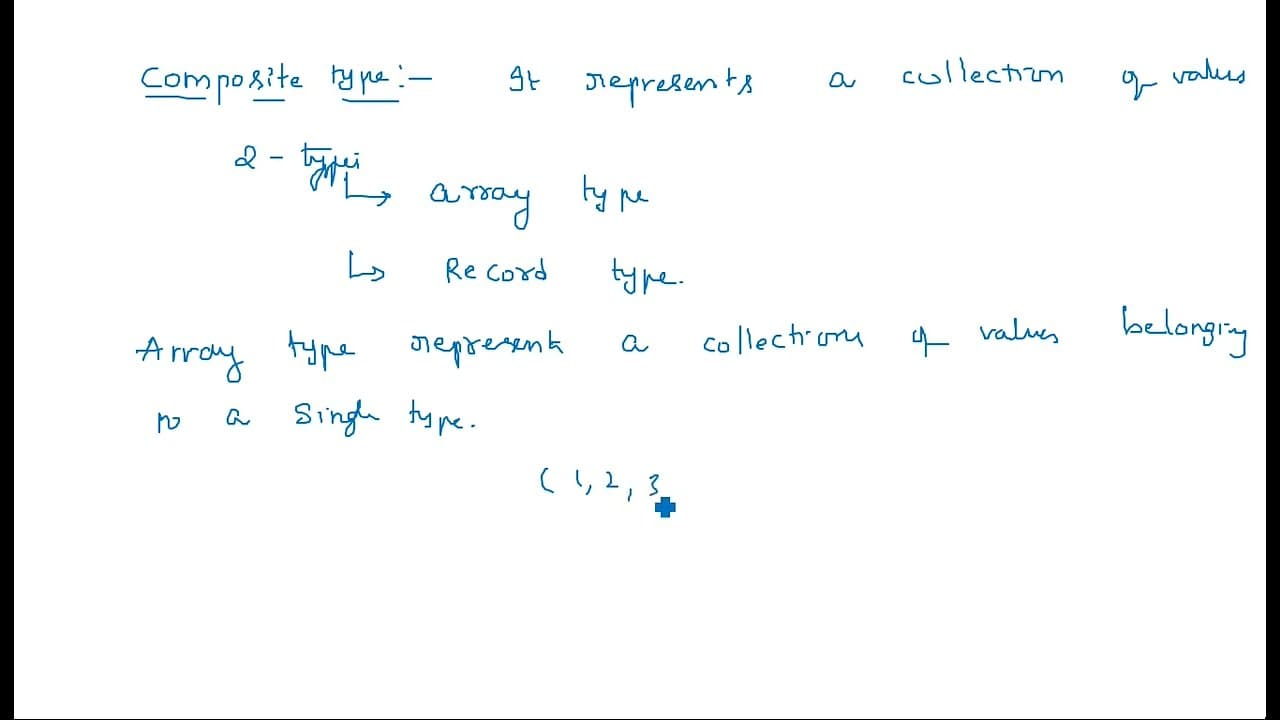
- 👥 Composite types categorize data structures into arrays and records for efficient management of grouped data.
- 🅰️ Array types in VHDL store elements of the same type, crucial for handling similar data sets effectively.
- 🅰️ Record types allow for diverse types in a single collection, making them versatile for complex data modeling.
- ♿ Access types provide dynamic memory management by functioning like pointers, enabling runtime data allocation.
- 🍵 File types interface with external data storage, facilitating broader data handling capabilities in VHDL environments.
Install to Summarize YouTube Videos and Get Transcripts
Explore YouTube Video Summarizer or Get YouTube Transcript Extractor
Questions & Answers
Q: What are predefined data types in VHDL, and can you give examples?
Predefined data types in VHDL are built-in data types that include scalars like bits and Booleans, integers, and others. For example, a bit can represent binary information, while integers provide numerical values. Boolean types can represent true or false values, making them essential for control structures and logic operations in programs.
Q: Can you explain what a scalar data type is in VHDL?
Scalar data types in VHDL are types that represent a single value from a defined set. They include enumeration types (like user-defined states), integer types representing whole numbers, physical types for measurable quantities, and floating-point types that represent decimal values. These types are foundational for expressing simple data in designs.
Q: What differentiates array types from record types in composite data types?
Array types consist of multiple elements of the same type, enabling easy management and access to a series of similar data points. In contrast, record types can hold elements of different types, allowing for a more complex structure resembling a database record. This flexibility in storage is crucial for efficient data modeling.
Q: How do access types function in VHDL?
Access types in VHDL are akin to pointers in C or Pascal, enabling dynamic allocation of objects. This functionality allows you to create references to objects without pre-defining their sizes, useful for managing complex data structures or when the size is unknown until runtime. For example, you can dynamically create arrays.
Q: What is the purpose of file types in VHDL?
File types in VHDL are used to manage data externally by representing data files within the host environment. This allows the design to read and write data to files, enhancing programmability. For example, you might define a file type to store configurations or large datasets used by the VHDL model.
Q: Can you elaborate on the classification of scalar data types?
Scalar data types in VHDL can be classified into four main categories: enumeration types (user-defined sets), integer types (whole numbers with a range), physical types (measurable quantities), and floating-point types (decimal numbers). Each serves specific use cases in programming, facilitating precision and clarity in representations.
Q: How are composite types structured in VHDL?
Composite types in VHDL consist of collections of values, categorized into array types and record types. Array types group values of a single data type together, while record types allow for a mix of values from various types, making it easier to model complex data scenarios efficiently.
Summary & Key Takeaways
-
The video discusses predefined data types in VHDL, highlighting scalar types like integers and Booleans, which can represent either discrete or decimal values in a defined range.
-
Composite data types are introduced, explaining arrays and record types, which organize collections of values either of single or multiple types respectively for more complex data structures.
-
The video also covers access types, which function as pointers to dynamically allocated objects, and file types, which represent files in a host environment, providing examples for each category.
Read in Other Languages (beta)
Share This Summary 📚
Summarize YouTube Videos and Get Video Transcripts with 1-Click
Try YouTube Summary with ChatGPT & Claude or YouTube Transcript Generator