How to Avoid Mistakes in European Portuguese
TL;DR
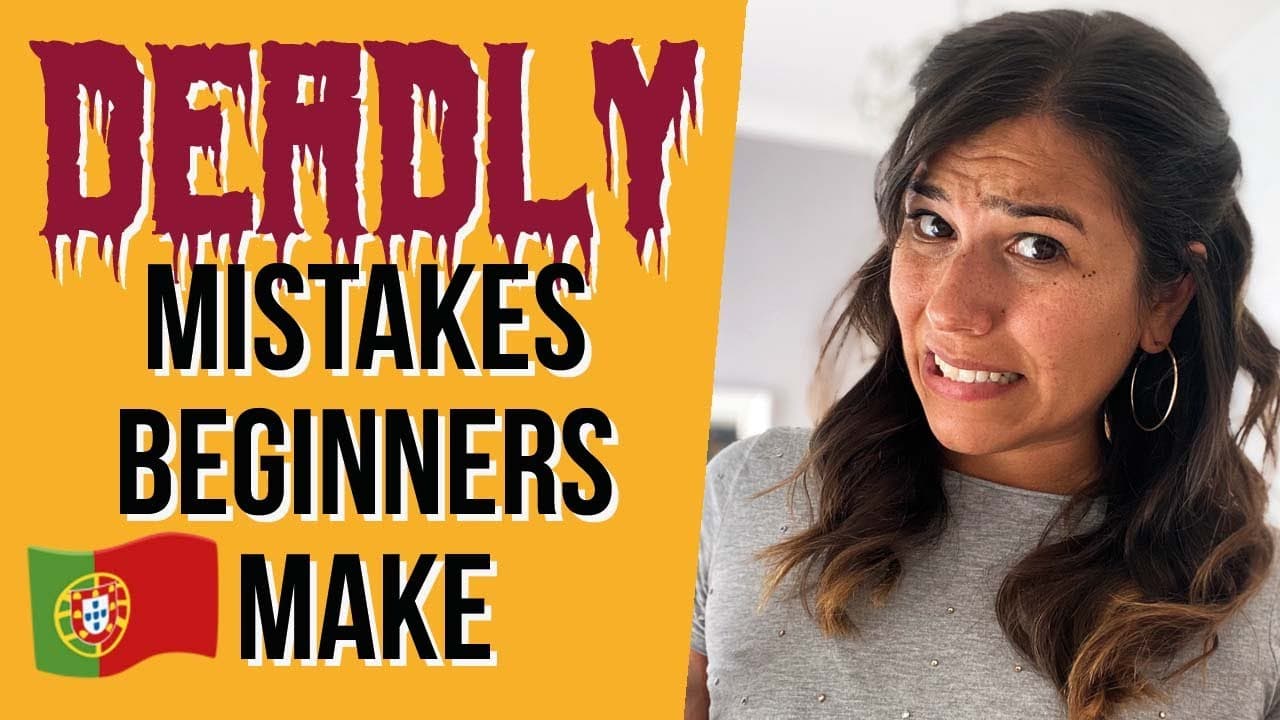
Begin your European Portuguese journey by avoiding common pitfalls. Key mistakes include relying on apps like Duolingo, mispronouncing nasal sounds, and confusing Portuguese with Spanish. Practice with native speakers and focus on frequent vocabulary for effective learning. Avoid using 'você' in Portugal to maintain politeness.
Transcript
if you were at the beginning of your journey with European Portuguese feeling like bambi on ice getting started then it is highly, highly likely that you are making some very, very common mistakes that most beginners make that are really going to hold you back from making progress but don't worry in this video today i'm going to talk you through... Read More
Key Insights
- Duolingo focuses on Brazilian Portuguese, which can confuse beginners aiming to learn European Portuguese.
- Memrise is recommended for European Portuguese as it features native speakers and relevant vocabulary.
- In Portuguese, words ending in 'M' require nasalization of the preceding vowel, similar to English 'ng' sounds.
- Spanish pronunciation should not be applied to Portuguese despite vocabulary similarities; they have distinct sounds.
- Prioritize learning the most frequent words to avoid overwhelming your brain with unnecessary vocabulary.
- European Portuguese is stress-timed, leading to swallowed syllables; listening practice is essential.
- Using 'você' in Portugal can be seen as impolite; instead, conjugate verbs in the third person singular for politeness.
- Speaking practice with native speakers is crucial to overcoming fear and improving fluency in Portuguese.
Install to Summarize YouTube Videos and Get Transcripts
Explore YouTube Video Summarizer or Get YouTube Transcript Extractor
Questions & Answers
Q: How to choose the right app for learning European Portuguese?
For learning European Portuguese, it's important to choose an app that focuses on this specific variant. While Duolingo is popular, it primarily teaches Brazilian Portuguese, which can be confusing for beginners. Instead, opt for Memrise, which offers European Portuguese content with native speakers, helping learners grasp the correct pronunciation and vocabulary relevant to Portugal.
Q: What is a common pronunciation mistake in European Portuguese?
A common pronunciation mistake in European Portuguese involves words ending in 'M'. Instead of pronouncing the 'M', the preceding vowel should be nasalized, similar to the 'ng' sound in English words like 'sing'. This nasalization is crucial for sounding more like a native speaker and avoiding misunderstandings in conversation.
Q: Why should learners avoid using 'você' in Portugal?
In Portugal, using 'você' can be perceived as impolite or overly formal. This contrasts with Brazil, where 'você' is commonly used to mean 'you'. To maintain politeness in Portugal, it's better to conjugate verbs in the third person singular without using 'você', or use 'tu' when speaking to friends or younger individuals.
Q: How can listening practice improve European Portuguese skills?
Listening practice is vital for mastering European Portuguese due to its stress-timed nature, where syllables are often swallowed. By regularly listening to native speakers, learners can better understand the rhythm and pronunciation of the language. Resources like Portuguese music, children's shows on Netflix, and listening exercises with subtitles can significantly enhance comprehension skills.
Q: What are the benefits of learning frequent vocabulary first?
Learning the most frequent vocabulary first helps language learners communicate effectively in everyday situations without feeling overwhelmed. These common words form the foundation of daily conversations, allowing learners to quickly build practical language skills. This approach is favored by polyglots and language enthusiasts for its efficiency and practicality.
Q: How can learners overcome the fear of speaking Portuguese?
Overcoming the fear of speaking Portuguese involves consistent practice with native speakers. Engaging in conversations, even if mistakes occur, helps build confidence and fluency. Mistakes are valuable learning opportunities, as they reinforce correct usage. Setting regular practice sessions and finding a conversation partner can accelerate progress and ease communication anxiety.
Q: What is the difference between European and Brazilian Portuguese?
European and Brazilian Portuguese differ in pronunciation, vocabulary, and some grammar rules. European Portuguese has a stress-timed rhythm, leading to syllable reduction, while Brazilian Portuguese is more syllable-timed. Vocabulary and expressions can vary significantly, making it crucial for learners to focus on the variant relevant to their needs, especially if planning to live or travel in Portugal.
Q: Why is Spanish pronunciation not applicable to Portuguese?
Despite vocabulary similarities, Spanish and Portuguese have distinct pronunciation rules. Spanish pronunciation cannot be directly applied to Portuguese, as the latter has unique sounds and stress patterns. Misapplying Spanish pronunciation can lead to misunderstandings and hinder effective communication in Portuguese. It's important for learners to focus on the specific phonetic characteristics of Portuguese.
Summary & Key Takeaways
-
Avoid using Duolingo for European Portuguese as it focuses on Brazilian Portuguese, creating confusion for beginners. Instead, use Memrise, which features native speakers and relevant vocabulary.
-
Nasalization is key in Portuguese pronunciation, especially for words ending in 'M'. Practice these sounds by comparing them to English 'ng' sounds, which are similar.
-
Vocabulary overload can hinder progress. Focus on frequent words used in everyday life and engage in listening practice to tune your ear to the stress-timed nature of European Portuguese.
Read in Other Languages (beta)
Share This Summary 📚
Summarize YouTube Videos and Get Video Transcripts with 1-Click
Try YouTube Summary with ChatGPT & Claude or YouTube Transcript Generator
Explore More Summaries from Talk the Streets 📚


Summarize YouTube Videos and Get Video Transcripts with 1-Click
Try YouTube Summary with ChatGPT & Claude or YouTube Transcript Generator