How to Create Fashion Illustrations with Markers and Watercolor
TL;DR
To create detailed fashion illustrations using markers and watercolors, start by choosing the right paper and tools, like Copic markers and high-quality watercolor paper. Use different techniques for rendering textures, such as fur and sheer fabrics, while balancing intricate line work with softer strokes to reduce hand fatigue. Always allow paint to dry before adding layers to ensure crisp details.
Transcript
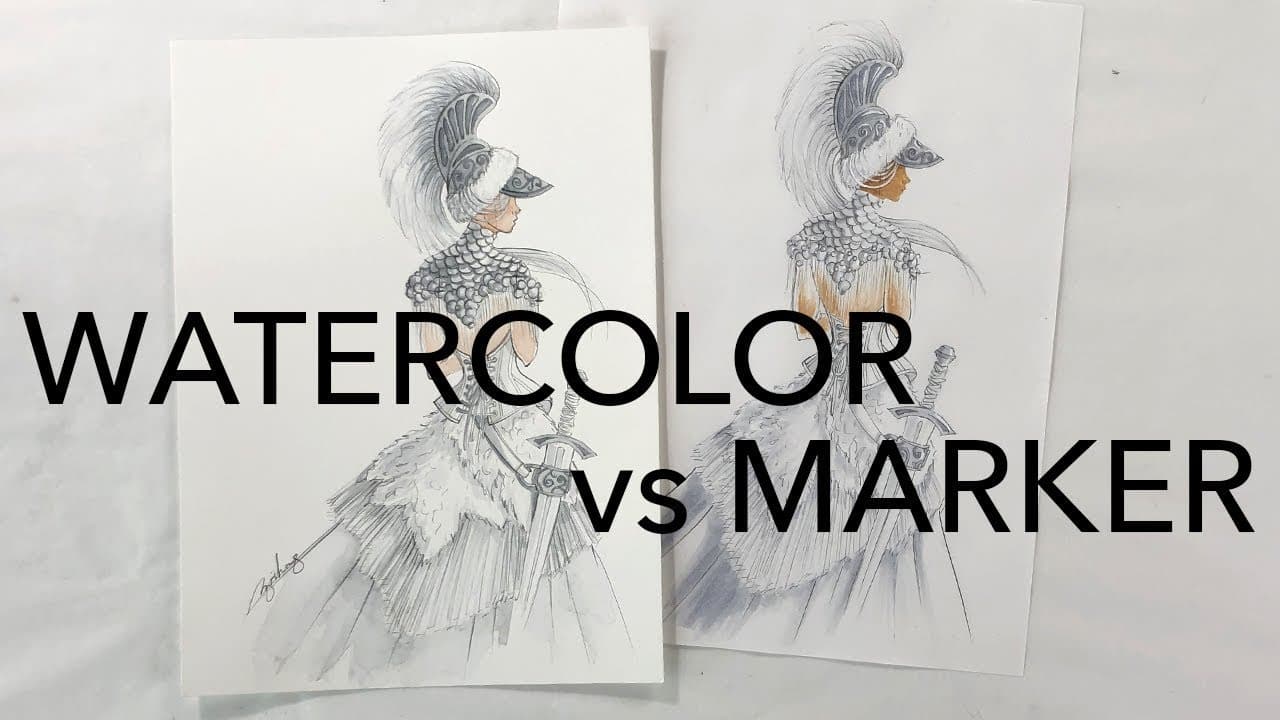
hey hey party people welcome to fashion illustration Thunderdome - we'll enter one okay maybe not all right today in this video I'm gonna go over the same illustration once in marker once in paint trying to get very similar results and dropping some tidbits on illustration how to's along the way if you want to color along I have this illustration a... Read More
Key Insights
- 🏮 Using the wrong side of marker paper when using graphite pencil helps prevent smearing.
- ❓ Different techniques are used for rendering different textures, such as fur, sheer fabrics, and metallic elements.
- ✏️ Brushstrokes and pencil strokes can be used to create movement, texture, and differentiation between elements.
- 💦 Alternating between intricate and softer work can reduce hand fatigue when working on detailed illustrations.
- ⌛ Marker renderings and watercolor paintings have similar techniques, but drying time affects the workflow in watercolor.
- 🤗 Having an eyedropper and lint-free cloth or paper towel on hand is useful for working with watercolors.
- 🎨 Design inspiration can be found on platforms like Pinterest and Google.
Install to Summarize YouTube Videos and Get Transcripts
Explore YouTube Video Summarizer or Get YouTube Transcript Extractor
Questions & Answers
Q: Why does the artist prefer to draw on the wrong side of marker paper when using graphite pencil?
Drawing on the wrong side of marker paper helps prevent smearing of graphite pencil, which tends to show up darker and smear more on smoother surfaces like marker paper.
Q: How does the artist create texture in fur and other textured elements?
The artist uses artful brush strokes and pencil strokes to create texture and movement in fur. They also occasionally use colored pencils for added texture.
Q: What techniques does the artist use for rendering sheer fabrics?
When rendering sheer fabrics, the artist lays down a softer and lighter flesh tone as the base color, ensuring that it is lighter than the regular skin tone. They also pay attention to shadows and use different brushstrokes to create a sense of transparency.
Q: How does the artist prevent hand fatigue when working on intricate illustrations?
The artist alternates between intricate pencil line work and softer marker or paint work to prevent hand fatigue. This allows them to maintain accuracy and detail without becoming sloppy due to tiredness.
Summary & Key Takeaways
-
The artist demonstrates how they prefer to draw on the wrong side and render on the right side of marker paper to prevent smearing when using graphite pencil.
-
Different techniques are used for rendering different textures, such as furry details and sheer fabrics.
-
The artist utilizes various brushstrokes and pencil strokes to create movement, texture, and differentiation between different elements in the illustration.
Read in Other Languages (beta)
Share This Summary 📚
Summarize YouTube Videos and Get Video Transcripts with 1-Click
Try YouTube Summary with ChatGPT & Claude or YouTube Transcript Generator
Explore More Summaries from Zoe Hong 📚



Summarize YouTube Videos and Get Video Transcripts with 1-Click
Try YouTube Summary with ChatGPT & Claude or YouTube Transcript Generator