Can Perpetual Motion Machines Truly Work?
TL;DR
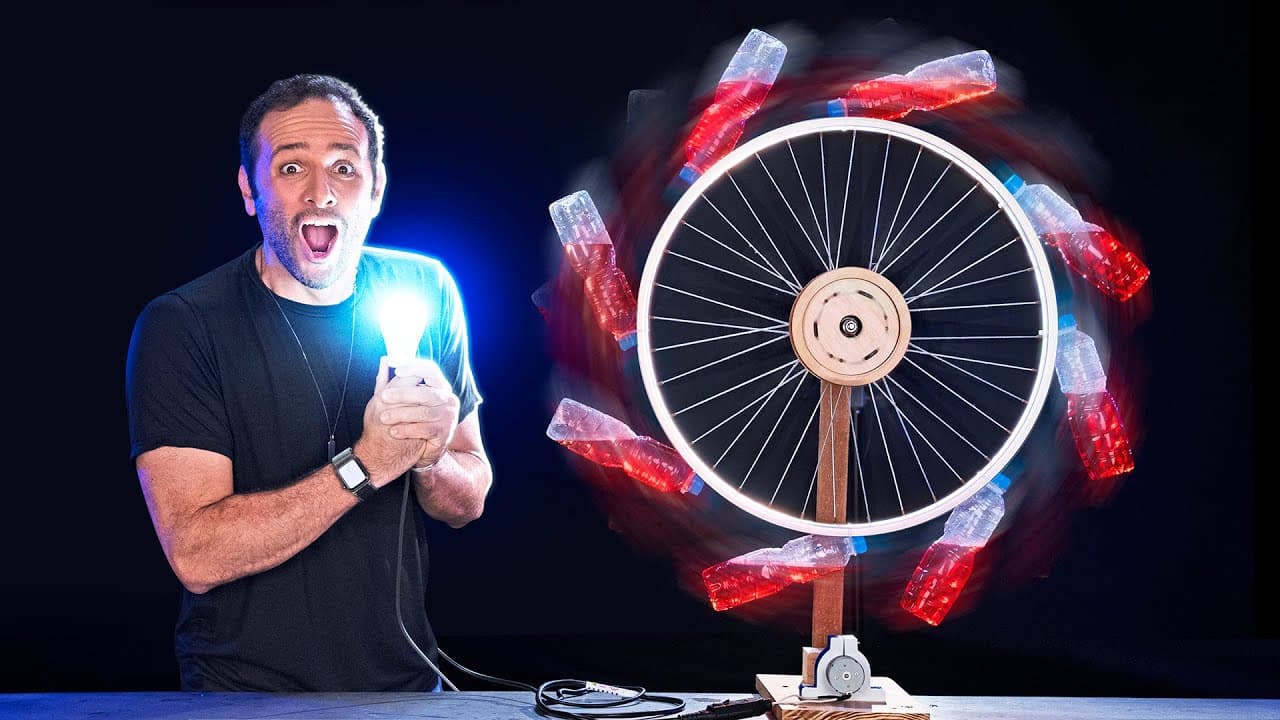
Perpetual motion machines, like the one based on Leonardo da Vinci's designs, cannot work due to the laws of physics. They appear to generate endless energy but are ultimately fake, as demonstrated by hidden tricks in the video. Understanding thermodynamics reveals why these machines can't sustain motion or generate energy perpetually.
Transcript
Oh boy, stopping spinning doesn't stop. Is this here generating energy? Ah, we have the Perpetual Motor! Today, after a long time, we are finally going to make our engine that spins forever and generates energy. And it’s not just any little project, no. It is based on Leonardo Da Vinci's drawings! If you are not very aware of who Leonardo da Vinci ... Read More
Key Insights
- Perpetual motion machines cannot work due to the laws of thermodynamics.
- Leonardo da Vinci designed a perpetual motion machine but concluded it wouldn't work.
- Energy is lost in systems through sound, friction, and air resistance.
- Generators require external power sources; they cannot create energy from nothing.
- The video demonstrates how hidden tricks create the illusion of perpetual motion.
- A secret wire and a pre-charged lamp were used to fake the machine's functionality.
- Thermodynamics explains why perpetual motion and infinite energy are impossible.
- Real energy solutions include solar, wind, and hybrid technologies.
Install to Summarize YouTube Videos and Get Transcripts
Explore YouTube Video Summarizer or Get YouTube Transcript Extractor
Questions & Answers
Q: How do perpetual motion machines appear to work?
Perpetual motion machines appear to work through clever tricks and illusions. In the video, hidden wires and pre-charged lamps create the false impression of endless motion and energy generation. These machines cannot truly sustain themselves due to energy losses from friction, sound, and air resistance.
Q: Why can't perpetual motion machines generate energy indefinitely?
Perpetual motion machines cannot generate energy indefinitely because they violate the laws of thermodynamics. Energy is always lost in systems through friction, sound, and air resistance, preventing these machines from sustaining motion or generating energy without an external power source.
Q: What did Leonardo da Vinci conclude about perpetual motion?
Leonardo da Vinci, despite designing a perpetual motion machine, concluded that it wouldn't work. He realized that energy losses from friction and other factors prevent such machines from sustaining motion indefinitely. His designs were more theoretical explorations rather than practical solutions.
Q: How are perpetual motion machines faked in videos?
Perpetual motion machines in videos are faked using hidden tricks, such as concealed wires and pre-charged devices. In the video, a hidden wire powered the motor, and a special lamp with a built-in battery created the illusion of perpetual energy generation, deceiving viewers into believing the machine was self-sustaining.
Q: What are some real energy solutions mentioned in the video?
The video mentions real energy solutions such as solar and wind power, as well as hybrid technologies. These solutions focus on harnessing renewable energy sources and improving energy efficiency, offering practical alternatives to the impossible concept of perpetual motion and infinite energy generation.
Q: Why is understanding thermodynamics important for energy generation?
Understanding thermodynamics is crucial for energy generation because it explains the principles governing energy conservation and transfer. It helps identify the limitations of systems, such as perpetual motion machines, and guides the development of efficient and sustainable energy solutions like solar, wind, and hybrid technologies.
Q: What tricks were used in the video to fake the perpetual motion machine?
The video used several tricks to fake the perpetual motion machine, including a hidden wire that powered the motor and a pre-charged lamp that lit up without external power. These tricks created the illusion of endless motion and energy generation, misleading viewers about the machine's true capabilities.
Q: What role does friction play in the failure of perpetual motion machines?
Friction plays a significant role in the failure of perpetual motion machines by dissipating energy as heat. This energy loss prevents the machine from sustaining motion indefinitely. Friction, along with other factors like air resistance and sound, ensures that energy input is always required to maintain any motion.
Summary & Key Takeaways
-
Perpetual motion machines, such as those inspired by Leonardo da Vinci, are impossible according to the laws of physics. Despite historical attempts, these machines cannot sustain motion or generate energy indefinitely due to energy losses from friction, sound, and air resistance.
-
The video reveals how perpetual motion machines are faked using tricks like hidden wires and pre-charged lamps. These devices appear to operate indefinitely, but they rely on concealed power sources and clever illusions to deceive viewers.
-
Understanding the principles of thermodynamics clarifies why perpetual motion machines cannot work. Real-world energy solutions focus on sustainable technologies like solar, wind, and hybrid systems, which offer practical ways to generate and conserve energy.
Read in Other Languages (beta)
Share This Summary 📚
Summarize YouTube Videos and Get Video Transcripts with 1-Click
Try YouTube Summary with ChatGPT & Claude or YouTube Transcript Generator
Explore More Summaries from Manual do Mundo 📚
Summarize YouTube Videos and Get Video Transcripts with 1-Click
Try YouTube Summary with ChatGPT & Claude or YouTube Transcript Generator