What Is an Electric Fuse and How Does It Work?
TL;DR
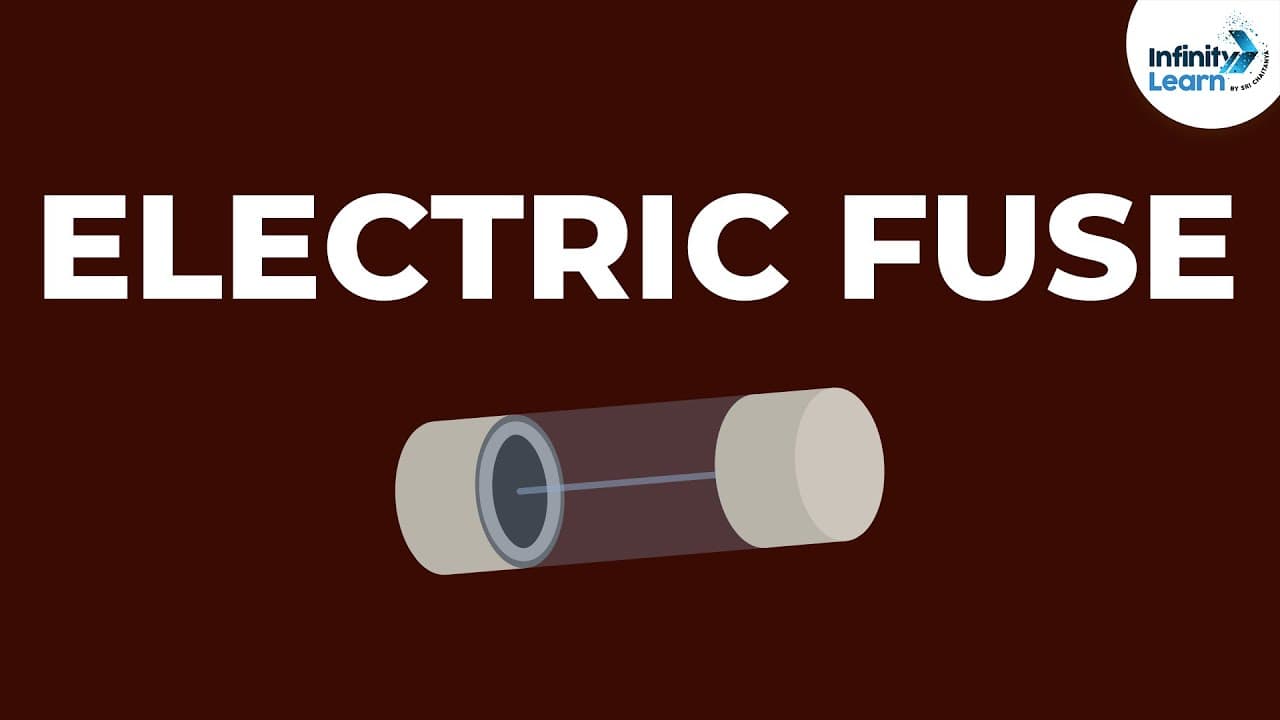
An electric fuse prevents appliances from overheating and catching fire by breaking the circuit when excessive current flows. It contains a fuse wire that melts under high current, stopping the electricity from reaching the device. Automatic fuses, or miniature circuit breakers (MCBs), provide additional protection by automatically shutting off the circuit without needing manual replacement.
Transcript
In the last two videos we have been looking at some of the advantages of the fact that ‘electric current heats up objects through which it flows’. Electric water heaters, light bulbs and electric iron are few of the electric appliances that make use of this fact. However it has its drawbacks too. For instance if these appliances are overheated then... Read More
Key Insights
- 🔌 Electric appliances can be damaged or catch fire if exposed to high electric currents.
- 😕 Electric fuses are used in circuits to prevent excessive current flow and protect appliances from damage.
- 😕 Fuse wires in traditional electric fuses may melt and need replacement, while MCBs are automatic and do not require manual intervention.
- 🧑🏭 MCBs act as safety devices, turning off circuits when there is excessive current flow and ensuring the normal functioning of appliances.
- 😕 The materials used in fuse wires can vary, with zinc, copper, silver, or aluminum being common options.
- 😕 Electric fuses are connected to every circuit in a household to provide comprehensive protection.
- 😕 The fuse itself should be made of non-combustible materials to avoid adding to the risk of fire.
Install to Summarize YouTube Videos and Get Transcripts
Explore YouTube Video Summarizer or Get YouTube Transcript Extractor
Questions & Answers
Q: What is the purpose of an electric fuse?
An electric fuse is used to prevent appliances and circuits from overheating and catching fire by breaking the circuit when there is excess current flow.
Q: How does an electric fuse work?
When the current flows through a circuit with an electric fuse, it heats up the fuse wire. If the current exceeds the fuse's limit, the wire melts, breaking the circuit and stopping the current flow to protect appliances.
Q: What are the drawbacks of traditional electric fuses?
Sod the wire in a traditional electric fuse melts, it needs to be manually replaced. This can be inconvenient and time-consuming.
Q: How do miniature circuit breakers (MCBs) address the drawbacks of traditional fuses?
MCBs are automatic fuses that work like switches. They automatically turn off when there is excessive current flow, breaking the circuit. Once the current is back to normal, they automatically turn back on.
Summary & Key Takeaways
-
Electric appliances can overheat and catch fire if exposed to high electric currents.
-
Electric fuses are devices connected to circuits that contain a fuse wire, which melts when there is heavy current flow, breaking the circuit and preventing damage to appliances.
-
Automatic fuses, known as miniature circuit breakers (MCBs), function as automatic switches that turn off when there is excessive current flow and turn on when the flow returns to normal.
Read in Other Languages (beta)
Share This Summary 📚
Summarize YouTube Videos and Get Video Transcripts with 1-Click
Try YouTube Summary with ChatGPT & Claude or YouTube Transcript Generator
Explore More Summaries from Infinity Learn NEET 📚

Summarize YouTube Videos and Get Video Transcripts with 1-Click
Try YouTube Summary with ChatGPT & Claude or YouTube Transcript Generator