21. Development 1
TL;DR
Multicellular organisms have evolved in a way that allows for specialization of cells, leading to the development of new functions and greater complexity of life.
Transcript
The following content is provided under a Creative Commons license. Your support will help MIT OpenCourseWare continue to offer high quality, educational resources for free. To make a donation, or view additional materials from hundreds of MIT courses, visit MIT OpenCourseWare at ocw.mit.edu. PROFESSOR: The thing we have to talk about here is multi... Read More
Key Insights
- 👻 Multicellularity allows for the specialization of cells and the development of new functions in organisms.
- 💦 Cells are organized into groups and structures, which enable them to work together and form organs.
- 😑 The combinatorial code of expressed genes determines the cell type and function.
- 🧑🏭 The development of cell types is influenced by both cell-cell signaling and cell-autonomous factors.
- 😑 Concentration-dependent signals, known as morphogens, can regulate cell fate and determine the expression of specific genes.
- 🖐️ Localized determinants and organizers play a crucial role in directing cell fate and organizing the embryonic development.
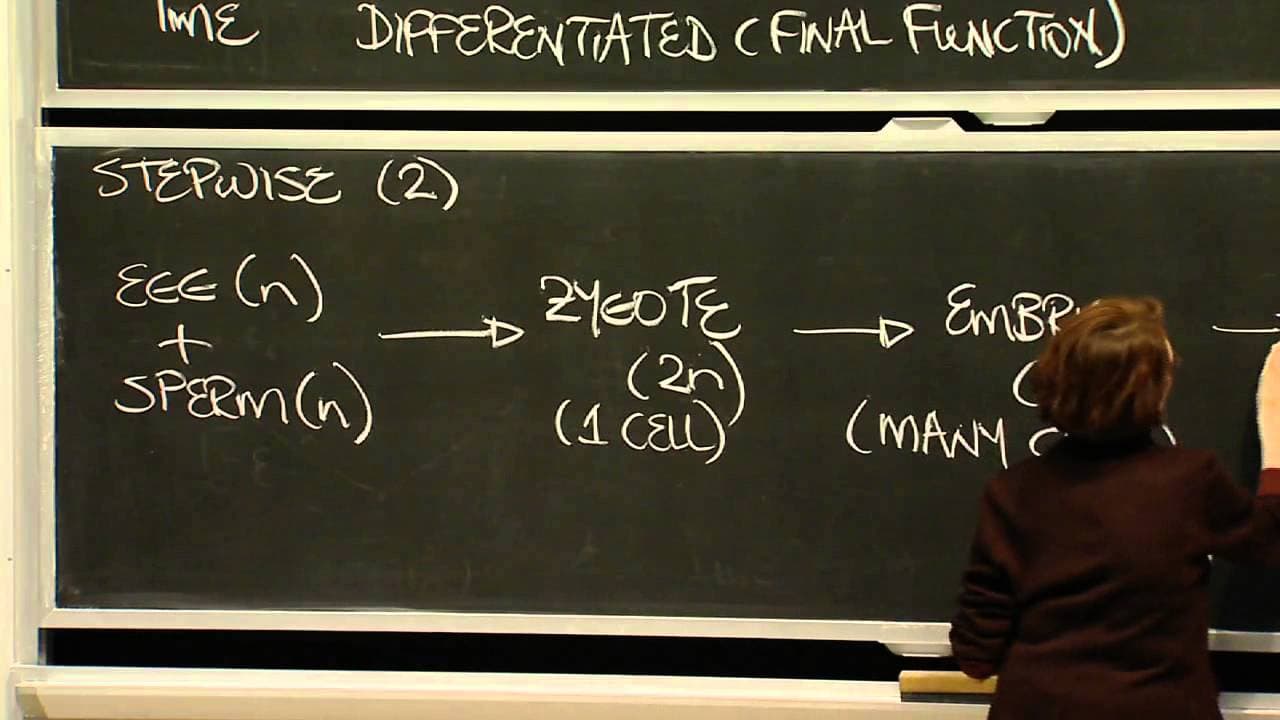
- ⌛ The process of cell determination and differentiation occurs in a stepwise manner over time.
Install to Summarize YouTube Videos and Get Transcripts
Explore YouTube Video Summarizer or Get YouTube Transcript Extractor
Questions & Answers
Q: Why are multicellular organisms more interesting and complex than single-celled organisms?
Multicellular organisms have the ability to specialize different cells for different functions, leading to a greater complexity of life and the ability to interact with the environment and other organisms.
Q: How many different types of cells are found in the human body?
The human body contains around 400 different types of cells, each with a specialized function.
Q: What is the significance of cells being organized into groups and 3D structures?
The organization of cells into groups and structures allows for the coordination of function and the formation of organs, which have even greater specialized functions.
Q: What is the role of organ systems in multicellular organisms?
Organ systems are super structures made up of organs and work together to perform specific functions in the body, such as digestion or circulation.
Summary & Key Takeaways
-
Cells are not the unit of a whole organism, but rather organisms are made up of multiple cells with specialized functions.
-
Multicellularity allows for diversification of function, colonization of new environments, and interaction with other species.
-
Cells are organized into groups and structures, working together to form organs and organ systems.
Read in Other Languages (beta)
Share This Summary 📚
Summarize YouTube Videos and Get Video Transcripts with 1-Click
Try YouTube Summary with ChatGPT & Claude or YouTube Transcript Generator
Explore More Summaries from MIT OpenCourseWare 📚



Summarize YouTube Videos and Get Video Transcripts with 1-Click
Try YouTube Summary with ChatGPT & Claude or YouTube Transcript Generator