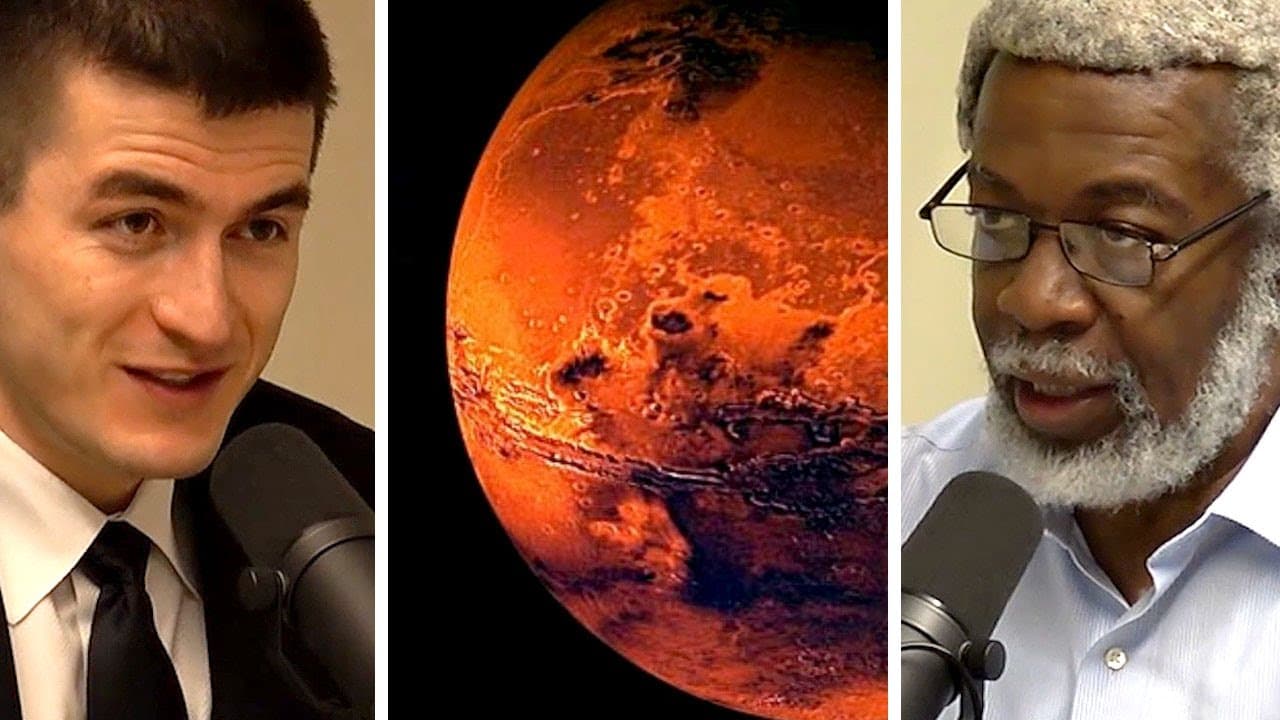
Jim Gates: Challenges of Putting a Human on Mars | AI Podcast Clips
TL;DR
Despite efforts from SpaceX, NASA, and other organizations, putting a human on Mars by 2030 is unlikely due to the significant challenge and cost associated with the mission.
Transcript
if you think so Mars is a harsh place you are Musk SpaceX and other folks NASA are really pushing to put a human being on Mars do you think again let's forgive me for lingering in science fiction land for a little bit do you think one day we may be able to colonize Mars first do you think we'll put a human on Mars and then do you think we'll put ma... Read More
Key Insights
- 🎟️ Colonizing Mars by 2030 is highly unlikely due to the significant cost and immense challenge of the mission compared to previous space missions.
- ⌛ Funding is a major obstacle, as Mars is a hundred times farther than the Moon and would require a thousand times more resources.
- 🗺️ Biological engineering, particularly radiation protection, poses a significant challenge for interstellar travel.
Install to Summarize YouTube Videos and Get Transcripts
Explore YouTube Video Summarizer or Get YouTube Transcript Extractor
Questions & Answers
Q: Why is it unlikely to put a human on Mars by 2030?
The challenge lies in funding, as Mars is much farther than the Moon and requires a hundred times more resources. The current government funding is significantly lower than during the Apollo missions, making the task at least a thousand times harder.
Q: What is the challenge with biological engineering for interstellar travel?
The main challenge is radiation protection. Ensuring that humans can survive the rigors of interplanetary space travel is difficult, and developing suitable technology or bioengineered bodies is crucial for successful colonization.
Q: Can business entrepreneurs like Elon Musk and Jeff Bezos make space exploration cheaper and faster?
While cost reduction is critical for success, the current endeavors by Musk and Bezos are disappointing. The technology being pursued is not significantly different from the past, and alternative engines like flare engines, which are more economical and versatile, are not being explored.
Q: How might the cost curve be bent for successful colonization?
Bending the cost curve is crucial, and innovative solutions like using flare engines could contribute to cost reduction. However, the incremental changes in technology and lack of breakthroughs in this area are discouraging.
Summary & Key Takeaways
-
Colonizing Mars by 2030 is highly unlikely due to the massive challenge and cost compared to previous space missions.
-
The main challenge lies in funding, as Mars is a hundred times farther than the Moon and requires significant resources.
-
Biological engineering is another major challenge, particularly the need to protect humans from radiation during interplanetary travel.
Read in Other Languages (beta)
Share This Summary 📚
Summarize YouTube Videos and Get Video Transcripts with 1-Click
Try YouTube Summary with ChatGPT & Claude or YouTube Transcript Generator
Explore More Summaries from Lex Clips 📚




Summarize YouTube Videos and Get Video Transcripts with 1-Click
Try YouTube Summary with ChatGPT & Claude or YouTube Transcript Generator