Perfect chess opening: If AI solves chess | Hikaru Nakamura and Lex Fridman
TL;DR
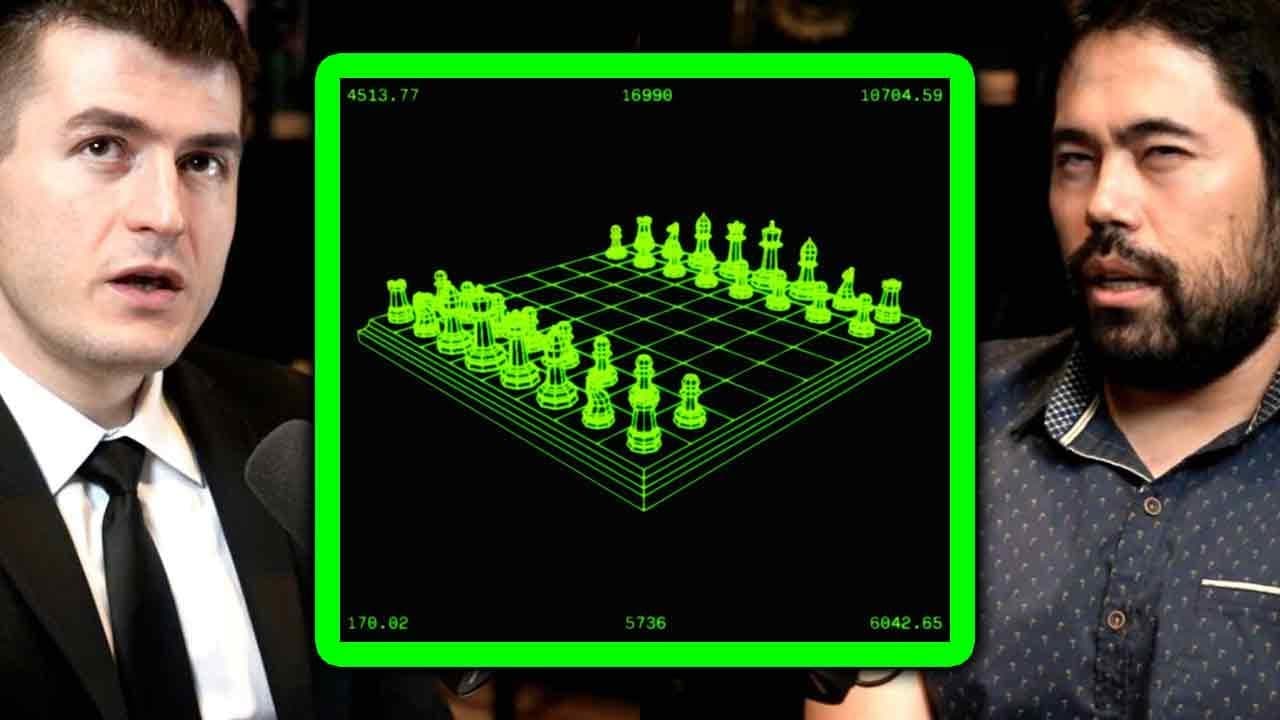
Chess may never be fully solved due to the limitations of current computing power, but symmetrical openings like E4 E5 and D4 D5 are likely to lead to a draw.
Transcript
do you think chess will ever get solved from the opening position to where we'll know the optimal optimal level of play I highly doubt it um without major advances in Quantum Computing I don't think it's realistic to expect chess to be hard solved I just I don't think that will happen um but I I don't know it could happen 20 30 years maybe but I th... Read More
Key Insights
- ♟️ Chess may never be fully solved without significant advances in Quantum Computing.
- ♟️ Symmetrical openings like E4 E5, D4 D5, and C4 C5 are likely to result in a draw in chess.
- 👾 Maintaining asymmetry throughout the game may not be possible in chess due to the inherent balance of the game.
Install to Summarize YouTube Videos and Get Transcripts
Explore YouTube Video Summarizer or Get YouTube Transcript Extractor
Questions & Answers
Q: Do you think chess will ever be completely solved?
It is unlikely without significant advances in Quantum Computing. Solving chess from the opening position to achieve optimal play may not be realistic in the near future.
Q: If chess were to be solved, what opening do you think would be the optimal choice?
Symmetrical openings like E4 E5 and D4 D5 are likely to lead to a draw. Perfect information and knowledge of a solved chess game would suggest that these openings result in an equal position.
Q: Can maintaining asymmetry throughout the game prevent a draw in chess?
It is unlikely that chess inherently allows for maintaining asymmetry throughout the game. Symmetrical openings often lead to balanced positions, making it challenging to constantly keep the opponent off balance and prevent a draw.
Q: What would be the response to move Knight F3 in chess?
The opponent can respond with a symmetrical move like Knight F6 or even play D5. In the end, various paths in chess often lead back to similar positions, emphasizing the tendency towards symmetry and potential draws.
Summary & Key Takeaways
-
Chess may not be solvable from the opening position without major advancements in Quantum Computing.
-
Symmetrical openings like E4 E5 and D4 D5 are likely to result in a draw.
-
Maintaining asymmetry throughout the game to prevent a draw may not be possible in chess.
Read in Other Languages (beta)
Share This Summary 📚
Summarize YouTube Videos and Get Video Transcripts with 1-Click
Try YouTube Summary with ChatGPT & Claude or YouTube Transcript Generator
Explore More Summaries from Lex Clips 📚


Summarize YouTube Videos and Get Video Transcripts with 1-Click
Try YouTube Summary with ChatGPT & Claude or YouTube Transcript Generator