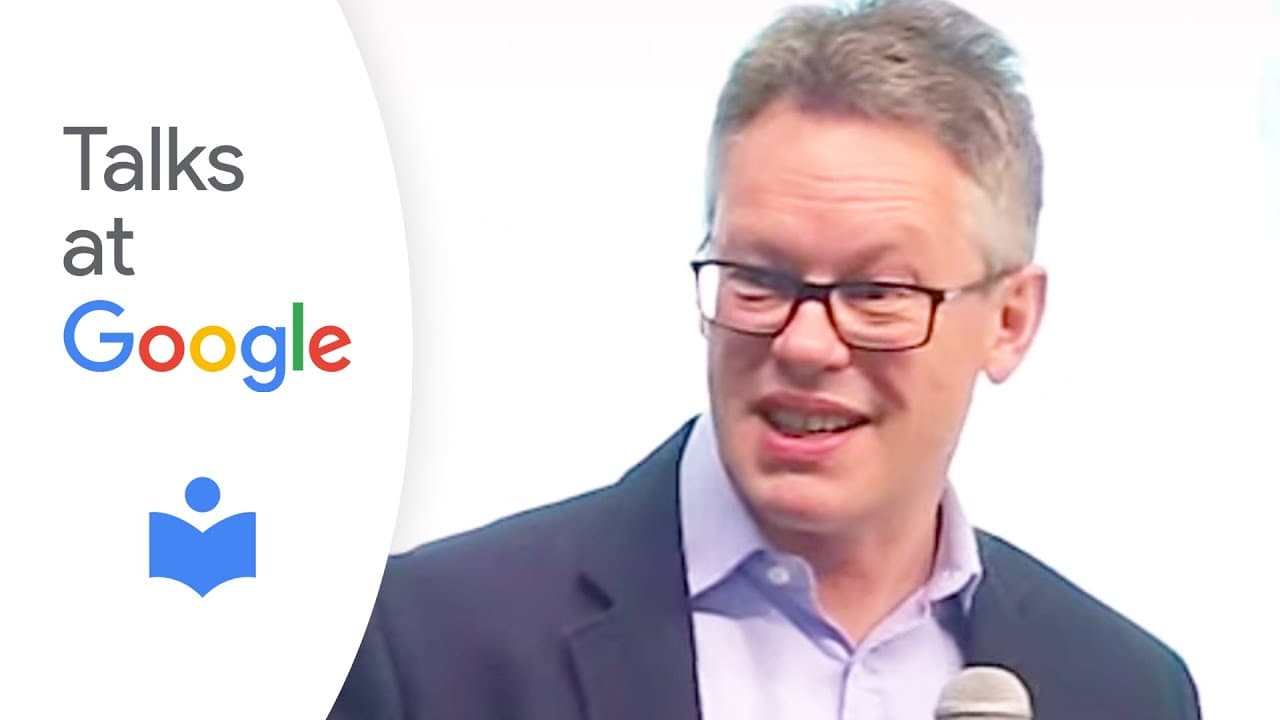
Prof: Alan Turing Decoded | Dermot Turing | Talks at Google
TL;DR
Alan Turing's brilliance as a mathematician, logician, computer scientist, and code breaker during World War II revolutionized computing and laid the groundwork for modern technology.
Transcript
FEMALE SPEAKER: At Google, we're surrounded by technology, but we may rarely think about the first pain years and the struggles that they faced to get us to where we are today. The word brilliant is frequently used to describe Alan Turing, who was not only one of the earliest computer scientists, but also a mathematician, logician, biologist, and e... Read More
Key Insights
- 🙅 Turing's contribution to breaking the Enigma encryption during World War II saved countless lives and gave the Allies a significant advantage.
- 💦 His early work on the concept of a universal computing machine laid the groundwork for modern computer technology.
- 🙅 Turing's designs for machines like the bombe and Colossus were revolutionary in their programmability and ability to perform multiple functions.
Install to Summarize YouTube Videos and Get Transcripts
Explore YouTube Video Summarizer or Get YouTube Transcript Extractor
Questions & Answers
Q: What was Alan Turing's contribution to computing during World War II?
Turing played a key role in breaking the German Enigma encryption, developing machines like the bombe and Colossus that helped decrypt messages. His work saved countless lives and gave the Allies a significant advantage.
Q: How did Turing's work differ from previous computing machines?
Turing's designs for machines like the bombe and Colossus were revolutionary because they were programmable and could perform multiple functions. This was a significant departure from earlier machines that could only do one thing.
Q: What inspired Turing's ideas about computing machines?
Turing was influenced by a professor at Cambridge University, Max Newman, who discussed the concept of a mechanical process for solving mathematical problems. This sparked Turing's interest in developing a theoretical blueprint for a universal computing machine.
Q: What was Turing's role in post-war computing projects?
Turing was hired as the chief computer designer for the UK's National Physical Laboratory and wrote a paper that led to the creation of the Automatic Computing Engine (ACE). He also worked on the Manchester Mark 1 computer, using it to model chemical diffusion in embryo development.
Summary & Key Takeaways
-
Alan Turing was an early computer scientist and mathematician known for breaking the German Enigma encryption during World War II and for his development of the concept of a universal computing machine.
-
Turing's early work focused on the idea of a multi-purpose machine that could change its functionality by being fed different sets of instructions.
-
He was involved in the design and development of early computing machines such as the bombe and Colossus, which played a crucial role in decrypting German messages during the war.
Read in Other Languages (beta)
Share This Summary 📚
Summarize YouTube Videos and Get Video Transcripts with 1-Click
Try YouTube Summary with ChatGPT & Claude or YouTube Transcript Generator
Explore More Summaries from Talks at Google 📚
Summarize YouTube Videos and Get Video Transcripts with 1-Click
Try YouTube Summary with ChatGPT & Claude or YouTube Transcript Generator