Reid Hoffman Fireside with Josh Elman | #ProductSF 2016
TL;DR
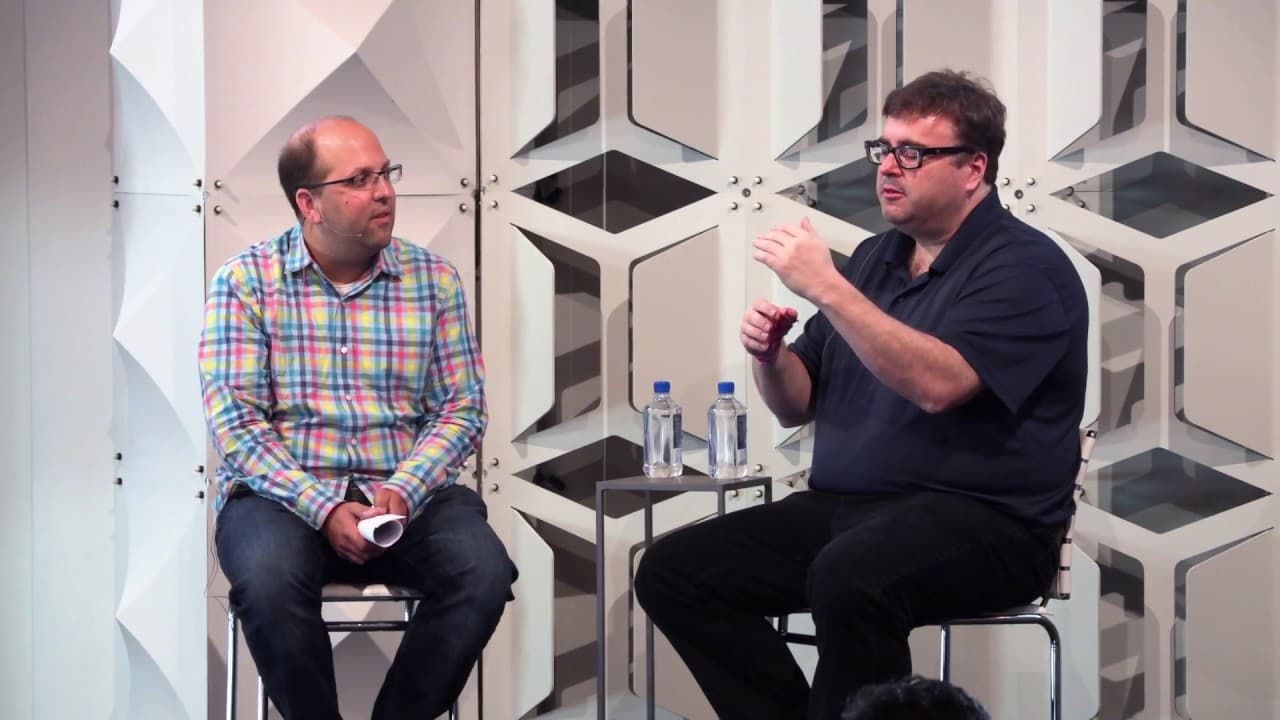
Reid Hoffman discusses the early days of LinkedIn, the challenges of distribution, and the importance of entrepreneurship and public intellectual discourse.
Transcript
without further ado I'd love to bring up Reid Hoffman a partner of mine at Greylock founder of LinkedIn the first kind of famous CEO celebrity person I met when I moved down to Silicon Valley 13 years ago and just to kind of like talk talk about sort of the early days of LinkedIn so thanks Reid for coming and doing this so so like you know everybod... Read More
Key Insights
- 🏛️ Building a robust strategy for product distribution is essential for the success of a startup.
- 🎟️ Revenue and financing strategies should be carefully considered to align with the overall mission and goals of the company.
- 🌐 The success of entrepreneurship is dependent on a stable, optimistic environment, making it crucial to pay attention to political and global events.
- 🥅 As a CEO, focusing on the organization's strategic goals and partnering well with executives can enable continued involvement and influence within the company.
- ⚾ The focus on distribution may vary based on the type of product, with consumer products often emphasizing virality and freemium models, while enterprise products may prioritize paid distribution and specific buyer personas.
- ⚖️ Scaling interestingness in a social network involves balancing exclusivity and inclusivity, as well as leveraging early adopters to drive growth and user engagement.
Install to Summarize YouTube Videos and Get Transcripts
Explore YouTube Video Summarizer or Get YouTube Transcript Extractor
Questions & Answers
Q: How did Reid Hoffman get into software entrepreneurship after graduating from Stanford?
After graduating, Reid Hoffman considered becoming an academic but realized the impact he could have in software entrepreneurship, which led him to network with venture capitalists and gain experience at companies like Apple and Fujitsu.
Q: What challenges did Socialnet face and why did it not succeed?
Socialnet faced challenges in product distribution and made the mistake of relying on partnerships with magazines and newspapers for distribution. Despite returning capital to investors, Socialnet did not achieve the success it had hoped for.
Q: How did Reid Hoffman approach distribution with LinkedIn?
Reid Hoffman recognized the importance of distribution and focused on inviting interesting technologists, inventors, and entrepreneurs to be part of the initial user base. He also encouraged users to upload their address books to find connections on LinkedIn.
Q: What factors influenced Reid Hoffman in deciding to sell LinkedIn to Microsoft?
Convinced that combining forces with Microsoft would bring distribution, integration, and a closer integration to the way people work, Reid Hoffman saw the potential for LinkedIn to fulfill its mission in a more effective way.
Summary
In this video, Reid Hoffman, founder of LinkedIn and partner at Greylock, discusses his early days in Silicon Valley and the evolution of LinkedIn. He talks about the importance of failures and how they shaped his journey. Hoffman also shares his thoughts on the role of revenue in startups, the hiring process, and the decision to sell LinkedIn to Microsoft. He concludes by discussing his current initiatives in changing public discourse and fighting against the negative effects of the Trump administration.
Questions & Answers
Q: How did Reid Hoffman get into software entrepreneurship after graduating from Stanford?
After graduating from Stanford, Reid Hoffman initially considered becoming an academic. However, he realized that software entrepreneurship could have a greater impact than academic work. He networked with venture capitalists who advised him to gain experience launching and specifying products before approaching them for funding. This led him to work at Apple and Fujitsu before founding his own companies.
Q: What was SocialNet and why did it fail?
SocialNet was one of Reid Hoffman's early ventures, and it aimed to create a platform for real-world interactions through the internet. The idea was to help people form relationships and connections based on various interests such as dating, roommates, sports, and professional networking. However, the company failed because they underestimated the importance of product distribution. Their partnership with magazines and newspapers for promotion did not yield significant results, and they realized the importance of integrating product distribution into their strategy.
Q: How did Reid Hoffman start LinkedIn and what was different about its approach compared to SocialNet?
Reid Hoffman started LinkedIn by focusing on building a strong distribution strategy. They were the first to allow users to upload their address books to see who they know on the platform. This helped attract early adopters and interesting technologists, creating a strong initial base for the network. Unlike with SocialNet, LinkedIn had a clear value proposition for users in terms of professional networking and career development. This focus on distribution and clear value proposition contributed to LinkedIn's success.
Q: How did Reid Hoffman approach revenue generation in the early days of LinkedIn?
Initially, Reid Hoffman and the LinkedIn team focused on growth and usage before considering revenue. They wanted to reach a critical mass of users before introducing revenue-generating features and use cases. This approach allowed them to focus on building a strong network, creating engagement features, and refining the user experience. They believed that revenue would follow once they had a large and engaged user base. However, they eventually launched LinkedIn Jobs as a revenue-positive feature to validate the legitimacy of the platform and attract more users.
Q: How did Reid Hoffman approach building a team at LinkedIn?
Reid Hoffman believed in the importance of building a strong team and was intentional about the people he recruited. He focused on finding individuals who shared LinkedIn's mission and were passionate about the product. He also emphasized the importance of challenging one another, asking hard questions, and establishing a culture of collaboration. Hoffman recognized the different skills required as a company scales, which led him to hire CEOs who could better handle organizational management while he focused on the artifacts of how human ecosystems operate.
Q: How did Reid Hoffman approach exits, such as the IPO and the sale to Microsoft?
Reid Hoffman always prioritized the mission and the maximum impact LinkedIn could have on individuals' economic destinies. While he had a reserve price in mind for any potential exit, he considered the best way to achieve the mission. In the case of the IPO, he saw it as an opportunity to raise funds and maintain independence. However, as LinkedIn faced challenges in achieving its goals, Hoffman recognized the potential benefits of combining forces with a company like Microsoft. The decision was made based on closer integration to how people work and the potential for greater distribution, integration, and alignment of missions.
Q: Why is Reid Hoffman currently focused on changing public discourse and fighting against the negative effects of the Trump administration?
Reid Hoffman believes that the success of Silicon Valley is closely tied to globalization and entrepreneurship, which are threatened by the anti-globalization stance and lack of stability promoted by Trump. He wants to preserve the stability necessary for entrepreneurship and ensure that the benefits of globalization are spread. Additionally, he feels a responsibility to stand up against the perpetuation of toxic and divisive public discourse. Hoffman wants to use his resources and initiatives to combat the negative consequences of the current political climate and work towards a more positive future.
Summary & Key Takeaways
-
Reid Hoffman graduated from Stanford and initially considered becoming an academic before realizing the impact he could have in software entrepreneurship.
-
He networked his way to venture capitalists who advised him to learn how to launch and specify products before coming back to them, which led him to work at Apple and Fujitsu.
-
He founded Socialnet, which focused on connecting people for real-world interactions, but faced challenges in product distribution and ultimately did not succeed. This led him to learn the importance of product distribution and the need for a robust strategy.
Read in Other Languages (beta)
Share This Summary 📚
Summarize YouTube Videos and Get Video Transcripts with 1-Click
Try YouTube Summary with ChatGPT & Claude or YouTube Transcript Generator
Explore More Summaries from Greylock 📚



Summarize YouTube Videos and Get Video Transcripts with 1-Click
Try YouTube Summary with ChatGPT & Claude or YouTube Transcript Generator