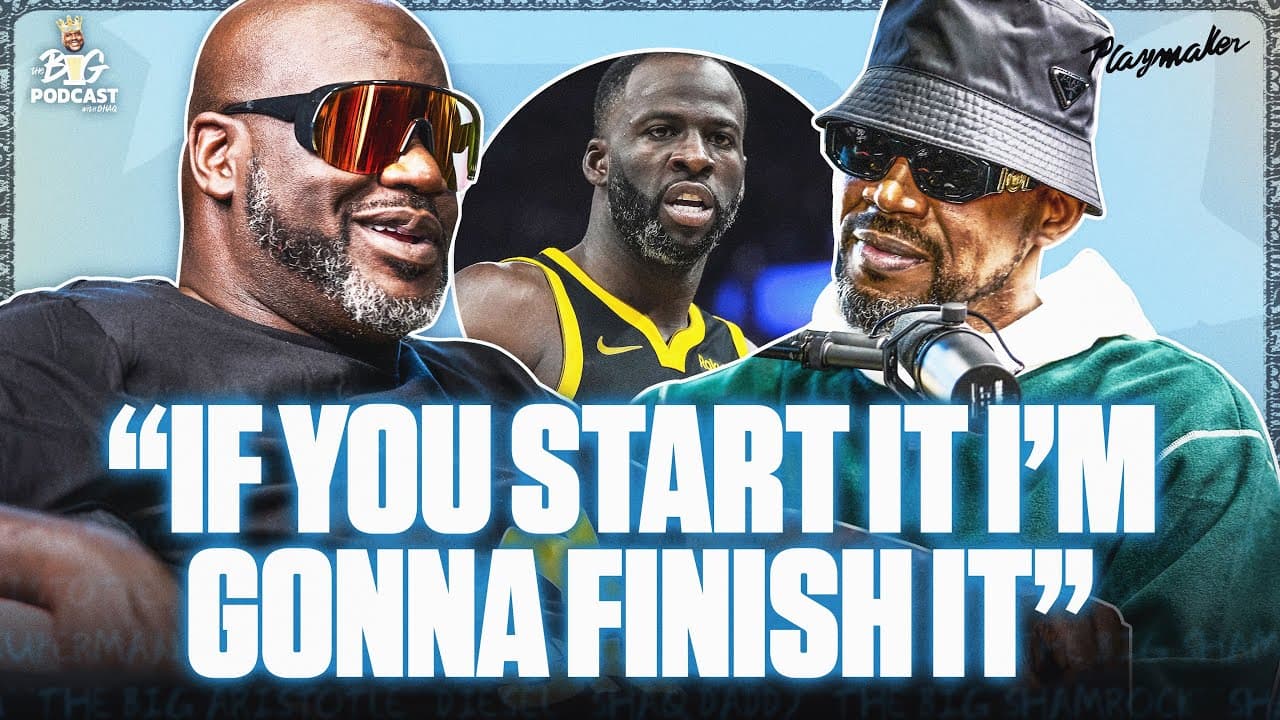
Shaq And Udonis’ Unfiltered Takes On Draymond Green…
TL;DR
Discusses Draymond Green's behavior and the narrative of needing help.
Transcript
you are doing a podcast with your guy Mike Miller the OG's also in the play playmaker Network and y'all are so awesome yes OG it's amazing to be a part of it but to that same Tyler hansboro story you said that our job is not to be the bully we'll handle business when it comes to us but not to be the bully and you were talking about Draymond Green t... Read More
Key Insights
- 🤳 The importance of self-regulation in sports to differentiate between assertiveness and unnecessary aggression.
- ❓ Media narratives can be powerful but often misrepresent the complexities of an athlete's character and behavior.
- ✋ Personal and competitive experiences contribute significantly to an athlete’s decision-making process in high-pressure situations.
- 😀 Athletes should prioritize strategic responses over emotional reactions when facing provocations during play.
- 🤗 Open discussions about mental health should be framed to empower athletes rather than labeling them as weak.
- 🔨 Conflict resolution skills are essential tools that can help athletes manage provocations effectively.
- 🖐️ Understanding opponent dynamics plays a crucial role in formulating strategies during competitive play.
Install to Summarize YouTube Videos and Get Transcripts
Explore YouTube Video Summarizer or Get YouTube Transcript Extractor
Questions & Answers
Q: What defines the line between being assertive and being a bully in sports?
The line is drawn by intention and context. Being assertive means standing your ground and protecting teammates without initiating unnecessary conflict. A bully typically seeks to intimidate or provoke, creating hostility. It's crucial for athletes to be aware of their actions, ensuring they don't cross into aggression for its own sake instead of for their team's benefit.
Q: How does the media's portrayal of athletes impact their reputation?
Media narratives can heavily influence public perception. Labeling someone as needing help implies dysfunction or instability, which can overshadow their achievements and character. For players like Draymond Green, such narratives may ignore their competitive spirit and strategic toughness, creating unfair associations that harm their public image.
Q: What role does personal experience play in understanding Draymond Green's actions?
Personal experience allows for greater empathy and insight into an athlete's mentality. By reflecting on one's own competitive situations, it becomes clearer how the pressures and dynamics of the game can lead to complex behaviors. Understanding that athletes have different personas on and off the court is essential in evaluating their actions accurately.
Q: Why is it important for athletes to maintain composure during games?
Composure directly impacts performance and ensures that athletes can focus on the game rather than becoming distracted by provocations. Maintaining decorum helps prevent penalties and distractions that can hinder a team's success. It also sets an example for younger players about professionalism and discipline in competitive environments.
Q: How does the notion of "needing help" affect the discussions around mental health in sports?
Framing an athlete as needing help can inadvertently perpetuate stigma around mental health by suggesting they are inadequate. Conversations should focus on the complexities of mental resilience rather than implying weakness. Athletes require support like anyone else, but they also possess their own understanding of strategy and psychological management on the court.
Q: In what ways can athletes educate themselves to avoid escalating conflicts?
Understanding conflict resolution and communication strategies can help athletes respond to provocations without resorting to aggression. Engaging in workshops or sessions focused on emotional intelligence and situational awareness can empower players to handle heat-of-the-moment situations with tact and poise.
Q: What does the term "big man alliance" refer to in this context?
The "big man alliance" refers to a camaraderie among powerful, often larger players who support each other in maintaining a physical and competitive edge on the court. It highlights the importance of skill and strategy in asserting dominance without appearing weak or vulnerable to smaller opponents.
Summary & Key Takeaways
-
The conversation highlights the distinction between being assertive and being a bully in sports, urging athletes to defend themselves without starting conflict.
-
There is criticism of how the media portrays Draymond Green, suggesting that labeling him as needing help undermines his intelligence and competitive nature.
-
The discussion reflects on personal experiences in sports and the importance of maintaining composure, advocating for a strong yet respectful approach on the court.
Read in Other Languages (beta)
Share This Summary 📚
Summarize YouTube Videos and Get Video Transcripts with 1-Click
Try YouTube Summary with ChatGPT & Claude or YouTube Transcript Generator
Explore More Summaries from The Big Podcast with Shaq 📚
Summarize YouTube Videos and Get Video Transcripts with 1-Click
Try YouTube Summary with ChatGPT & Claude or YouTube Transcript Generator