Amma Y. Ghartey-Tagoe Kootin: A musical that examines black identity in the 1901 World's Fair | TED
TL;DR
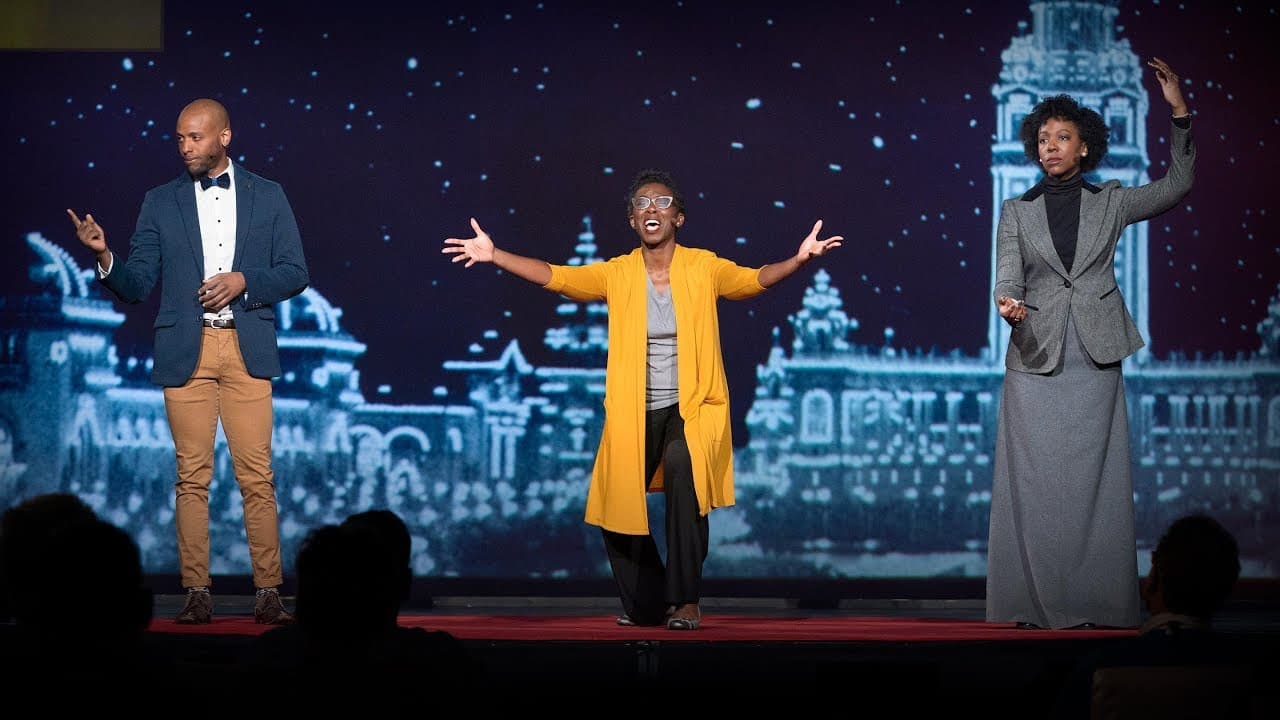
"At Buffalo" is a new musical that brings the archive of the 1901 Pan-American Exposition to life and explores the racial dramas and conflicts experienced by black Americans during this time.
Transcript
The archive. One may envision rooms and shelves stocked with boxes and cartons of old stuff. And yet, for those who are patient enough to dig through it, the archive provides the precious opportunity to touch the past, to feel and learn from the experiences of once-living people who now seem dead and buried deeply in the archive. But what if there ... Read More
Key Insights
- 🔎 The archive provides a precious opportunity to touch the past and learn from the experiences of once-living people who now seem dead and buried deeply in the archive.
- 🎭 "At Buffalo," a new musical, aims to bring the archive to life through live, immersive, spectacular musical theater, using collections from over 30 archival institutions.
- 📍 The 1901 Pan-American Exposition held in Buffalo, New York, presented conflicting displays of what it meant to be black in the United States, including a savage black origin, happy slave life, and the Negro Exhibit.
- 🎵 The musical tells the stories of individuals like Tannie and Henrietta, John Tevi, and Mary Talbert, bringing their experiences and struggles to the forefront through music and dance.
- 💔 The archive is filled with racial caricature, conflicting information, and silence, masking the answers to important questions about how black folk navigated their experiences at the fair.
- 💡 "At Buffalo" reveals how the United States today stands at similar crossroads as 1901 America, with names like Oscar Grant, Jacqueline Culp, Trayvon Martin, and Sandra Bland filling today's media.
- 👧 Black women like Mary Talbert and the National Association of Colored Women started movements against lynching and the myth of black criminality, similar to the Black Lives Matter movement today.
- 🎭 Performing the archive in "At Buffalo" prompts audiences to reflect on whether society is still inside the gates and part of the show, highlighting the enduring impact of the 1901 fair's legacies.
Install to Summarize YouTube Videos and Get Transcripts
Explore YouTube Video Summarizer or Get YouTube Transcript Extractor
Questions & Answers
Q: What is "At Buffalo" about?
"At Buffalo" is a new musical that brings to life the massive archive of the 1901 Pan-American Exposition, the first World's Fair of the 20th century held in Buffalo, New York. It uses collections from over 30 archival institutions to tell the story of this fair and the racial drama that played out on the fairgrounds.
Q: How did the three distinct groups of black folk navigate their experience at the 1901 fair?
The three distinct groups of black folk at the 1901 fair, which included white showmen presenting a savage black origin, Southern black performers showcasing a happy slave life, and the black Buffalo community championing the Negro Exhibit, navigated their experiences in different ways. The archive provides limited information on how they specifically navigated this experience, but "At Buffalo" aims to explore and shed light on their stories through live immersive musical theater.
Q: What was the purpose of the Negro Exhibit at the 1901 fair?
The Negro Exhibit at the 1901 fair was co-designed by African American scholar W.E.B. Du Bois and aimed to showcase black Americans as a high-achieving race capable of education and progress. It curated photographs, charts, books, and more to challenge the racial stereotypes perpetuated by the other conflicting displays, such as Darkest Africa and Old Plantation.
Q: Who were some of the individuals involved in the fight against racial inequality during the fair?
Mary Talbert and the black Buffalo elite played a crucial role in the fight against racial inequality during the fair. They successfully demanded the presence of the Negro Exhibit and held protest meetings to challenge the fair directors' decision to exclude them. Their efforts laid the groundwork for movements against lynching and the myth of black criminality, as well as the creation of the NAACP.
Q: How does "At Buffalo" relate to the present-day United States?
"At Buffalo" highlights how the United States today stands at similar crossroads as it did in 1901. The legacies of the fair, such as racial injustice and systemic racial violence, persist in today's society. The musical draws parallels between the past and present by mentioning names like Oscar Grant, Jacqueline Culp, Trayvon Martin, and Sandra Bland, emphasizing that the fight against racial inequality is ongoing.
Summary & Key Takeaways
-
"At Buffalo" is a new musical that brings the archive of the 1901 Pan-American Exposition to life, using collections from over 30 archival institutions.
-
The fair had conflicting displays of what it meant to be black in the United States, with white showmen portraying a savage black origin, a recreation of slave life, and the Negro Exhibit curated by W.E.B. Du Bois.
-
The musical tells the stories of individuals navigating this racial drama, including a husband and wife vaudeville duo, an African businessman trapped in a human zoo, and Mary Talbert, a leader of the black Buffalo elite who successfully demands the inclusion of the Negro Exhibit.
Read in Other Languages (beta)
Share This Summary 📚
Summarize YouTube Videos and Get Video Transcripts with 1-Click
Try YouTube Summary with ChatGPT & Claude or YouTube Transcript Generator
Explore More Summaries from TED 📚


Summarize YouTube Videos and Get Video Transcripts with 1-Click
Try YouTube Summary with ChatGPT & Claude or YouTube Transcript Generator