How Different Are You From Ancient Humans?
TL;DR
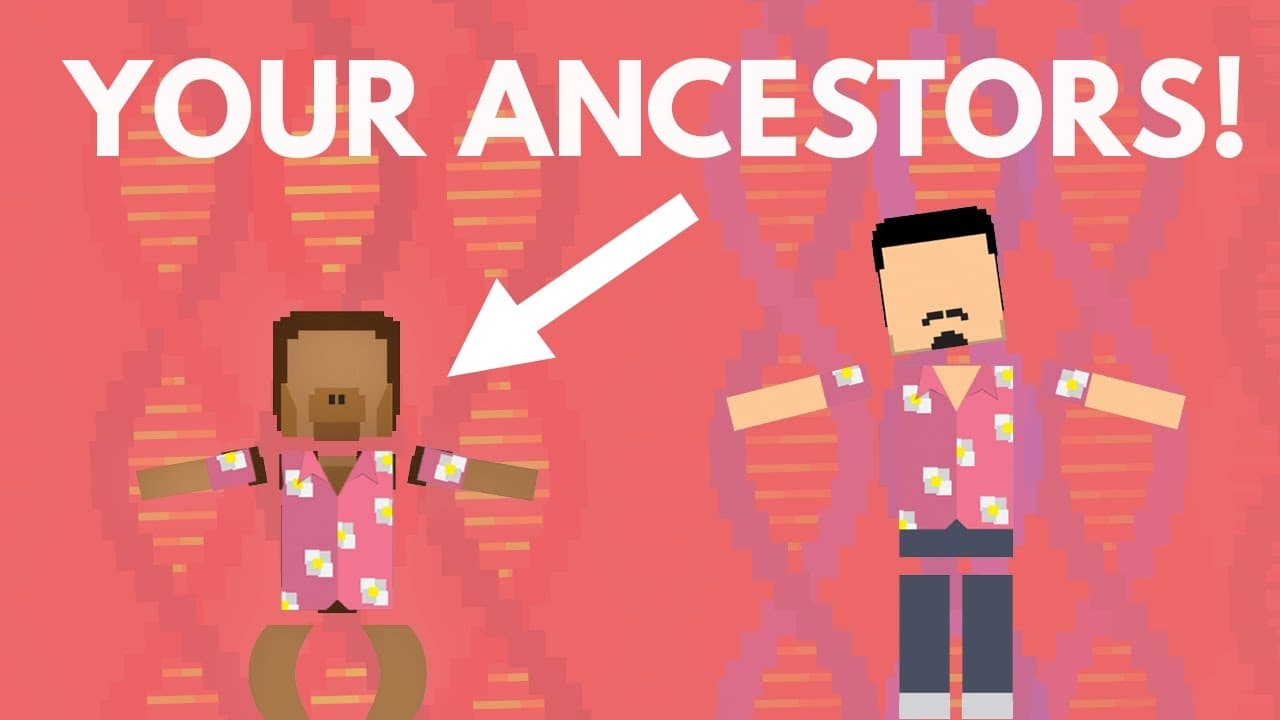
Human evolution from Australopithecus to Homo sapiens involved various species with both ape-like and human-like features. Neanderthals and Denisovans also interbred with early humans, leading to the diversity of human DNA.
Transcript
Hey there and welcome to Life Noggin. Human evolution is incredibly complicated. Around 6 to 8 million years ago, a common ancestor we share with chimps diverged genetically, with one lineage eventually giving rise to modern day humans. The path to Homo sapiens is far from straightforward and there are a lot of early-human ancestors that once exist... Read More
Key Insights
- 🫤 Human evolution began around 6 to 8 million years ago with a common ancestor shared with chimps.
- 🫤 Australopithecus afarensis, living 3 to 4 million years ago, was closely related to modern humans.
- 🖐️ Homo habilis, Homo erectus, Neanderthals, and Denisovans played significant roles in human evolution.
- 🥺 Neanderthals and Denisovans interbred with early humans, leading to genetic diversity.
- 🧠 Homo sapiens developed larger brains, adapted to changing environments, and created agriculture and technology.
Install to Summarize YouTube Videos and Get Transcripts
Explore YouTube Video Summarizer or Get YouTube Transcript Extractor
Questions & Answers
Q: How did Australopithecus afarensis resemble both humans and apes?
Australopithecus afarensis had ape-like faces and strong arms for climbing trees, but they also walked upright on two legs like modern humans.
Q: What was unique about Homo habilis?
Homo habilis, known as the "handy man," could make and use tools. They had smaller teeth and faces but larger skulls compared to Australopithecus.
Q: How did Homo erectus differ from previous species?
Homo erectus had the most human-like body proportions and was better adapted for ground life. They expanded beyond Africa, improved their tool technology, and used fire for cooking and defense.
Q: What distinguishes Neanderthals from other early human species?
Neanderthals had large, receding foreheads, distinct brow ridges, and a stocky build for cold climates. They buried their dead and interbred with both modern humans and Denisovans.
Summary & Key Takeaways
-
Australopithecus afarensis, living 3 to 4 million years ago, was closely related to modern humans. They walked upright, had ape-like faces, and were skilled at climbing trees.
-
Homo habilis, existing 2.4 to 1.4 million years ago, were tool-users with smaller faces and larger skulls compared to Australopithecus.
-
Homo erectus, spanning 1.9 million to 140,000 years ago, had human-like body proportions and expanded their reach beyond Africa, using tools and fire.
-
Neanderthals, living 300,000 to 30,000 years ago, were our close relatives, adapted to cold conditions, and interbred with both modern humans and Denisovans.
Read in Other Languages (beta)
Share This Summary 📚
Summarize YouTube Videos and Get Video Transcripts with 1-Click
Try YouTube Summary with ChatGPT & Claude or YouTube Transcript Generator
Explore More Summaries from Life Noggin 📚



Summarize YouTube Videos and Get Video Transcripts with 1-Click
Try YouTube Summary with ChatGPT & Claude or YouTube Transcript Generator