Can Microsoft’s AI-Powered Bing Take On Google? (#91)
TL;DR
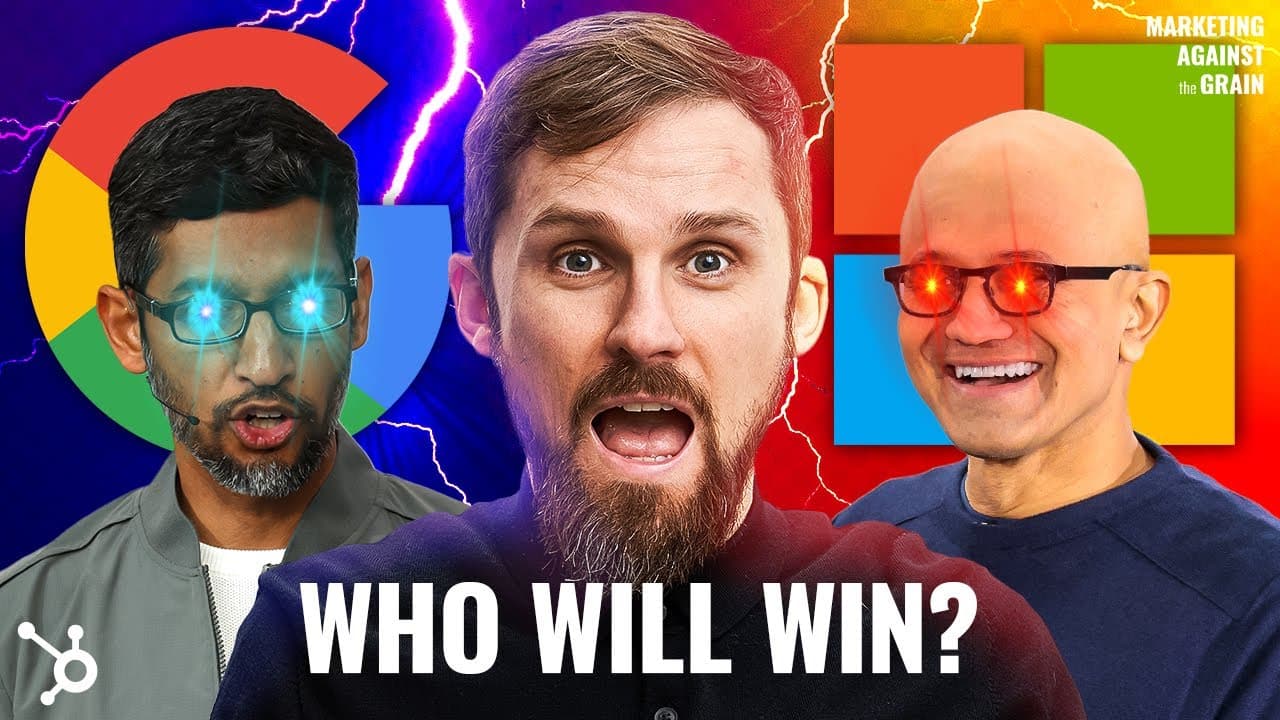
Microsoft's AI Bing challenges Google's search dominance.
Transcript
(funky music) - Hey, hey. Welcome to another episode of "Marketing Against the Grain". Your show for marketing-minded people everywhere. I'm your co-host Kipp Bodnar and I am joined by friend and colleague, Kieran Flanagan from the other side of the world. And we have an emergency podcast today. I can't stand it, I've never, ever, Kieran, needed to... Read More
Key Insights
- Microsoft's strategic release of AI-powered Bing aims to disrupt Google's search dominance by leveraging advanced AI models and offering features like integrated chat and travel planning.
- Google's AI chatbot Bard announcement fell short of market expectations, causing a significant drop in their stock value due to perceived underperformance and incorrect information in promotional material.
- The shift towards AI-driven search is expected to change the internet landscape, potentially diminishing the current ad-based revenue models and altering the relationship between content publishers and aggregators.
- Marketers may need to adapt to new metrics such as 'influence' rather than direct conversions, as AI-driven search experiences could reduce the effectiveness of traditional ad models.
- The rise of AI in search could lead to a decrease in anonymous searches, as companies might require users to log in for personalized experiences, enhancing intent data collection and utilization.
- Brand marketing is likely to become more aligned with performance marketing, focusing on driving intent and leveraging AI to better understand and target audiences.
- The creator economy is expected to grow as educational content becomes commoditized, making personal connection and unique perspectives more valuable in marketing strategies.
- The potential for AI to serve as a recommendation engine poses challenges for marketers, as it could centralize decision-making and reduce opportunities for traditional marketing interventions.
Install to Summarize YouTube Videos and Get Transcripts
Explore YouTube Video Summarizer or Get YouTube Transcript Extractor
Questions & Answers
Q: What are the key differences between Microsoft's and Google's AI announcements?
Microsoft's announcement focused on integrating advanced AI models into Bing search, offering features like chat and travel planning without immediate monetization plans. In contrast, Google's Bard announcement was perceived as underwhelming, with errors in promotional content and a lack of immediate public access, leading to a significant drop in Google's stock value.
Q: How might AI-driven search impact traditional ad revenue models?
AI-driven search, with its chat-based interface, could reduce user interaction with traditional ad formats like blue links, potentially diminishing their effectiveness. As a result, companies like Google may need to shift focus from direct conversion metrics to influence-based metrics, fundamentally altering the ad revenue landscape and challenging existing business models.
Q: What implications does AI-driven search have for marketers?
Marketers may need to adapt to a new landscape where intent data becomes crucial. They might need to focus more on brand marketing and driving intent, as AI-driven search could centralize decision-making and reduce opportunities for traditional marketing interventions. This shift requires marketers to leverage AI effectively and consider new strategies for engaging audiences.
Q: How does AI-driven search affect the relationship between content creators and aggregators?
AI-driven search could disrupt the traditional relationship between content creators and aggregators by changing how content is monetized and distributed. With AI chat interfaces potentially reducing traffic to traditional web pages, content creators may need to explore new monetization strategies and partnerships to maintain visibility and revenue.
Q: What role does intent data play in the future of AI-driven search?
Intent data is expected to become increasingly valuable in AI-driven search, as it enables personalized experiences and targeted marketing. Companies may require users to log in to capture this data, which can then be used to enhance ad targeting, customer engagement, and product recommendations, transforming how businesses interact with consumers.
Q: Why is brand marketing becoming more important in the AI-driven search landscape?
As AI-driven search commoditizes educational content, brand marketing is becoming crucial for differentiating products and services. By focusing on driving intent and creating personal connections through unique perspectives and storytelling, brands can effectively engage audiences and build loyalty in a rapidly changing digital environment.
Q: How might the creator economy evolve with the rise of AI-driven search?
The creator economy is likely to expand as AI-driven search commoditizes traditional educational content. Creators who offer unique perspectives and personal connections will become more valuable, as audiences seek content that resonates on a personal level. This shift presents opportunities for creators to collaborate with brands and leverage their influence.
Q: What challenges do marketers face with AI as a recommendation engine?
AI as a recommendation engine centralizes decision-making, reducing traditional marketing opportunities. Marketers may struggle to influence consumer decisions if AI becomes the primary source of product recommendations. To overcome this, marketers need to understand AI algorithms and ensure their products are well-represented in AI-driven environments.
Summary & Key Takeaways
-
Microsoft's recent announcement of AI-powered Bing search aims to challenge Google's long-standing dominance in the search market. By integrating advanced AI models and offering features like chat and travel planning, Microsoft seeks to capture market share from Google.
-
Google's announcement of their AI chatbot Bard was met with disappointment, as it failed to meet market expectations. The stock value of Google dropped significantly due to errors in promotional material and perceived lack of innovation compared to Microsoft's offerings.
-
The rise of AI-driven search is expected to transform the internet landscape, affecting ad-based revenue models and the relationship between content creators and aggregators. Marketers may need to adapt to new metrics and strategies to remain competitive in this evolving environment.
Read in Other Languages (beta)
Share This Summary 📚
Summarize YouTube Videos and Get Video Transcripts with 1-Click
Try YouTube Summary with ChatGPT & Claude or YouTube Transcript Generator
Explore More Summaries from Marketing Against the Grain 📚
![This 2-Minute AI Hack Creates Your OWN Call-In Podcast [PROVEN] thumbnail](/_next/image?url=https%3A%2F%2Fi.ytimg.com%2Fvi%2F-vcEPrjAvP4%2Fhqdefault.jpg&w=750&q=75)




Summarize YouTube Videos and Get Video Transcripts with 1-Click
Try YouTube Summary with ChatGPT & Claude or YouTube Transcript Generator