The Bizarre Characteristics of Titan | Our Solar System's Moons: Titan
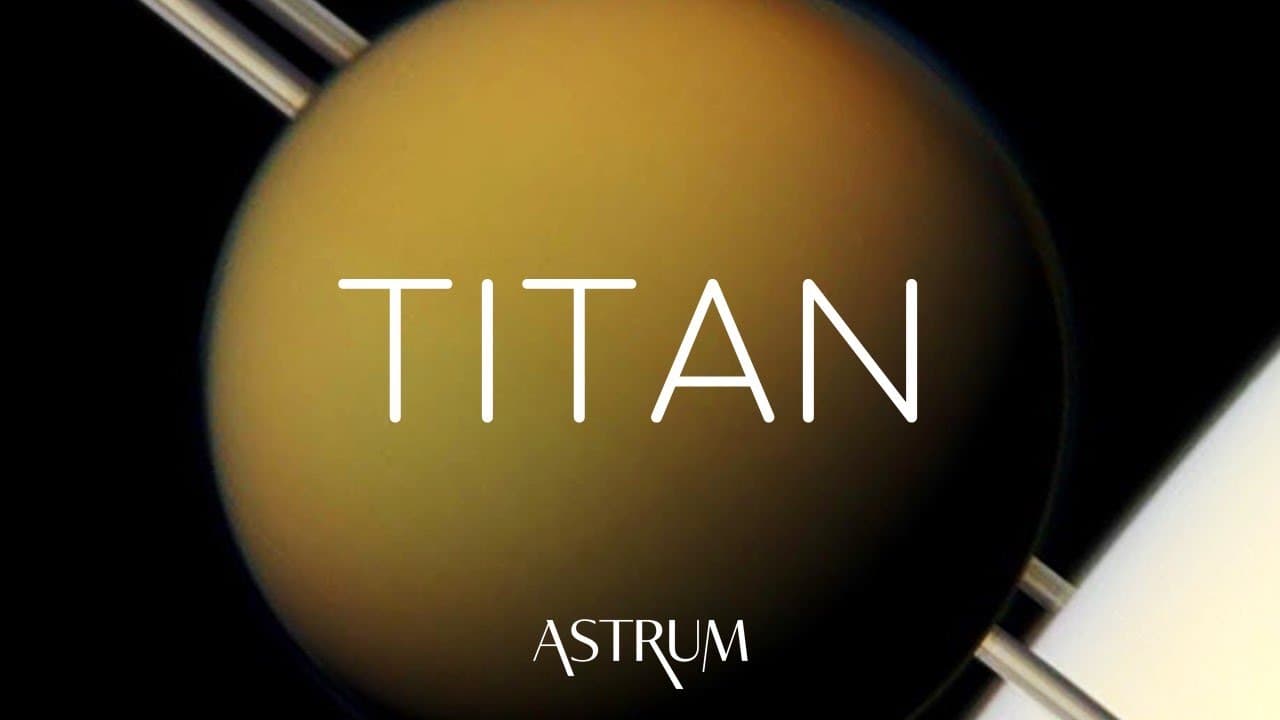
TL;DR
Titan, Saturn's moon, features unique lakes, atmosphere, and geology.
Transcript
Well everyone, here it is, your most asked for video: Titan. And to be fair, I can understand the curiosity towards it. It is the only moon with a substantial atmosphere. There is clear evidence of stable bodies of surface liquid on it. And best of all, mankind has visited it so I will be able to show a lot of real photos and video footage! I’m Ale... Read More
Key Insights
- Titan is Saturn's largest moon and has a significant atmosphere, making it unique among moons in our solar system.
- The moon's atmosphere is thicker than Earth's, with a surface pressure of 1.45 atm and is primarily composed of nitrogen and methane.
- Titan's surface has lakes and rivers of liquid methane and ethane, resembling Earth's hydrological cycle but with hydrocarbons.
- The Cassini-Huygens mission provided crucial data about Titan, confirming the presence of surface lakes and a subsurface ocean.
- Titan's surface is geologically young and active, with cryovolcanoes possibly replenishing atmospheric methane.
- The moon's thick atmosphere and low gravity create an anti-greenhouse effect, balancing the greenhouse effect from methane.
- Titan's atmosphere rotates faster than the moon itself, creating polar vortexes that resemble permanent hurricanes.
- Despite its potential for life, Titan remains unexplored for this possibility, with future missions potentially focusing on Jupiter's Europa.
Install to Summarize YouTube Videos and Get Transcripts
Explore YouTube Video Summarizer or Get YouTube Transcript Extractor
Questions & Answers
Q: What makes Titan's atmosphere unique among moons?
Titan's atmosphere is unique because it is substantial and thicker than Earth's, primarily composed of nitrogen and methane. This atmosphere creates a surface pressure of 1.45 atm, and its thickness results in a significant anti-greenhouse effect, balancing the greenhouse effect from methane. Titan's atmosphere also rotates faster than the moon itself.
Q: How do Titan's lakes and rivers differ from those on Earth?
Titan's lakes and rivers are composed of liquid methane and ethane, unlike Earth's water-based bodies. The moon's cold temperatures allow methane to exist in liquid form, creating a hydrological cycle similar to Earth's but with hydrocarbons. This unique feature was confirmed by the Cassini-Huygens mission, which observed these lakes and rivers from space.
Q: What role do cryovolcanoes play on Titan?
Cryovolcanoes on Titan are believed to release a mix of water and ammonia instead of molten rock. These eruptions could replenish the methane in Titan's atmosphere, which would otherwise deplete over time. The presence of cryovolcanoes suggests geological activity, contributing to the moon's young surface and potentially renewing it over time.
Q: What did the Cassini-Huygens mission discover about Titan?
The Cassini-Huygens mission provided extensive data on Titan, confirming the presence of surface lakes and a subsurface ocean. The mission revealed Titan's geological activity, including cryovolcanoes and tectonic features. It also provided detailed observations of Titan's atmosphere, lakes, and surface features, greatly enhancing our understanding of this moon.
Q: Why is Titan considered a potential site for life?
Titan is considered a potential site for life due to its subsurface ocean, which could harbor conditions suitable for life. The presence of hydrocarbons and a dynamic atmosphere also suggests chemical processes that might support life. However, exploration for life on Titan remains limited, with future missions potentially prioritizing other moons like Europa.
Q: How does Titan's atmosphere affect its surface conditions?
Titan's thick atmosphere creates a surface pressure of 1.45 atm, with a greenhouse effect from methane that warms the surface. However, the atmosphere's haze reflects sunlight, creating an anti-greenhouse effect that cools the surface. These opposing effects result in a cold surface temperature of -183°C, with conditions suitable for liquid methane lakes.
Q: What geological features are found on Titan's surface?
Titan's surface features include lakes and rivers of liquid methane, cryovolcanoes, and ridge belts similar to mountain ranges on Earth. The moon also has dunes, gorges, and valleys, with a surface resembling early Earth conditions. The geological activity is believed to be driven by cryovolcanism and possibly tectonic forces, renewing the surface over time.
Q: What future missions are planned for Titan exploration?
Currently, there are no specific missions planned for Titan exploration, with focus potentially shifting to Jupiter's moon Europa for life investigation. However, Titan remains a compelling target due to its unique features and potential for life. Future missions could aim to explore its surface and subsurface ocean, building on the data from Cassini-Huygens.
Summary & Key Takeaways
-
Titan, Saturn's largest moon, stands out due to its thick atmosphere and surface lakes of liquid methane. Unlike other moons, Titan has a significant atmosphere primarily composed of nitrogen and methane, creating a unique environment.
-
The Cassini-Huygens mission revealed Titan's geological activity, including cryovolcanoes and a subsurface ocean. These features suggest a dynamic world with potential for life, though exploration remains limited.
-
Titan's atmosphere rotates faster than the moon itself, leading to polar vortexes. The moon's surface resembles early Earth, with hydrocarbon lakes and a young, active geology that continues to intrigue scientists.
Read in Other Languages (beta)
Share This Summary 📚
Summarize YouTube Videos and Get Video Transcripts with 1-Click
Try YouTube Summary with ChatGPT & Claude or YouTube Transcript Generator
Explore More Summaries from Astrum 📚






Summarize YouTube Videos and Get Video Transcripts with 1-Click
Try YouTube Summary with ChatGPT & Claude or YouTube Transcript Generator