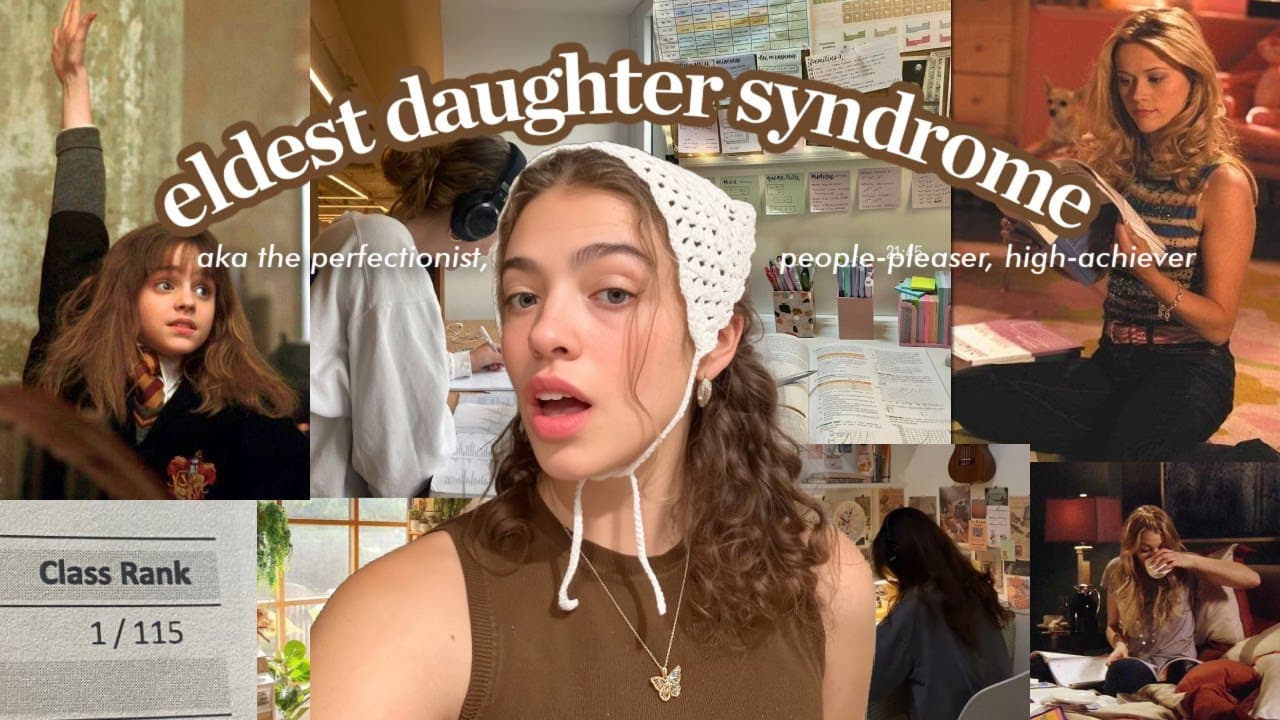
are you a people pleaser or just the eldest daughter?
TL;DR
A personal reflection on the burdens and expectations faced by eldest daughters.
Transcript
hi friends we're in podcast mode I hope you can hear me okay I'm speaking into this new mic okay so this video doesn't have fully formed thoughts I just feel a deep need to film right now so it's just coming from the Mind basically my dear friend Esther is staying with me this week Esther is one of my best friends from University she's from Taiwan ... Read More
Key Insights
- 🧔 The speaker discusses how eldest daughters often bear the burden of emotional labor in families, feeling responsible for the happiness and stability of others.
- 🤠 There is a societal double standard where daughters must appear perfect and composed, while boys are permitted to be more carefree and imperfect.
- 😑 Emotional independence, a trait cultivated in eldest daughters, can lead to a detachment from expressing personal feelings, which may hinder their relationships.
- 🧔♀️ The speaker recognizes multi-generational trauma among women, often transferred through familial roles, particularly impacting the emotional landscape of eldest daughters.
- 🤳 The pressure to be a caretaker can result in self-sacrifice, where daughters may neglect their well-being in favor of supporting others.
- 👯 The speaker encourages the establishment of boundaries to help daughters avoid the continuous cycle of people-pleasing and mediating family conflicts.
- 🔬 There is a call for societal change to recognize and value caregiving and emotional labor, particularly in the context of capitalism and gender norms.
Install to Summarize YouTube Videos and Get Transcripts
Explore YouTube Video Summarizer or Get YouTube Transcript Extractor
Questions & Answers
Q: What are some common traits of eldest daughters according to the speaker?
Eldest daughters often develop traits like hyper-independence, empathy, and the habit of mediating family conflicts. They tend to take on emotional responsibilities from a young age, focusing on keeping the peace and caring for others. These traits, while nurturing, can also lead to personal exhaustion and difficulty in expressing their own emotions.
Q: How do societal expectations shape the behavior of eldest daughters?
Societal norms often pressure eldest daughters to be high achievers, caregivers, and role models. This pressure can result in a desire for perfection, making them feel responsible for family dynamics while neglecting their emotional needs. They may internalize these expectations as a measure of their worth, leading to stress and self-imposed limitations.
Q: What does the speaker suggest as a remedy for the pressures of daughterhood?
The speaker advocates for cultivating emotional boundaries, allowing daughters to prioritize their well-being while still being empathetic. They encourage creating supportive relationships that allow for vulnerability and messiness, emphasizing that being authentic and prioritizing personal needs is essential for emotional health.
Q: How does the speaker connect their personal experiences to broader societal issues?
The speaker links their struggles with daughters' expectations to larger societal issues surrounding gender roles and the undervaluation of care work. They highlight the cultural expectation for women to be the caregivers without recognition or compensation, which further entrenches the expectations placed on daughters and women in general.
Q: What advice does the speaker give for managing emotional burdens?
The speaker emphasizes the importance of recognizing that it's okay to not carry the emotional burdens of others. They suggest that daughters should practice self-care and allow others to take on some responsibilities, advocating for a balance between supporting their families and prioritizing their own emotional health.
Q: Why does the speaker believe hyper-independence can be harmful?
While hyper-independence may seem beneficial, the speaker argues it can hinder the ability to form close relationships and communicate emotions. This self-reliance often results in an unwillingness to share or seek help, ultimately leading to isolation and unaddressed feelings, which can be detrimental to mental health.
Q: What does the term "radical authenticity" mean in the context of this discussion?
"Radical authenticity" refers to the idea of embracing one’s true self, including imperfections and vulnerabilities, rather than conforming to societal expectations. The speaker encourages daughters to express their genuine feelings and needs without the pressure to always be perfect or caring, advocating for a more genuine approach to relationships.
Q: How does the speaker feel about their role as a daughter?
The speaker expresses a deep appreciation for their role as a daughter despite the challenges. They view their experiences as opportunities for growth and empathy, highlighting that caring for their family has shaped them positively, while also noting the need for individual identity and independence beyond familial expectations.
Summary & Key Takeaways
-
The speaker reflects on their experiences as an eldest daughter, discussing how they inadvertently mediate family dynamics and carry emotional burdens from a young age.
-
They express the societal pressures placed on daughters to be perfect, empathetic, and caregivers, often leading to hyper-independence and emotional struggles.
-
The speaker advocates for radical authenticity and emotional boundaries, encouraging daughters to prioritize their own well-being while navigating family relationships.
Read in Other Languages (beta)
Share This Summary 📚
Summarize YouTube Videos and Get Video Transcripts with 1-Click
Try YouTube Summary with ChatGPT & Claude or YouTube Transcript Generator
Explore More Summaries from UnJaded Jade 📚






Summarize YouTube Videos and Get Video Transcripts with 1-Click
Try YouTube Summary with ChatGPT & Claude or YouTube Transcript Generator