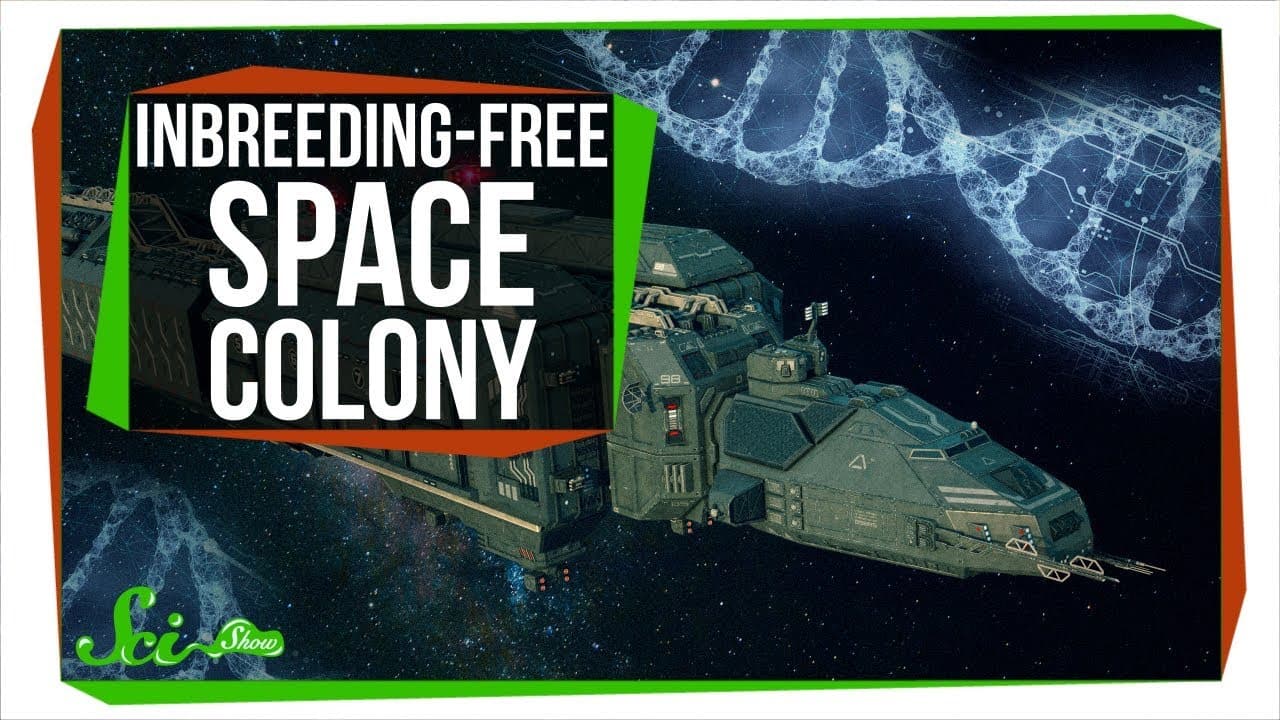
Founding An Inbreeding-Free Space Colony
TL;DR
Founding a colony on Mars presents the challenge of low genetic diversity, leading to inbreeding and potential genetic disorders.
Transcript
SciShow is supported by 23andMe. Whether it’s SpaceX or Lockheed Martin or NASA, eventually someone’s going to start sending people to Mars. And when that happens, we might decide to set up a colony there, too. People could be born, raised, have their own families, and die without ever setting foot on Earth. Sending people across the void of space ... Read More
Key Insights
- 😘 Establishing a colony on Mars requires addressing the challenge of low genetic diversity due to the Founder Effect.
- 🥺 Certain populations, like the Amish and the Afrikaner community, demonstrate how the Founder Effect can lead to higher frequencies of specific genetic disorders.
- 👾 The effective population size determines the genetic diversity of a population, with estimates suggesting several thousand to tens of thousands of individuals are needed for a space colony.
- 👶 Maintaining genetic diversity on Mars could involve periodic introductions of new genes from Earth or using stored genetic material.
- 💁 A genetic database, similar to Iceland's, could help track and analyze genetic information in a Martian colony.
- 🐕🦺 23andMe offers genetic ancestry testing services that can provide insights into an individual's personal genetic background.
Install to Summarize YouTube Videos and Get Transcripts
Explore YouTube Video Summarizer or Get YouTube Transcript Extractor
Questions & Answers
Q: How does the Founder Effect impact genetic diversity in a small population?
The Founder Effect refers to the loss of genetic diversity that occurs when a small subset of a population establishes a new society. This can lead to increased frequencies of certain traits and diseases due to limited genetic variation.
Q: Why are smaller populations more prone to inbreeding?
In smaller populations, individuals have a more limited choice of potential mates, increasing the chances of mating with relatives. This leads to a higher incidence of inbreeding and the potential for genetic disorders.
Q: Can genetic diversity be maintained in a colony on Mars?
Maintaining genetic diversity is crucial for the long-term survival of a colony on Mars. One approach could be to periodically introduce new genes through missions from Earth or using stored frozen sperm and eggs on Mars.
Q: How does the effective population size impact genetic diversity?
The effective population size refers to the number of individuals in a population who contribute offspring. A larger effective population size ensures more genetic diversity, reducing the risk of inbreeding and genetic disorders.
Summary & Key Takeaways
-
When establishing a colony on Mars, low genetic diversity becomes a major challenge due to the Founder Effect, resulting in inbreeding and the emergence of rare diseases.
-
The Amish in Pennsylvania and the South African Afrikaner community serve as examples of how the Founder Effect can lead to higher frequencies of specific genetic disorders.
-
To avoid the consequences of inbreeding, a founding group for a space colony should have an effective population size in the thousands or tens of thousands.
Read in Other Languages (beta)
Share This Summary 📚
Summarize YouTube Videos and Get Video Transcripts with 1-Click
Try YouTube Summary with ChatGPT & Claude or YouTube Transcript Generator
Explore More Summaries from SciShow 📚
Summarize YouTube Videos and Get Video Transcripts with 1-Click
Try YouTube Summary with ChatGPT & Claude or YouTube Transcript Generator