What Do Allergies Do To Your Insides?
TL;DR
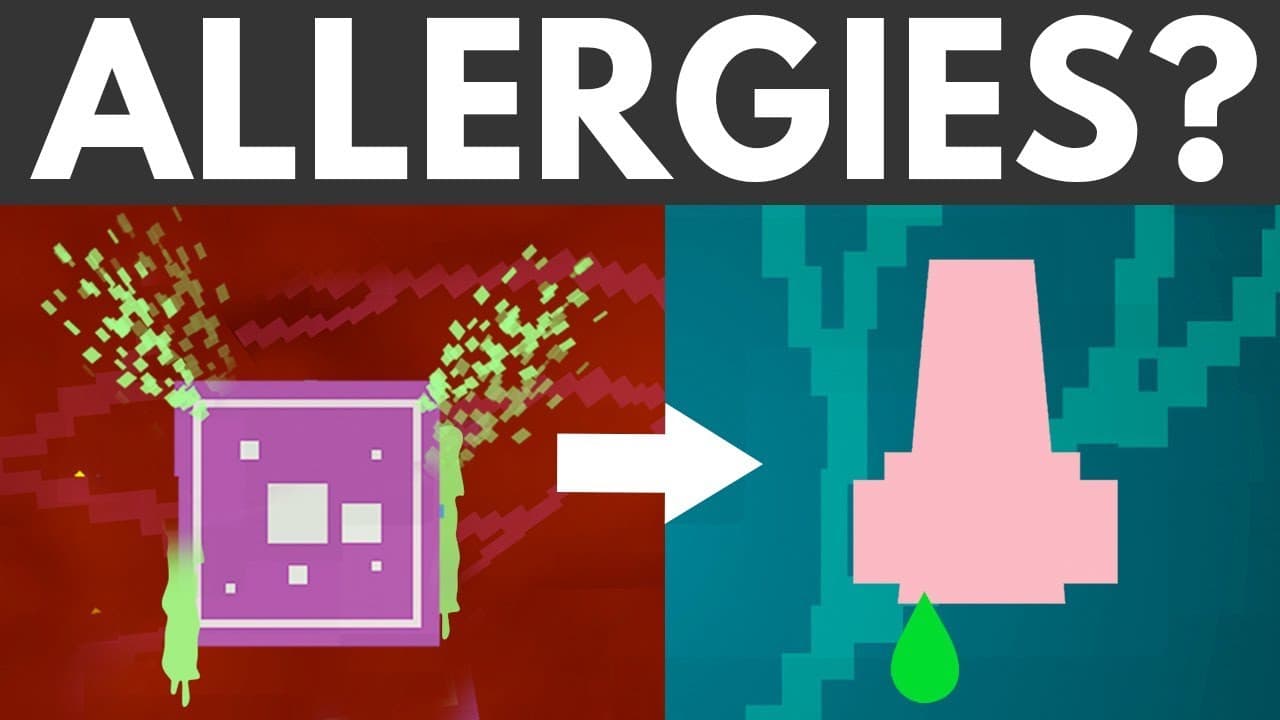
Allergies are caused by the immune system's reaction to allergens, triggering a series of responses such as sneezing and itching.
Transcript
Hey there and welcome to Life Noggin. When you picture allergies, you may imagine someone sneezing, coughing, and itching on a beautiful spring day. Or perhaps you think of someone accidentally eating peanuts or shellfish and going into anaphylactic shock. Whatever the case may be, allergies are a serious problem for many millions of people. But ho... Read More
Key Insights
- 😋 Allergies involve the immune system's response to allergens, which can include pollen, dust, or food substances.
- 🖐️ Immunoglobulin E plays a crucial role in triggering allergic reactions by binding to allergens and initiating immune responses.
- 😃 Histamines released during an allergic reaction are responsible for common symptoms like watery eyes, runny nose, and congestion.
- 🍻 The development of allergies can be linked to the immune system mistaking allergens for parasites or perceiving them as threats.
- 😣 Severe allergic reactions are an exaggerated response of the immune system and can be life-threatening.
- ⚠️ Allergic reactions may have evolved as a protective mechanism to warn us of potentially dangerous situations or substances.
- 🤔 Recent research suggests that allergens may be more harmful than previously thought, leading to a stronger immune response to remove them from the body.
Install to Summarize YouTube Videos and Get Transcripts
Explore YouTube Video Summarizer or Get YouTube Transcript Extractor
Questions & Answers
Q: How does the immune system react to allergens?
When an allergen enters the body, immune cells release immunoglobulin E, which activates mast cells and triggers the release of histamines. This reaction leads to allergy symptoms.
Q: Why do some allergies cause severe reactions?
Severe allergic reactions are an overactive response of the immune system. It can be due to the presence of dangerous allergens or a heightened immune response to harmless allergens.
Q: Why do allergies develop in the first place?
One theory suggests that the immune system may mistake allergens for parasitic worms and launch a defensive attack. Another theory proposes that allergens were once a threat to our ancestors, leading to the development of allergic reactions as a protective mechanism.
Q: Are allergies helpful in any way?
Allergic reactions can serve as a warning mechanism, alerting us to potentially dangerous situations or substances. They may prompt us to avoid certain areas or objects that could pose a threat.
Summary & Key Takeaways
-
Allergies involve the immune system's response to allergens, whether they are pollen, bee stings, or food substances.
-
When the body encounters an allergen, immune cells release immunoglobulin E, which triggers a reaction to fight against the allergens.
-
This reaction involves the release of histamines, which lead to symptoms like watery eyes, runny nose, and congestion.
Read in Other Languages (beta)
Share This Summary 📚
Summarize YouTube Videos and Get Video Transcripts with 1-Click
Try YouTube Summary with ChatGPT & Claude or YouTube Transcript Generator
Explore More Summaries from Life Noggin 📚





Summarize YouTube Videos and Get Video Transcripts with 1-Click
Try YouTube Summary with ChatGPT & Claude or YouTube Transcript Generator