How to Achieve Google #1 Ranking with 8 SEO Steps

TL;DR
To rank number one on Google, follow an eight-step SEO process focusing on selecting the right keywords, creating unique content angles, and optimizing for user engagement. Emphasize keyword relevance over search volume and enhance your content with unique insights and data. Build topic authority and acquire high-quality backlinks to strengthen your site's overall authority.
Transcript
I'm going to show you how to rank number one in Google using a proven eight-step SEO process that helped me achieve results like this this and this if we haven't met before I'm Nathan gotch the founder of gotch SEO Academy co-founder of rankability and author of The SEO entrepreneur and since 2013 I've LED hundreds of successful SEO campaigns and t... Read More
Key Insights
- Keyword intent is crucial for conversion; prioritize commercial and transactional keywords.
- Search volume is less important than keyword relevance and conversion potential.
- Creating unique content angles helps differentiate your content from competitors.
- Visual proof and detailed content enhance credibility and engagement.
- Content optimization should focus on topics, not just keyword frequency.
- User engagement signals, like scrolling and clicking, influence Google rankings.
- Internal linking and site architecture play roles in content visibility and ranking.
- Acquiring high-quality backlinks is essential for competitive keyword rankings.
Install to Summarize YouTube Videos and Get Transcripts
Explore YouTube Video Summarizer or Get YouTube Transcript Extractor
Questions & Answers
Q: How to choose the right keywords for SEO?
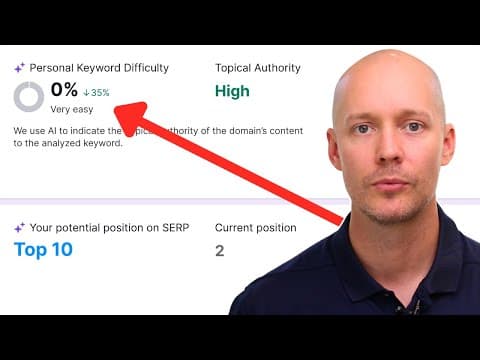
Choosing the right keywords involves considering keyword intent and relevance over search volume. Focus on commercial and transactional keywords that align with your business offerings, as these have a higher probability of conversion. Use tools like SEMrush to analyze keyword difficulty and competitor strength to ensure you're targeting feasible opportunities.
Q: Why is keyword intent important in SEO?
Keyword intent is crucial because it determines the likelihood of conversion. Commercial and transactional keywords, which indicate a user's readiness to purchase or engage with a service, are more valuable than informational keywords. Prioritizing intent helps ensure your SEO efforts drive meaningful traffic that aligns with business goals.
Q: What is a unique content angle in SEO?
A unique content angle involves creating content that stands out from competitors by offering something different, such as original data, unique insights, or visual proof. This approach not only satisfies keyword intent but also makes it difficult for competitors to replicate, helping your content maintain a competitive edge in search results.
Q: How does user engagement affect Google rankings?
User engagement, such as scrolling, clicking, and time spent on a page, influences Google rankings by signaling content quality and relevance. If users frequently exit a page quickly, it may indicate to Google that the content is not meeting their needs, potentially leading to lower rankings. Enhancing engagement through readable formats and interactive elements can improve rankings.
Q: What role does internal linking play in SEO?
Internal linking helps distribute page authority and improve content visibility within a website. By linking to new or priority content from high-traffic pages or the site's main navigation, you can enhance its discovery and indexing by search engines, ultimately supporting better rankings and site architecture.
Q: Why are backlinks important for SEO?
Backlinks are important because they signal trust and authority to search engines. High-quality backlinks from reputable sites enhance your site's credibility and can significantly improve rankings for competitive keywords. While it's possible to rank without backlinks for low-competition terms, they are essential for establishing site authority in competitive niches.
Q: How to optimize content for SEO using NLP?
Optimizing content with NLP involves focusing on topic relevance rather than keyword frequency. By analyzing top-ranking results, you can identify important phrases and topics to cover in your content. This approach ensures your content is comprehensive and relevant, avoiding over-optimization while effectively addressing search intent and improving rankability.
Q: What is the significance of topic authority in SEO?
Topic authority refers to the depth and breadth of content coverage on a specific subject within a website. Building topic authority involves creating multiple supporting assets and acquiring backlinks to establish expertise and relevance. This strategy helps improve rankings by demonstrating to search engines that your site is a trusted resource on the topic.
Summary & Key Takeaways
-
The video outlines an eight-step SEO process to achieve top Google rankings, focusing on selecting relevant keywords and understanding keyword intent for better conversion rates. It emphasizes the importance of creating unique content angles and using visual proof to enhance credibility.
-
It highlights the significance of content optimization through topic relevance rather than keyword frequency, and the impact of user engagement signals on search rankings. The video also stresses the role of internal linking and site architecture in improving content visibility.
-
Finally, it underscores the necessity of acquiring high-quality backlinks to build site authority and compete for competitive keywords, suggesting a balanced approach to link-building strategies for long-term success.
Read in Other Languages (beta)
Share This Summary 📚
Summarize YouTube Videos and Get Video Transcripts with 1-Click
Try YouTube Summary with ChatGPT & Claude or YouTube Transcript Generator
Explore More Summaries from Nathan Gotch 📚





Summarize YouTube Videos and Get Video Transcripts with 1-Click
Try YouTube Summary with ChatGPT & Claude or YouTube Transcript Generator