Average Velocity and Instantaneous Velocity
TL;DR
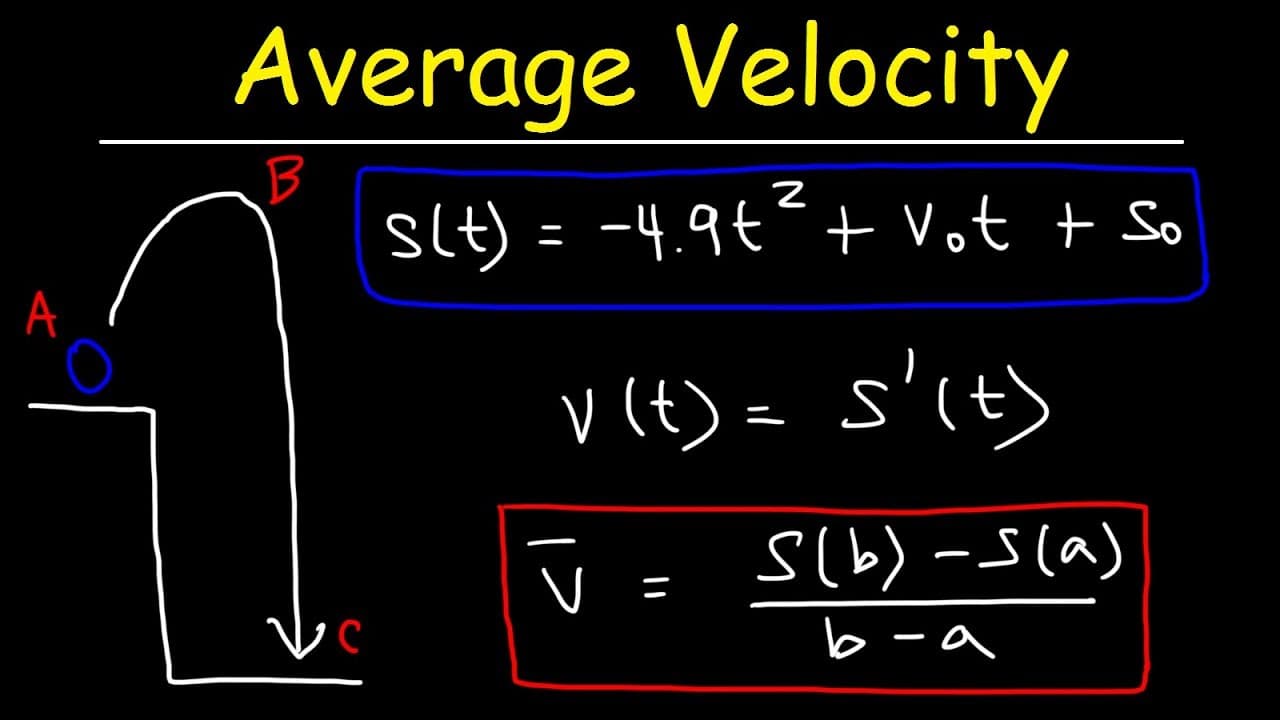
This video explains how to determine the height of a building, initial velocity, instantaneous velocity, average velocity, and time of flight of a ball using position functions and calculus concepts.
Transcript
so in this video we're going to talk about average velocity instantaneous velocity position functions and all the little questions that go with that type of problem so let's start with this one a ball is thrown straight upward from a building so let's draw a picture this is like a calculus slash projectile motion type problem so we got this ball an... Read More
Key Insights
- 🧘 Calculus concepts, such as position functions and derivatives, are essential for solving problems involving velocity and height in projectile motion.
- 👻 Evaluating position functions at specific times and using derivatives allows us to determine instantaneous velocity and initial velocity.
- 🫥 Average velocity can be used to estimate instantaneous velocity by choosing two points on an interval and calculating the slope of the secant line.
- ⌛ The time it takes for an object to hit the ground can be found by setting the position function equal to zero and solving for time.
Install to Summarize YouTube Videos and Get Transcripts
Explore YouTube Video Summarizer or Get YouTube Transcript Extractor
Questions & Answers
Q: How do we determine the height of the building in this problem?
To find the height of the building, we evaluate the position function at t=0, substituting zero for t in the equation and solving for s. The result gives us the initial height of the building.
Q: How is the initial velocity of the ball calculated using the position function?
The initial velocity is found by taking the derivative of the position function. The derivative of the position function gives us the velocity function, from which we can determine the initial velocity by substituting t=0.
Q: What does the instantaneous velocity at a certain time represent?
The instantaneous velocity at a specific time gives us the velocity of the ball at that exact moment. It can be calculated by substituting the time into the velocity function.
Q: How can we estimate the instantaneous velocity using average velocity?
By calculating the average velocity on a specific interval and choosing the midpoint of that interval, we can estimate the instantaneous velocity. The average velocity becomes closer to the instantaneous velocity as the two points used for calculating the average velocity approach the midpoint.
Q: How do we find the time it takes for the ball to hit the ground?
To determine the time of flight or the time it takes for the ball to hit the ground, we set the position function equal to zero since the height at the ground level is zero. We then solve for the time variable.
Q: Is the speed or velocity important when determining how fast the ball is moving before hitting the ground?
When considering how fast the ball is moving before hitting the ground, we are interested in its speed, which measures the magnitude of velocity. The direction of the velocity (positive or negative) does not affect the speed.
Q: At what time does the ball reach its highest point?
The ball reaches its highest point at position B, where the velocity in the y-direction is equal to zero. By setting the velocity function equal to zero and solving for time, we can find the time it takes for the ball to reach this point.
Q: How can we find the maximum height of the ball above ground level?
The maximum height is reached at position B, and we can find it by evaluating the position function when t=10 seconds. Substituting the value of t into the equation will give us the maximum height.
Summary & Key Takeaways
-
The video discusses solving problems involving average velocity, instantaneous velocity, and position functions for a ball thrown upwards from a building.
-
It explains how to determine the height of the building by evaluating the position function when time is zero.
-
The video shows how to find the initial velocity by taking the derivative of the position function.
-
It demonstrates calculating the instantaneous velocity at a specific time by substituting the time into the velocity function.
-
The video also explains how to estimate instantaneous velocity using average velocity on a given interval.
-
Lastly, it illustrates finding the time it takes for the ball to hit the ground and the maximum height it reaches.
Read in Other Languages (beta)
Share This Summary 📚
Summarize YouTube Videos and Get Video Transcripts with 1-Click
Try YouTube Summary with ChatGPT & Claude or YouTube Transcript Generator
Explore More Summaries from The Organic Chemistry Tutor 📚




Summarize YouTube Videos and Get Video Transcripts with 1-Click
Try YouTube Summary with ChatGPT & Claude or YouTube Transcript Generator