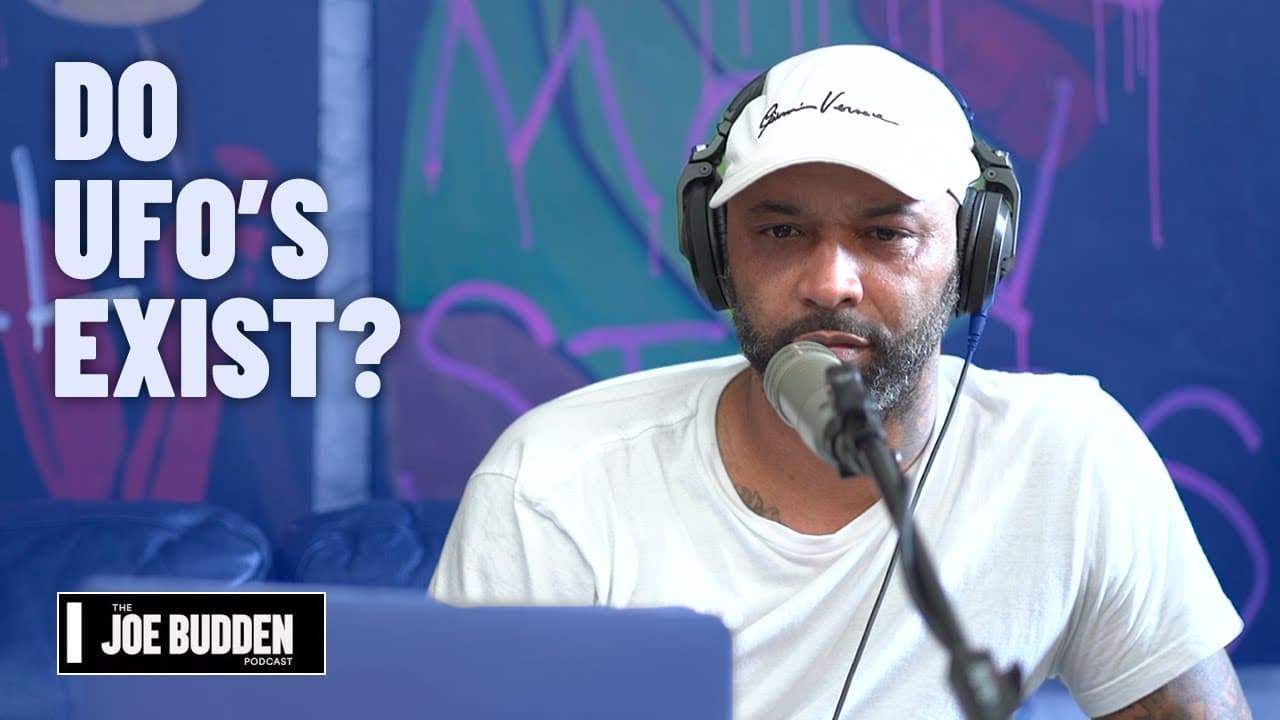
Do UFOs Exist? | The Joe Budden Podcast
TL;DR
The U.S. government acknowledges UFOs, raising questions about their implications and origin.
Transcript
what does everyone here think about the ufos oh they're not very real they confirmed it now there was a guy like a lot of y'all no more israel ufo task force i have a story here oh whenever the phone starts working the internet yeah uh you know that's what it is you gotta get this i have no internet on my phone use my um dial up password let me see... Read More
Key Insights
- 👽 The Pentagon's shift in stance towards UFOs marks a significant change in government transparency regarding UAPs.
- 🥺 UFO sightings reported by military personnel demonstrate movements and capabilities beyond current human technology, leading to concerns regarding national security.
- 💁 Public discussions suggest that government control over information is aimed at maintaining societal order and preventing widespread panic.
- 👮 A former military officer's insight advises the need for understanding UFO intentions rather than merely acknowledging their existence.
- ❓ The conversation exhibits a deepening awareness of the intertwining relationship between technology, societal norms, and governmental actions.
- 🤨 Speculation surrounding reverse-engineering of technology raises questions about human innovation influenced by external sources.
- ⌛ Broader existential reflections connect UFO discussions with contemporary issues like COVID-19 and societal upheaval, emphasizing a quest for understanding and order in chaotic times.
Install to Summarize YouTube Videos and Get Transcripts
Explore YouTube Video Summarizer or Get YouTube Transcript Extractor
Questions & Answers
Q: What recent developments have led to increased public interest in UFOs?
The Pentagon's acknowledgment of unidentified aerial phenomena (UAPs) in recent reports has heightened public interest. The Senate has called for transparency regarding sightings, breaking decades of silence and encouraging discussions around possible threats. Farewell to the previous skepticism, this acknowledgment has prompted debates about extraterrestrial life and government accountability.
Q: Why do some believe the government withholds information about UFOs?
There are theories suggesting that the government may avoid disclosing information about UFOs to prevent civil unrest. Concerns are raised that public knowledge of extraterrestrial existence could lead to societal chaos, as it challenges existing beliefs and order. The fear of public panic around the unknown is a significant factor in their reluctance to share information.
Q: What are some theories about the origins of advanced technology?
Some speculate that rapid technological advancements, particularly since the Roswell incident, might be the result of reverse-engineering alien technology. The timeline of inventions such as microchips and modern communication devices raises questions about whether these developments were influenced by encounters with UAPs. This notion suggests a connection between governmental secrecy and technological progress.
Q: How might the admission of UFOs affect religious beliefs?
The acknowledgment of extraterrestrial life could potentially destabilize established religious doctrines, which do not usually accommodate the idea of other life forms. This realization might lead individuals to question the validity of sacred texts and the role of religion as a societal control mechanism. The convergence of faith and scientific discovery poses significant philosophical dilemmas.
Summary & Key Takeaways
-
The Pentagon's recent admission of unidentified aerial phenomena (UAPs) raises public interest and concern regarding their nature and intentions, as the U.S. Senate requests more information on sightings.
-
A former military intelligence officer described his transition from skepticism to belief in UFOs, recalling fast-moving objects that exhibited unprecedented flight patterns, contributing to the discussion of UAPs as potential threats or unknown technology.
-
The conversation reflects broader themes of societal change, control mechanisms, and the government's role in managing information that could provoke civil unrest, alongside existential musings on life and technology.
Read in Other Languages (beta)
Share This Summary 📚
Summarize YouTube Videos and Get Video Transcripts with 1-Click
Try YouTube Summary with ChatGPT & Claude or YouTube Transcript Generator
Explore More Summaries from Joe Budden TV 📚




Summarize YouTube Videos and Get Video Transcripts with 1-Click
Try YouTube Summary with ChatGPT & Claude or YouTube Transcript Generator