NYC is Building Anti-Homeless Streets…
TL;DR
NYC uses hostile architecture to deter homelessness, sparking controversy.
Transcript
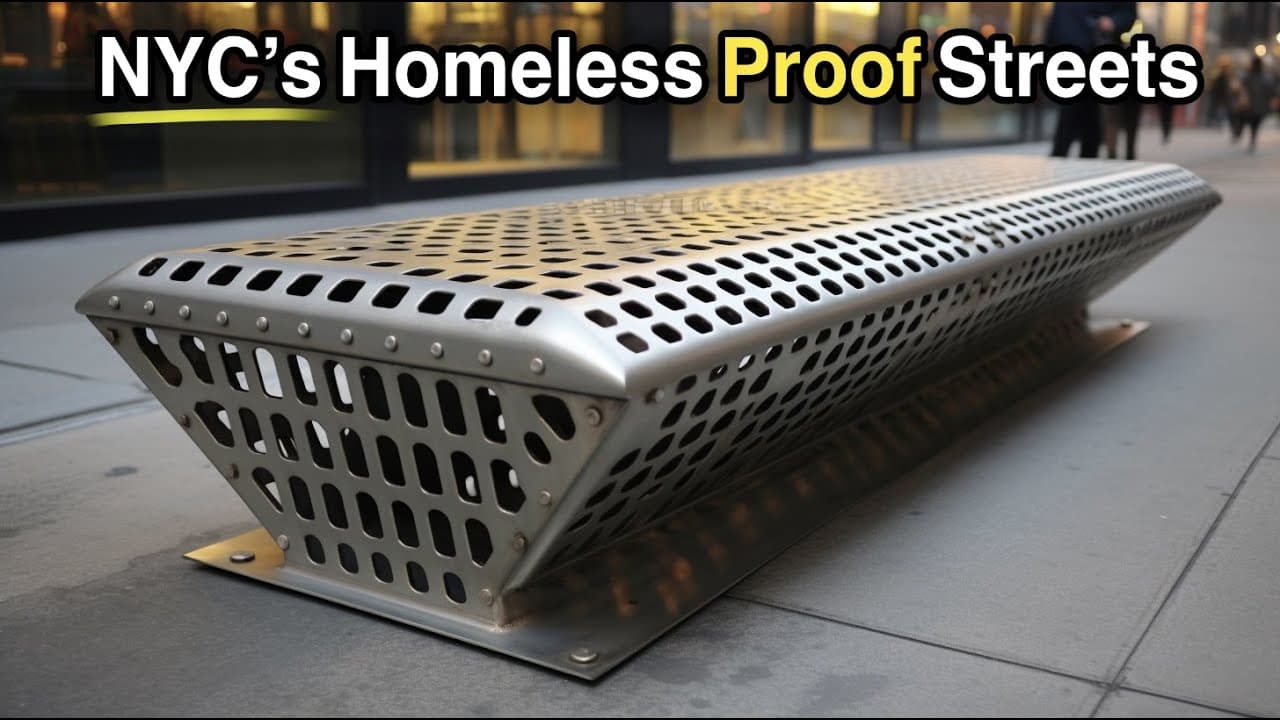
what the heck are these things and why are there five of them the goal was to prevent homeless from sleeping under this bridge instead it backlashed with outrage from the town armrests in the middle of benches to large rocks added underneath Bridges homeless Advocates call these designs hostile architecture or anti-homeless in London and Paris you ... Read More
Key Insights
- Hostile architecture refers to urban design strategies aimed at deterring certain behaviors, often impacting homeless individuals negatively.
- Examples include spikes on window sills, armrests on benches, and uneven surfaces to prevent lying down.
- Critics argue these designs are inhumane and target vulnerable populations, exacerbating the struggles of the homeless.
- The removal of subway benches in NYC led to public outrage, highlighting the balance between urban order and human dignity.
- The Moynihan Train Hall, despite its billion-dollar construction, lacks seating, pushing people to spend money in commercial areas.
- Hostile architecture is not only used indoors but also in public parks, affecting the usability and comfort of these spaces.
- The controversial designs often lead to a debate on whether urban spaces should prioritize aesthetics and order over inclusivity and comfort.
- Public backlash has sometimes resulted in the reversal of hostile designs, but often leads to more discreet implementations.
Install to Summarize YouTube Videos and Get Transcripts
Explore YouTube Video Summarizer or Get YouTube Transcript Extractor
Questions & Answers
Q: What is hostile architecture?
Hostile architecture refers to urban design strategies that deter certain behaviors, such as loitering or sleeping in public spaces. These designs often include features like spikes on surfaces, armrests on benches, and uneven surfaces, which are intended to make areas uncomfortable for extended use, particularly by homeless individuals.
Q: Why has hostile architecture sparked controversy in NYC?
Hostile architecture in NYC has sparked controversy because it is seen as targeting vulnerable populations, particularly the homeless. Critics argue that these designs are inhumane and exacerbate the struggles of those already facing hardships, while proponents claim they help maintain order and cleanliness in public spaces.
Q: What are some examples of hostile architecture in NYC?
Examples of hostile architecture in NYC include spikes on window sills, armrests on benches that prevent lying down, and uneven surfaces designed to deter sleeping. These features are often found in public parks, subway stations, and other urban areas, and are intended to discourage loitering and other behaviors deemed undesirable by city planners.
Q: How has the public reacted to hostile architecture in NYC?
The public reaction to hostile architecture in NYC has been mixed, with significant backlash from those who view it as inhumane and discriminatory against the homeless and other vulnerable groups. In some cases, public outcry has led to the reversal or modification of these designs, although cities often continue to implement them in more discreet ways.
Q: What impact does hostile architecture have on homeless individuals?
Hostile architecture significantly impacts homeless individuals by making public spaces less accessible and comfortable, often leaving them with fewer safe places to rest or seek shelter. This can exacerbate their struggles, as it limits their ability to find respite in urban environments, particularly during harsh weather conditions.
Q: How does the Moynihan Train Hall exemplify hostile architecture?
The Moynihan Train Hall exemplifies hostile architecture through its lack of seating, which forces people to stand or spend money in commercial areas to sit. Despite its billion-dollar construction, the absence of benches is a deliberate choice to deter loitering, reflecting a broader trend of prioritizing commercial interests over public comfort.
Q: What are the arguments for and against hostile architecture?
Proponents of hostile architecture argue that it helps maintain order, cleanliness, and safety in public spaces by deterring loitering and other undesirable behaviors. Critics, however, contend that it is inhumane and targets vulnerable populations, such as the homeless, by making public spaces inaccessible and uncomfortable, exacerbating their struggles.
Q: How does hostile architecture affect public parks in NYC?
In NYC, hostile architecture affects public parks by incorporating designs that discourage prolonged use and gathering. Features like awkwardly shaped benches and barriers are intended to control traffic flow and prevent loitering, but they also make parks less welcoming and comfortable for all visitors, sparking debates about the purpose and accessibility of public spaces.
Summary & Key Takeaways
-
Hostile architecture in NYC aims to deter behaviors like loitering and sleeping in public spaces, but often targets vulnerable populations such as the homeless. This has sparked controversy and debates about the morality and effectiveness of such designs.
-
Examples of hostile architecture include features like spikes, armrests on benches, and uneven surfaces. These are designed to prevent people from lying down or gathering, but critics argue they dehumanize and marginalize the needy.
-
Public outcry has occasionally led to the reversal or modification of hostile designs, but cities often continue to implement these strategies more subtly. The debate continues on how to balance urban order with humane treatment of all residents.
Read in Other Languages (beta)
Share This Summary 📚
Summarize YouTube Videos and Get Video Transcripts with 1-Click
Try YouTube Summary with ChatGPT & Claude or YouTube Transcript Generator
Explore More Summaries from Cash Jordan 📚



Summarize YouTube Videos and Get Video Transcripts with 1-Click
Try YouTube Summary with ChatGPT & Claude or YouTube Transcript Generator