How Do Banks Operate and Make Money?
TL;DR
Interest rates are the price of borrowing money, which banks use to generate profit by lending deposited funds at higher rates than they pay depositors. Banks operate on a fractional reserve system, holding only a portion of deposits in reserve while lending out the rest. This system allows banks to facilitate lending and borrowing but also introduces risks like bank runs if too many depositors demand their money simultaneously.
Transcript
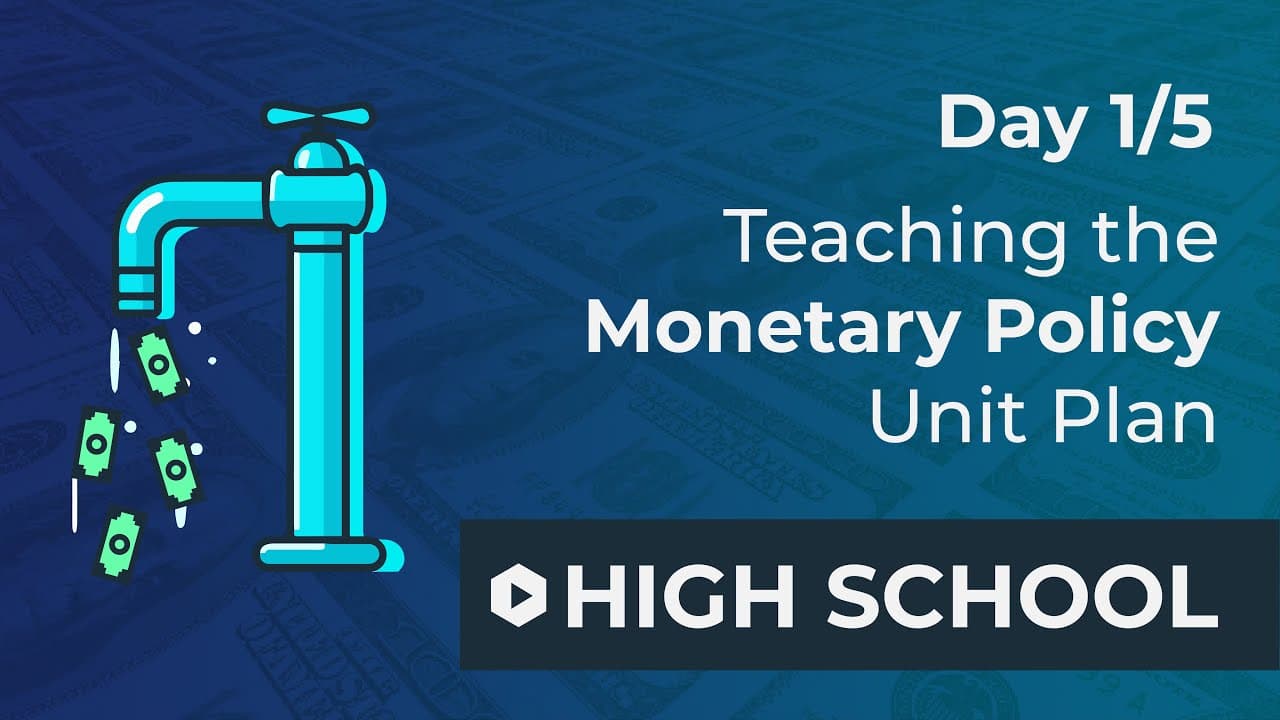
hi my name is Matt Hill I'm the curriculum designer here at mru and so these are the walkthrough videos for our monetary policy unit plan the idea with these is just to give you a sense of what we were thinking when we built um the particular day's lesson all right so in our first day what we're trying to get at is just some of the absolute Basics ... Read More
Key Insights
- Interest rates are the cost of borrowing money, calculated as a percentage of the principal loan amount.
- Banks make money by paying depositors lower interest rates than the rates they charge borrowers.
- Fractional reserve banking involves banks keeping only a fraction of deposits in reserve, lending out the remainder.
- If all depositors demand their money back at once, banks may fail due to insufficient reserves.
- Bank runs occur when many depositors withdraw funds simultaneously, fearing bank insolvency.
- The risk of bank runs is heightened by social media, which can rapidly spread rumors about a bank's stability.
- Banks play a crucial role in connecting lenders and borrowers, facilitating economic activity.
- The fractional reserve system is inherently risky, but it also enables banks to provide essential financial services.
Install to Summarize YouTube Videos and Get Transcripts
Explore YouTube Video Summarizer or Get YouTube Transcript Extractor
Questions & Answers
Q: How do banks make money?
Banks make money by lending out the funds deposited by customers at higher interest rates than they pay to those customers. This difference between the interest paid on deposits and the interest charged on loans is known as the interest margin, which constitutes the bank's profit. Banks also charge fees for various services, contributing to their revenue.
Q: What is a fractional reserve banking system?
A fractional reserve banking system is where banks keep only a fraction of their depositors' funds in reserve, lending out the remainder to borrowers. This system allows banks to create credit and facilitate economic activity, but it also introduces risks, such as the possibility of bank runs if too many depositors demand their money back simultaneously.
Q: What is an interest rate?
An interest rate is the cost of borrowing money, typically expressed as a percentage of the principal loan amount. It represents the fee paid by borrowers to lenders for the use of their funds. Interest rates can vary based on factors such as the loan duration, borrower creditworthiness, and prevailing economic conditions.
Q: Why are bank runs risky for banks?
Bank runs are risky because they involve a large number of depositors withdrawing their funds simultaneously, often due to fears about the bank's solvency. Since banks operate on a fractional reserve basis, they may not have enough liquid assets to meet all withdrawal requests, leading to potential insolvency and collapse if the situation is not managed properly.
Q: How do interest rates affect borrowing and lending?
Interest rates affect borrowing and lending by influencing the cost of credit. Higher interest rates increase the cost of borrowing, potentially reducing consumer and business demand for loans. Conversely, lower interest rates make borrowing cheaper, encouraging spending and investment. Interest rates also impact savings, as higher rates offer better returns for depositors.
Q: What role do banks play in the economy?
Banks play a crucial role in the economy by facilitating the flow of funds between savers and borrowers. They provide credit to individuals and businesses, support investment and consumption, and help manage financial risk. By offering a range of financial services, banks contribute to economic growth and stability, acting as intermediaries in the financial system.
Q: How can social media impact bank runs?
Social media can impact bank runs by rapidly spreading information, whether accurate or not, about a bank's financial health. This can lead to panic among depositors, prompting them to withdraw their funds en masse. The speed and reach of social media can exacerbate the situation, increasing the likelihood of a bank run and the potential for financial instability.
Q: What is the purpose of the bank run simulation game?
The bank run simulation game is designed to illustrate the dynamics and risks of fractional reserve banking. By simulating investment decisions and potential bank runs, students can understand how banks manage deposits and loans, the consequences of financial decisions, and the importance of maintaining adequate reserves. The game highlights the delicate balance banks must maintain to ensure stability.
Summary & Key Takeaways
-
Interest rates represent the cost of borrowing money, and banks profit by lending at higher rates than they pay on deposits. This lesson introduces students to the concept of interest rates and how banks generate income through lending. Students engage in activities to understand these concepts practically.
-
Banks operate using a fractional reserve system, which allows them to lend out most of the deposits they receive while keeping only a small reserve. This system helps facilitate lending and borrowing but poses risks like bank runs, where simultaneous withdrawals can lead to bank failures.
-
A bank run occurs when many depositors withdraw their money simultaneously, often due to fears of insolvency. The lesson uses historical and recent examples, such as the 2023 Silicon Valley Bank incident, to illustrate the risks and dynamics of fractional reserve banking in a modern context.
Read in Other Languages (beta)
Share This Summary 📚
Summarize YouTube Videos and Get Video Transcripts with 1-Click
Try YouTube Summary with ChatGPT & Claude or YouTube Transcript Generator
Explore More Summaries from Marginal Revolution University 📚

Summarize YouTube Videos and Get Video Transcripts with 1-Click
Try YouTube Summary with ChatGPT & Claude or YouTube Transcript Generator