How to Read Stock Charts for Better Investing Decisions
TL;DR
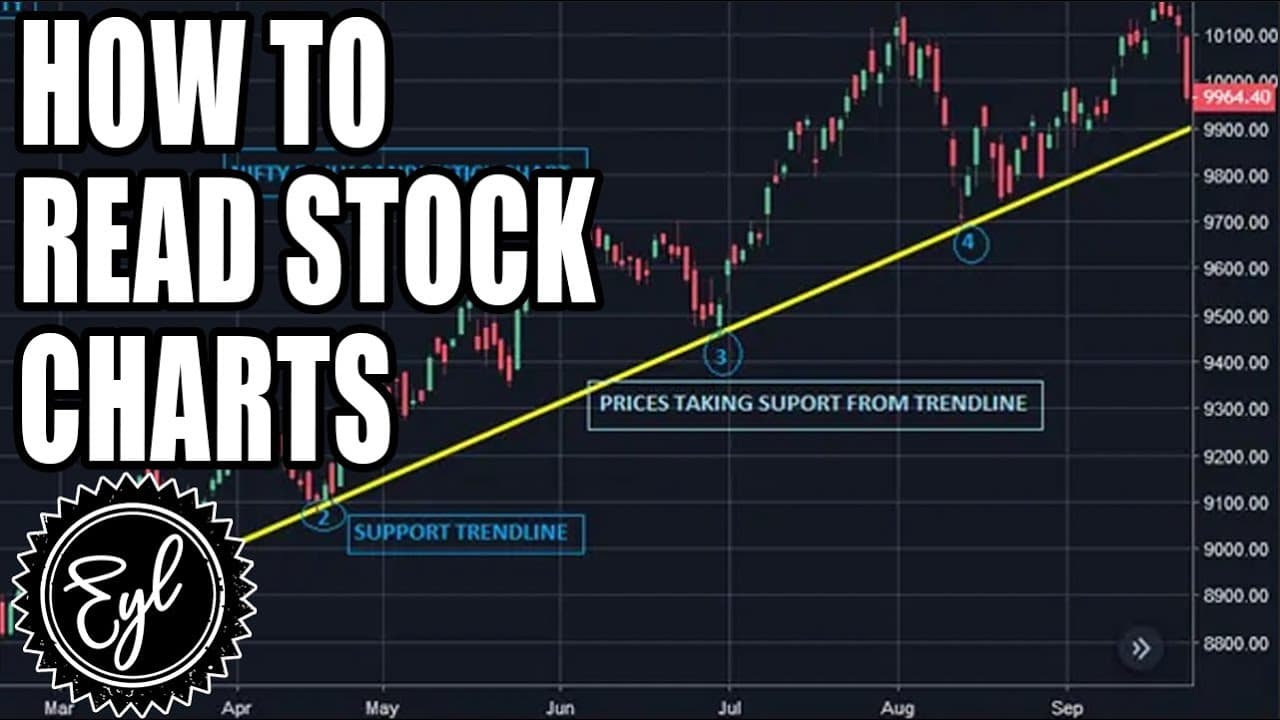
To effectively read stock charts and make informed investment decisions, focus on long-term trends using moving averages and Fibonacci retracements. Always assess the five-year and ten-year performance to identify buying opportunities, and avoid making emotional trading decisions to achieve generational wealth.
Transcript
so you guys have been asking me forever to go through charts so i want to save all the cute slides and let's get right to it tonight about how to chart so but first before we do that homework time type yes in chat if you actually went over the last week and studied what happened in the last 47 recessions type yes if you did know if you didn't if yo... Read More
Key Insights
- 🍝 It's essential to study past recessions and historical market trends to make more informed investment decisions.
- 🍉 Reading charts requires focusing on the long-term trend rather than short-term fluctuations.
- 😥 Using specific indicators like moving averages and Fibonacci retracements can help identify potential entry and exit points.
- 🥺 Embracing a long-term investing approach can lead to achieving generational wealth.
- 🥹 Holding onto stocks for extended periods allows for the benefits of compounding and market trends to accumulate.
- 🏛️ Real estate and stock market values are interconnected, as both asset classes are influenced by similar market forces.
- ⚾ Emotional decision-making should be avoided in trading, as successful trading is based on mathematical calculations.
Install to Summarize YouTube Videos and Get Transcripts
Explore YouTube Video Summarizer or Get YouTube Transcript Extractor
Questions & Answers
Q: Why is it important to study past recessions and historical market trends?
Studying past recessions helps us understand how the market behaves in different economic conditions and enables us to make more informed decisions in the current market environment. Historical trends provide valuable insights into potential market movements.
Q: How can moving averages help with chart analysis?
Moving averages smooth out price patterns and indicate the general direction of a stock's movement. They help identify potential entry points by highlighting levels of support or resistance. The 72-period moving average, in particular, is mentioned as a useful indicator.
Q: What is the significance of Fibonacci retracements?
Fibonacci retracements are a popular tool used to identify potential price levels where a stock may reverse its trend and resume its upward movement. These levels are generated by drawing horizontal lines at key Fibonacci ratios (such as 50% and 61.8%) between a stock's high and low points.
Q: How long should one hold onto stocks for generational wealth?
The presenter emphasizes the importance of holding stocks for the long term, ideally for 20 to 30 years or even longer. This mindset ensures that the potential benefits of compounding and long-term market trends can be fully realized.
Summary & Key Takeaways
-
The presenter emphasizes the importance of studying past recessions and understanding historical trends to make informed decisions in the current market.
-
Charts provide valuable insights into stock performance, and it is crucial to focus on the long-term trend rather than short-term fluctuations.
-
Specific techniques, such as using moving averages and Fibonacci retracements, can help identify potential entry points for buying stocks.
Read in Other Languages (beta)
Share This Summary 📚
Summarize YouTube Videos and Get Video Transcripts with 1-Click
Try YouTube Summary with ChatGPT & Claude or YouTube Transcript Generator
Explore More Summaries from Earn Your Leisure 📚



Summarize YouTube Videos and Get Video Transcripts with 1-Click
Try YouTube Summary with ChatGPT & Claude or YouTube Transcript Generator