John Jonchuck Trial Day 4 Part 4
TL;DR
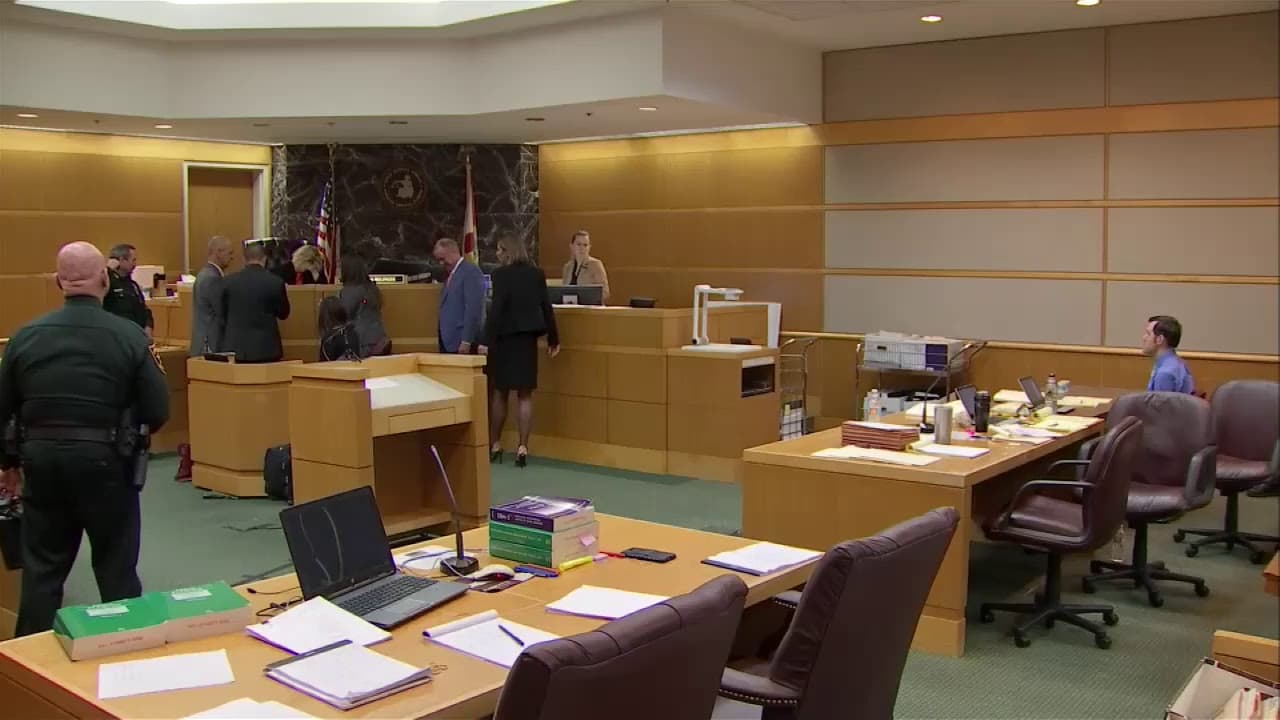
Forensic psychiatrist provides testimony on the mental health diagnosis and treatment of the defendant in a criminal case.
Transcript
okay and everybody ready who's the next witness Williams would stand right here for a moment please this clerk are you running - yes my name is George Randolph Williams MD I am employee of the North Florida valuation and treatment center in Gainesville Florida how long have you worked there approximately 8 years you mentioned MD at the end of your ... Read More
Key Insights
- ❓ The witness testifies to diagnosing the defendant with schizoaffective disorder, a more complex diagnosis than schizophrenia.
- 🖐️ Medication plays a crucial role in managing mental illness symptoms and stabilizing individuals.
- 🎚️ The witness discusses the correlation between stress levels and symptom intensity, as well as the importance of compliance with medication.
- 😤 The treatment team works together to address symptoms and adjust treatment plans accordingly.
Install to Summarize YouTube Videos and Get Transcripts
Explore YouTube Video Summarizer or Get YouTube Transcript Extractor
Questions & Answers
Q: What is the difference between schizophrenia and schizoaffective disorder?
Schizophrenia is characterized by cognitive impairment, thought disturbances, hallucinations, and paranoia. Schizoaffective disorder includes symptoms of schizophrenia along with mood disorder symptoms such as depression or mania.
Q: How does board certification work for psychiatrists?
Completion of a residency program qualifies psychiatrists for general board certification. Additional testing, both oral and written, is required for specialty certification, such as forensic psychiatry.
Q: How does medication help manage mental illness symptoms?
Medication, such as antipsychotics and mood stabilizers, aims to reduce symptomology and stabilize individuals. The effectiveness of medication can be determined by a reduction in frequency and intensity of symptoms, including hallucinations.
Q: What is malingering, and how do you address it at the treatment center?
Malingering refers to feigning or exaggerating symptoms of mental illness. If there are suspicions of malingering, a battery of tests can be administered to assess the validity of symptoms reported by the individual.
Summary & Key Takeaways
-
The witness, George Randolph Williams MD, is a board-certified psychiatrist specializing in forensic psychiatry.
-
He testifies to diagnosing the defendant with schizophrenia, later amended to schizoaffective disorder with bipolar type.
-
The witness explains the role of board certification and the American Board of Psychiatry in certifying psychiatrists.
-
Williams provides information on the admission process and treatment protocol at the North Florida evaluation and treatment center.
-
He highlights the importance of medication and the gradual adjustment of dosage to manage symptoms.
-
The witness clarifies that treatment does not cure mental illness, but aims to reduce symptoms and stabilize the individual.
-
He discusses the correlation between stress levels and symptom intensity, as well as the importance of compliance with medication and avoiding malingering.
Read in Other Languages (beta)
Share This Summary 📚
Summarize YouTube Videos and Get Video Transcripts with 1-Click
Try YouTube Summary with ChatGPT & Claude or YouTube Transcript Generator
Explore More Summaries from Law&Crime Network 📚




Summarize YouTube Videos and Get Video Transcripts with 1-Click
Try YouTube Summary with ChatGPT & Claude or YouTube Transcript Generator