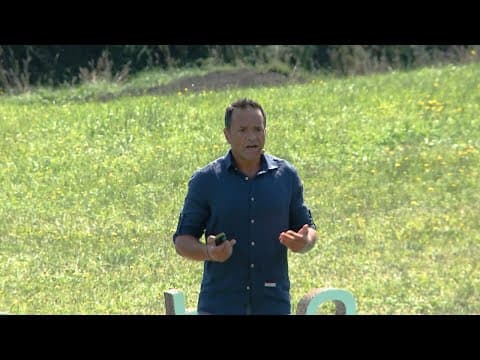
Breaking the Cycle of Hunger and Malnutrition in Africa | Carol Ibe | TEDxOxford

TL;DR
Despite Africa's wealth in resources, millions of people on the continent suffer from hunger due to challenges in agriculture. Investing in indigenous crops and supporting smallholder farmers can help achieve food security and end poverty in Africa.
Transcript
[Applause] imagine a world free of hunger where everyone had equal access to enough food good nutrition clean water and basic health care no matter where they live imagine a world where every child had equal access to good quality education and did not have to worry about learning or going to bed on an empty stomach a world where women in poor comm... Read More
Key Insights
- 😋 One in five Africans go to bed hungry, and over 140 million people in Africa are severely food insecure.
- 🌍 Africa has abundant resources, including 60% of the world's arable land and 30% of mineral reserves.
- 🥹 Indigenous crops hold cultural, nutritional, and economic value, but research investment has been historically biased.
- 🧑🌾 African smallholder farmers need support and infrastructure to maximize the potential of indigenous crops.
- 👨🔬 The JAROBIOTIC Foundation is working to bridge the scientific skills gap and empower African scientists in agricultural research.
Install to Summarize YouTube Videos and Get Transcripts
Explore YouTube Video Summarizer or Get YouTube Transcript Extractor
Questions & Answers
Q: Why are millions of people in Africa suffering from hunger?
Hunger in Africa is caused by factors like limited food access, climate change impacts, conflicts, rising tensions, inflation, and inequalities.
Q: Why are African countries still importing food despite having abundant resources?
African countries import cereal crops due to affordability and accessibility. Indigenous crops were traditionally consumed, but imported cereals have dominated local diets.
Q: How can smallholder farmers be empowered to grow indigenous crops?
Smallholder farmers need adequate land, water, organic fertilizers, agrochemicals, and support from governments and organizations to grow indigenous crops.
Q: Why should research and development prioritize indigenous crops in Africa?
Indigenous crops have cultural significance, nutritional value, and resilience to local conditions. Research investment is needed to improve productivity and diversify indigenous crops.
Q: How can the United Nations' sustainable development goals be achieved in Africa?
Long-term sustainable investments in research, development, and infrastructure are crucial, along with empowering smallholder farmers and investing in African research institutions.
Summary & Key Takeaways
-
Many people in food-insecure communities in Africa go to bed hungry due to limited access to food and nutrition, exacerbated by climate change, conflicts, and inequalities.
-
African countries import billions of dollars worth of cereal crops each year, but indigenous crops have been overlooked and undervalued.
-
Investing in research, development, and support for smallholder farmers and indigenous crops can lead to sustainable food systems and improved livelihoods in Africa.
Read in Other Languages (beta)
Share This Summary 📚
Summarize YouTube Videos and Get Video Transcripts with 1-Click
Try YouTube Summary with ChatGPT & Claude or YouTube Transcript Generator
Explore More Summaries from TEDx Talks 📚





Summarize YouTube Videos and Get Video Transcripts with 1-Click
Try YouTube Summary with ChatGPT & Claude or YouTube Transcript Generator