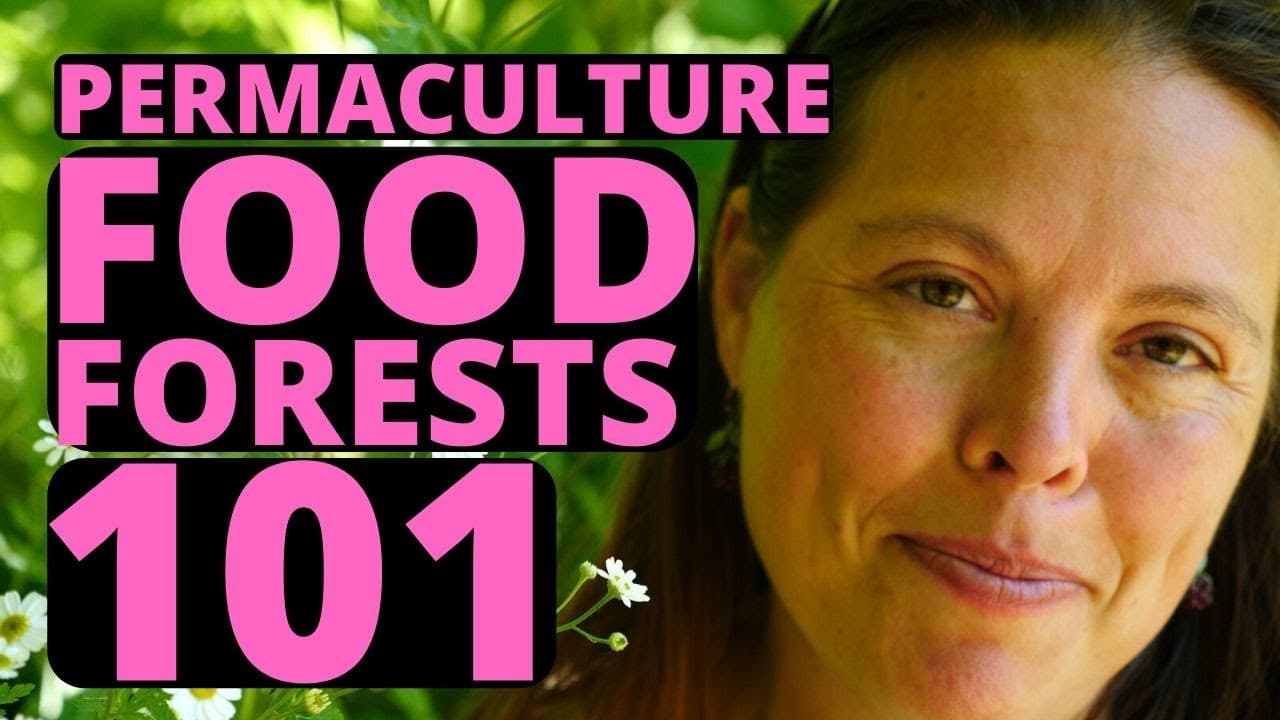
Permaculture Food Forests 101
TL;DR
Learn how to cultivate a diverse and sustainable garden through permaculture food forests with Oregon State University's online course.
Transcript
imagine yourself surrounded by a lush forest filled with all the plants that support your life as you wander through the vegetation you find sweet fruit at perfect ripeness glistening in the Sun the air feels cool despite the heat of the summer fresh fragrance wafts on the breeze buzzing insects hover over flowers birds sing between the branches of... Read More
Key Insights
- 😋 Permaculture food forests offer a sustainable and regenerative approach to gardening that supports biodiversity and local food production.
- 😋 The online course by Oregon State University provides comprehensive education on permaculture food forests, including plant selection, design, and implementation.
- 😋 There is a growing movement of food forests worldwide, from home gardens to public spaces, with the aim of creating abundant and resilient landscapes.
- 🌱 The course utilizes tools such as the natural capital plant database to assist participants in selecting plants suited to their specific climate and region.
- 😋 Permaculture food forests not only provide food but also contribute to carbon storage in the soil, mitigating climate change impacts.
- 👾 The course is self-paced and includes exercises to help participants build their plant selection and design skills.
- 🎨 Expert instructors provide guidance and feedback in the design phase, using custom-made worksheets, templates, and spreadsheets.
Install to Summarize YouTube Videos and Get Transcripts
Explore YouTube Video Summarizer or Get YouTube Transcript Extractor
Questions & Answers
Q: What are permaculture food forests?
Permaculture food forests are intentional landscapes where plants are grown in a way that replicates natural systems, providing food, habitat, and ecosystem services.
Q: What are the benefits of permaculture food forests?
Permaculture food forests offer multiple benefits such as local food production, enhanced biodiversity, carbon storage in the soil, and the creation of beautiful and abundant landscapes.
Q: Who can benefit from the online course on permaculture food forests?
The course is suitable for anyone interested in sustainable gardening, from homeowners and gardeners to schools, businesses, and public spaces looking to create productive and ecologically valuable landscapes.
Q: What can participants expect to learn from the online course?
Participants will learn how to select plants suitable for their climate, design a food forest, and cultivate a thriving garden using permaculture principles. The course provides expert guidance, exercises, and tools for participants to develop their own food forest.
Summary & Key Takeaways
-
Permaculture food forests are intentional landscapes that support both nature and people, providing local food and enhancing biodiversity.
-
The course offered by Oregon State University focuses on developing plant communities for different climates and designing personalized food forests.
-
Participants will have access to over 40 educational videos and tools such as the natural capital plant database to learn and implement permaculture principles.
Read in Other Languages (beta)
Share This Summary 📚
Summarize YouTube Videos and Get Video Transcripts with 1-Click
Try YouTube Summary with ChatGPT & Claude or YouTube Transcript Generator
Explore More Summaries from Andrew Millison 📚



Summarize YouTube Videos and Get Video Transcripts with 1-Click
Try YouTube Summary with ChatGPT & Claude or YouTube Transcript Generator