Why is Card Draw Overpowered? | Card Game Design
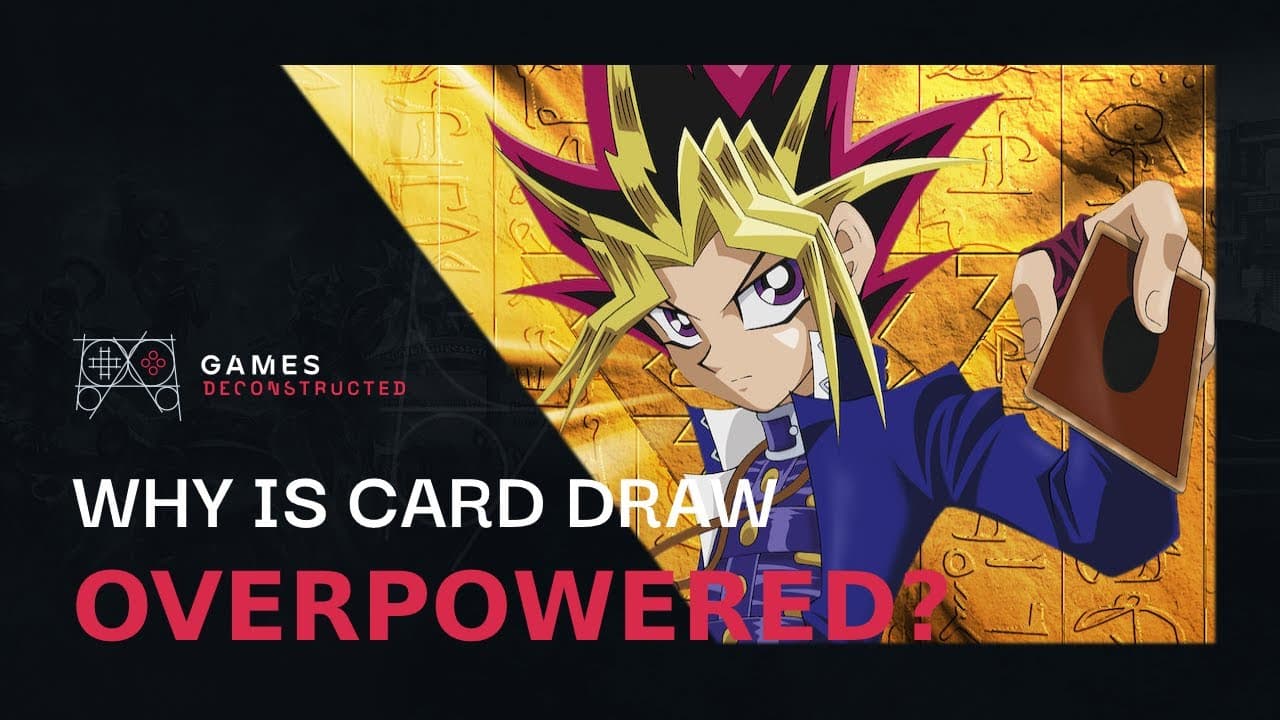
TL;DR
Drawing cards in games is a valuable resource that can give players more options, improve their strategies, and increase the likelihood of winning.
Transcript
this is a card so powerful that it's been banned for 15 years this card is considered part of the power 9 a collection of the most powerful cards ever printed in magic the gathering this card is considered ester by virtually all slate aspire tier lists well this one is just okay hello there ladies and gentlemen i'm simon from games deconstructed an... Read More
Key Insights
- 🃏 Having more cards than your opponent in card games allows you to do more and gives you an advantage.
- 🧮 Card draw is a valuable resource as it allows you to increase the number of cards available to you, making you better equipped to handle any situation.
- 🔁 The snowball effect in card games means that the player who assembles or feeds their engine first will outpace their opponent and potentially disallow them from using their own engine.
- 🖐️ Having a variety of cards in your hand allows you to make better sequencing decisions and have more powerful combinations, increasing your chances of winning.
- 🔮 Some card games rely on card draw to make strategies more reliable, and the number of cards drawn affects the reliability of certain strategies.
- 🔢 Sequencing is important in card games, and having more cards in hand gives you more options and greater chances of finding the best sequencing.
- ⚖️ Balancing card draw can be challenging for game developers, as they need to consider the impact of drawing cards on overall game balance and strategy.
- 💸 Ascribing a cost to card draw creates trade-offs for players, forcing them to consider the value of drawing cards compared to playing other cards with known effects.
Install to Summarize YouTube Videos and Get Transcripts
Explore YouTube Video Summarizer or Get YouTube Transcript Extractor
Questions & Answers
Q: Why is card draw important in games?
Card draw is important in games because it allows players to have more options and flexibility in their strategies. By drawing more cards, players can increase their chances of finding the specific cards they need to win.
Q: How does having more cards than your opponent give you an advantage?
Having more cards than your opponent gives you an advantage because it allows you to have a wider variety of options and resources at your disposal. You can adapt to different situations more easily and potentially outmaneuver your opponent.
Q: What are some ways to balance card draw mechanics?
Balancing card draw mechanics can be done by assigning a cost to drawing cards, introducing hand permanency or discarding unused cards, implementing impulsive draw mechanics with limited usability, or incorporating negative consequences for drawing too many cards, such as running out of cards in your deck or facing penalties.
Q: Why do some games limit the number of copies of a card in a deck?
Limiting the number of copies of a card in a deck promotes diversity and variety in gameplay. It prevents players from relying too heavily on a single powerful card and encourages them to explore different strategies and combinations.
Q: How can card draw mechanics be used strategically?
Card draw mechanics can be used strategically by timing when to draw cards, considering the impact of drawing cards versus playing existing cards, and sequencing cards to maximize effectiveness. It requires careful decision-making and weighing the benefits and drawbacks of drawing cards in different situations.
Q: How can negative consequences be implemented for drawing cards?
Negative consequences for drawing cards can be implemented by linking deck size to health points, introducing enemies or opponents that punish excessive card draw, or having a condition where drawing too many cards leads to negative effects or penalties. These consequences add a risk-reward element to card draw mechanics.
Q: What role does hand permanency play in card draw mechanics?
Hand permanency refers to the ability to retain certain cards in your hand beyond the current turn. It can act as a balancing factor in card draw mechanics by requiring players to make strategic decisions on which cards to keep, discard, or play, considering their long-term usefulness and immediate impact.
Summary & Key Takeaways
-
Card draw is a powerful resource in games, allowing players to have more options and make better decisions.
-
Having more cards than your opponent can give you a significant advantage and increase your chances of winning.
-
Balancing card draw mechanics is crucial, and factors such as cost, hand permanency, and potential negative effects can play a role.
Read in Other Languages (beta)
Share This Summary 📚
Summarize YouTube Videos and Get Video Transcripts with 1-Click
Try YouTube Summary with ChatGPT & Claude or YouTube Transcript Generator
Explore More Summaries from Games Deconstructed 📚

Summarize YouTube Videos and Get Video Transcripts with 1-Click
Try YouTube Summary with ChatGPT & Claude or YouTube Transcript Generator