Are Science and Religion Compatible? | Big Think

TL;DR
The relationship between science, faith, and design in the United States is complex, but a healthy dialogue and engagement are necessary to address extreme views and find a middle ground.
Transcript
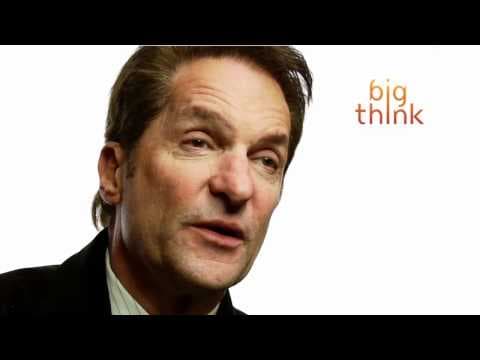
I think it's more of a a problem in the United States than it is other places I mean there's some places where science is less of an issue and there's other places where faith is less of an issue but in the United States it's very nicely Dux toos and I think it's actually a very good Dynamic I I think if I were what I I think part of the problem is... Read More
Key Insights
- 🇺🇸 The United States experiences a unique concentration of conflicts and extremes regarding the relationship between science, faith, and design.
- 🫵 Focusing on extreme views hinders progress and meaningful dialogue, impeding the understanding between science and religion.
- 🤗 There is a need for open-mindedness, critical thinking, and a willingness to admit uncertainty to bridge the gap between science and faith.
- 🔬 Scientists sometimes have faith in the positive impacts of science, but it is important to approach science with both skepticism and an appreciation for its potential benefits.
- 🌍 Embracing both the natural and synthetic aspects of the world is crucial, but it requires a deep understanding of ecology and personal diversity.
- 🫵 The coexistence of science and religion is possible when they are viewed as complementary rather than contradictory.
- 🖐️ Education plays a vital role in improving the relationship between science, faith, and design, by fostering knowledge about ecology and encouraging engagement in meaningful dialogue.
Install to Summarize YouTube Videos and Get Transcripts
Explore YouTube Video Summarizer or Get YouTube Transcript Extractor
Questions & Answers
Q: Why is the relationship between science, faith, and design more problematic in the United States compared to other countries?
The United States experiences a higher intensity of conflicts due to the influence of extreme views, making it difficult to find common ground and engage in meaningful dialogue.
Q: What is the suggested solution to improve the relationship between science and religion?
Finding a middle ground requires acknowledging uncertainty, admitting when we don't know something, and teaching both scientific and faith-based perspectives in schools to encourage critical thinking.
Q: Can science and religion coexist without compromising each other?
Yes, science and religion can coexist when there is an understanding that they serve different purposes. Science deals with the physical world, while religion focuses on spiritual beliefs and values.
Q: How can politicians and individuals become more knowledgeable about ecology and their environment?
By prioritizing ecological education and raising awareness about personal diversity and the interconnections between humans and the natural world, politicians and individuals can make more informed decisions.
Summary & Key Takeaways
-
The United States faces unique challenges regarding the intersection of science, faith, and design, with extremes on both ends of the spectrum.
-
There is a need for more open-mindedness and an acknowledgment of uncertainty in scientific education, including the possibility of intelligent design.
-
A well-informed dialogue between science, religion, and the general public is crucial for embracing the natural world, synthetic advancements, and ecological intelligence.
Read in Other Languages (beta)
Share This Summary 📚
Summarize YouTube Videos and Get Video Transcripts with 1-Click
Try YouTube Summary with ChatGPT & Claude or YouTube Transcript Generator
Explore More Summaries from Big Think 📚



Summarize YouTube Videos and Get Video Transcripts with 1-Click
Try YouTube Summary with ChatGPT & Claude or YouTube Transcript Generator