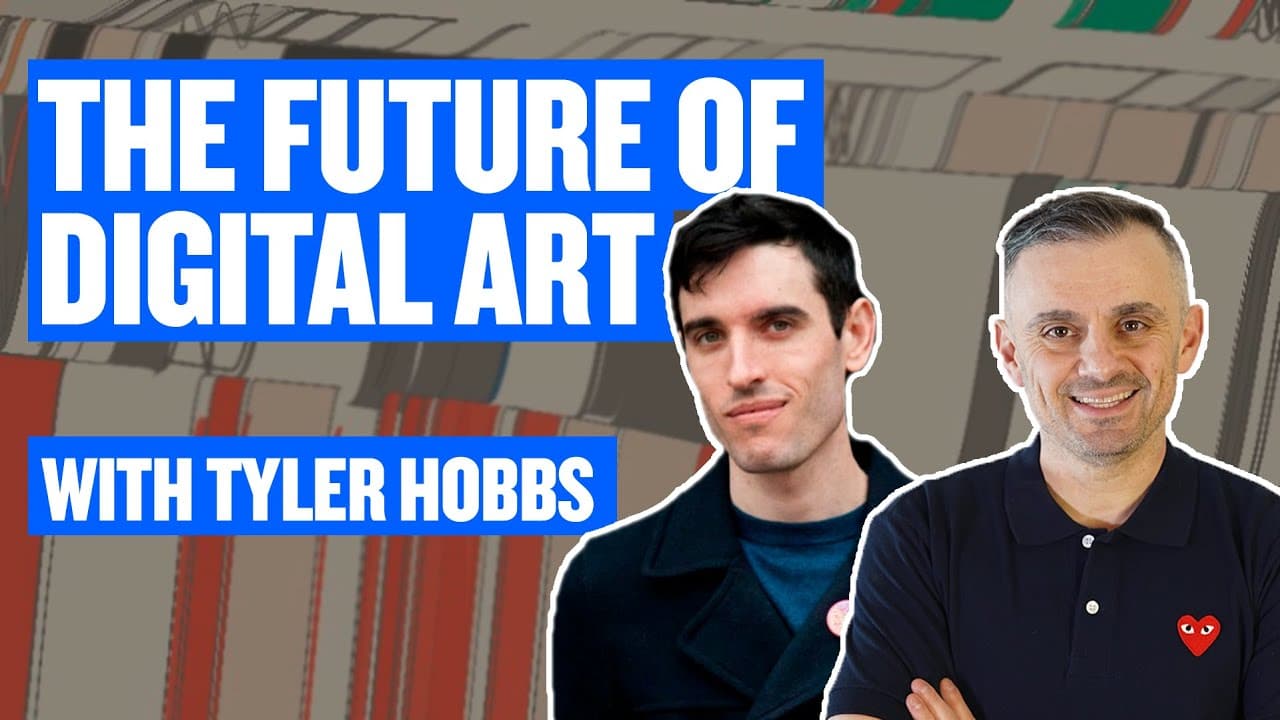
How Physical Items Will Be Tied To NFTs | GVAE With Tyler Hobbs
TL;DR
Tyler discusses his journey as a generative artist and the explosion of his NFT project, Fidenza, which has garnered high sales and recognition in the art world.
Transcript
there's not anything in the world that is art today that wasn't originally [ __ ] on by the prior art thing the garyvee audio experience podcast nation let me just say this very simply this is one of the most selfish podcasts in the history of the garyvee audio experience because i want to be able to have my grandkids ask me what it was like to kno... Read More
Key Insights
- 🥰 Generative art is gaining recognition and popularity, thanks to technological advancements and tools like processing and art blocks.
- 👻 NFTs provide a transparent and accessible marketplace for artists, allowing them to reach a wider audience and share their work more easily.
- 🧑🎨 The transition from traditional art to generative art requires artists to embrace technology and make their work more personal.
- 🧑🎨 The market value of artwork may not always correlate with its quality, and artists should focus on creating meaningful and impactful pieces rather than solely chasing financial gains.
Install to Summarize YouTube Videos and Get Transcripts
Explore YouTube Video Summarizer or Get YouTube Transcript Extractor
Questions & Answers
Q: How did Tyler transition from traditional art to generative art using programming?
Tyler started as a traditional artist, but his interest in programming led him to experiment with generative art in 2014. He found it more relevant to the modern era and a way to make his art more personal.
Q: What is Fidenza, and how did it become a successful NFT project?
Fidenza is a collection of 999 unique NFTs generated from the same algorithm. It started selling at a relatively low price but gained popularity quickly, resulting in a significant increase in value over time.
Q: What are some other generative artists that have influenced Tyler's work?
Tyler mentions artists like Casey Reas, Ben Fry, Sophia Crespo, Dimitri Cherniak, Matt Delaurier, and Chettle Golid, who have been making amazing generative artwork and have had an impact on his work.
Q: How does Tyler feel about the pressure of justifying the high prices of his artwork?
While Tyler acknowledges the pressure, he believes that the market valuation of his artwork does not necessarily reflect its quality. He aims to focus on creating the best possible artwork and making ethical and intelligent decisions as an artist.
Summary & Key Takeaways
-
Tyler started as a traditional artist, but transitioned to generative art using programming in 2014.
-
He discovered NFTs in early 2021 and launched his project, Fidenza, which quickly gained popularity and saw a significant increase in value.
-
Tyler emphasizes the importance of utilizing technology in art and believes that NFTs provide a transparent and accessible marketplace for artists.
Read in Other Languages (beta)
Share This Summary 📚
Summarize YouTube Videos and Get Video Transcripts with 1-Click
Try YouTube Summary with ChatGPT & Claude or YouTube Transcript Generator