How to Discover the Joy Hidden in Our Surroundings
TL;DR
To find joy in your environment, begin by observing the physical world around you and identifying elements that elicit joy, such as bright colors and round shapes. Joy, defined as a momentary experience of positive emotion, is universally accessible and can be intentionally incorporated into design to enhance our spaces and well-being.
Transcript
It's 2008, and I'm just finishing my first year of design school. And I'm at my first year-end review, which is a form of ritual torture for design students, where they make you take everything you made over the course of the year and lay it out on a table and stand next to it while a bunch of professors, most of whom you've never seen before, give... Read More
Key Insights
- 🤔 Design school review launched a journey to understand the relationship between the physical world and joy. Physical world can be a resource in creating happier lives.
- 🏭 Joy is an intense, momentary experience of positive emotion. Joy measures feeling good in the moment, while happiness measures how good we feel over time. We overlook joy in our pursuit of happiness.
- 🔎 Certain things like cherry blossoms, bubbles, swimming pools, and ice cream cones bring universal joy across age, gender, and ethnicity. They remind us of our shared humanity and common experience of the physical world.
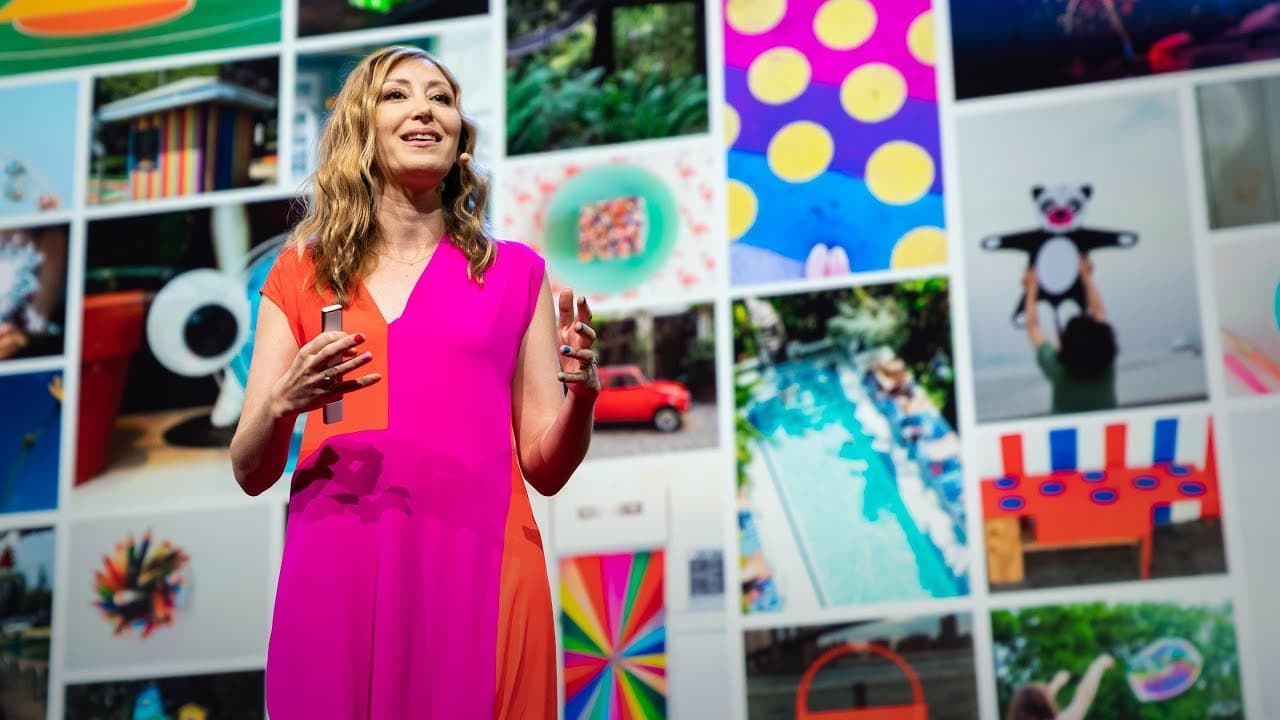
- 🌈 The aesthetics of joy can be accessed through tangible, physical attributes such as round things, bright colors, and symmetrical shapes. Joy begins with the senses.
- 😔 The world often lacks joy in its design and architecture, particularly in places that house vulnerable populations. Adults who exhibit genuine joy are often dismissed.
- 💡 People have started incorporating the aesthetics of joy into their designs to create more joyful spaces. Examples include hospitals and schools that use color and abundance to improve well-being.
- 🧠 Our love for color and round shapes is connected to our evolution. Color and abundance are signs of life and energy. Curves set us at ease, while angles evoke caution and anxiety.
- 💫 Instead of chasing after happiness, we should embrace joy and find ways to put ourselves in its path more often. Joy is directly connected to our fundamental instinct for survival and the drive toward life.
Install to Summarize YouTube Videos and Get Transcripts
Explore YouTube Video Summarizer or Get YouTube Transcript Extractor
Questions & Answers
Q: Why did the speaker feel nervous at their year-end review?
The speaker felt nervous at their year-end review because their professors remained silent for a long time after they displayed their designs on a table, which made them anxious.
Q: How do psychologists define joy?
Psychologists define joy as an intense, momentary experience of positive emotion that brings about a feeling of wanting to jump up and down. It is different from happiness, which measures overall positive emotions over time.
Q: What are some things that bring universal joy?
Some things that bring universal joy, regardless of age, gender, or ethnicity, include cherry blossoms, bubbles, swimming pools, tree houses, hot air balloons, googly eyes, and ice cream cones with sprinkles. These objects and experiences cut across lines of differences and bring joy to nearly everyone.
Q: How do aesthetics play a role in experiencing joy?
Aesthetics, which refer to the tangible, physical attributes of an object or environment, are linked to the experience of joy. The speaker discovered that aesthetics of joy include round shapes, bright colors, symmetry, a sense of abundance, a feeling of elevation, and a lightness. These patterns can help activate the senses and facilitate the experience of joy.
Q: How can the aesthetics of joy be used to create more joyful environments?
By incorporating the aesthetics of joy, such as vibrant colors and abundance, into various settings, more joy can be created. Examples include hospitals designed with bright colors, schools transformed by colorful paint, and architectural designs that feature curves and playful elements. These aesthetics have been shown to improve people's well-being, enhance their sense of safety, and foster positive emotions.
Q: Why should we embrace joy instead of solely pursuing happiness?
Joy is not merely a fleeting pleasure, but an essential aspect of our human nature and instinct for survival. Embracing joy allows us to experience life to the fullest. Rather than solely pursuing happiness, which is about feeling good over time, we should actively seek out and embrace joy in our surroundings, as it directly connects to our fundamental drive for survival.
Summary & Key Takeaways
-
The speaker reflects on their experience as a design student and their initial confusion about joy as a response to their work.
-
The speaker embarked on a 10-year journey to understand the connection between tangible things and the intangible emotion of joy.
-
The speaker found that certain patterns and attributes, such as round shapes and bright colors, can elicit feelings of joy, and these aesthetics of joy can be incorporated into design to create more joyful environments.
Read in Other Languages (beta)
Share This Summary 📚
Summarize YouTube Videos and Get Video Transcripts with 1-Click
Try YouTube Summary with ChatGPT & Claude or YouTube Transcript Generator
Explore More Summaries from TED 📚






Summarize YouTube Videos and Get Video Transcripts with 1-Click
Try YouTube Summary with ChatGPT & Claude or YouTube Transcript Generator