What Is the Carbon Cycle and Why Is It Important?
TL;DR
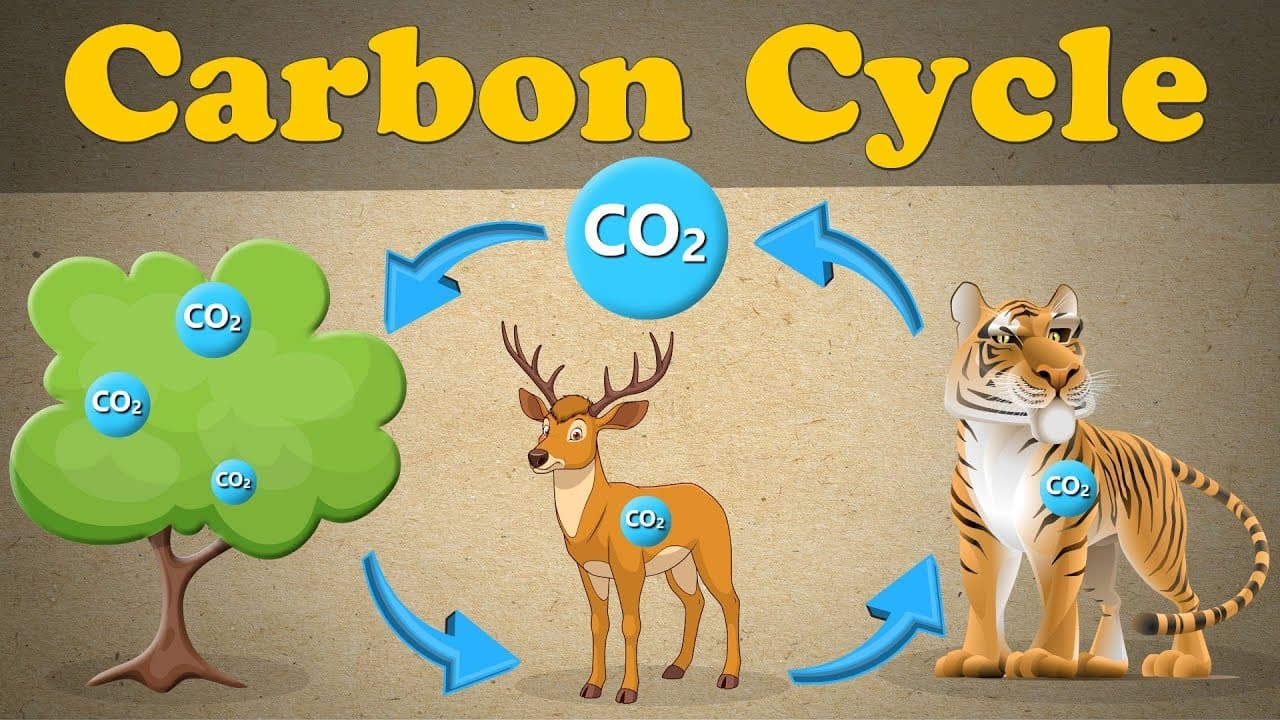
The carbon cycle is the process by which carbon is recycled between living organisms and the environment, consisting of biological and geological components. It includes photosynthesis, where plants convert carbon dioxide into glucose, and respiration, which releases carbon back into the atmosphere. This cycle is essential for maintaining life and balancing atmospheric carbon levels, but human activities have disrupted its natural processes.
Transcript
It's AumSum Time. Hey Guys. AumSum has cracked many jokes in this video. Do let us know your favorite ones. Also, there is a quiz at the end of this video. Do not miss it. Hey guys. Have you met Bosco? If we had to introduce him, how would we do it? Not in dog language AumSum. We would say Bosco lives in house number 9. Barks only at 2 p.m. and abs... Read More
Key Insights
- 🛟 Carbon is a fundamental element that is crucial for life on Earth.
- ♻️ The carbon cycle consists of the biological and geological cycles, which recycle carbon between living and non-living things.
- 🖐️ Photosynthesis in plants and respiration in organisms play important roles in the carbon cycle.
- 🏍️ Geological processes like weathering, sedimentation, and volcanic eruptions also contribute to the carbon cycle.
- 🥺 Human activities, such as burning fossil fuels and deforestation, have disrupted the carbon cycle and led to increased atmospheric carbon dioxide levels.
- 🏪 Carbon sequestration is the process of capturing and storing carbon for long periods of time.
- 👨🎤 Limestone rocks and the ocean are natural carbon sinks.
Install to Summarize YouTube Videos and Get Transcripts
Explore YouTube Video Summarizer or Get YouTube Transcript Extractor
Questions & Answers
Q: Why is carbon important for living organisms?
Carbon is essential for life as it is present in every known lifeform. It is a key component of molecules in cells and is involved in various biological processes.
Q: How does carbon enter the food chain?
Carbon enters the food chain when heterotrophs consume plants or other animals. The carbon content in plants is transferred to animals through the consumption of plant matter.
Q: What is the geological carbon cycle?
The geological carbon cycle involves the circulation of carbon between the atmosphere, water, rocks, and soil through processes like weathering, sedimentation, subduction, and volcanic eruptions.
Q: How do human activities affect the carbon cycle?
Human activities, such as burning fossil fuels, release additional carbon dioxide into the atmosphere. This, along with deforestation, disrupts the natural balance of carbon and contributes to increased atmospheric carbon dioxide levels.
Summary & Key Takeaways
-
Carbon is an important element that is present in various forms in every known lifeform on Earth.
-
The carbon cycle consists of the biological and geological cycles, which constantly recycle carbon between living and non-living things.
-
The biological carbon cycle starts with plants performing photosynthesis to convert carbon dioxide into glucose, which is then transferred through the food chain to other organisms. Respiration and decomposition release carbon back into the atmosphere, completing the cycle.
Read in Other Languages (beta)
Share This Summary 📚
Summarize YouTube Videos and Get Video Transcripts with 1-Click
Try YouTube Summary with ChatGPT & Claude or YouTube Transcript Generator
Explore More Summaries from It's AumSum Time 📚



Summarize YouTube Videos and Get Video Transcripts with 1-Click
Try YouTube Summary with ChatGPT & Claude or YouTube Transcript Generator