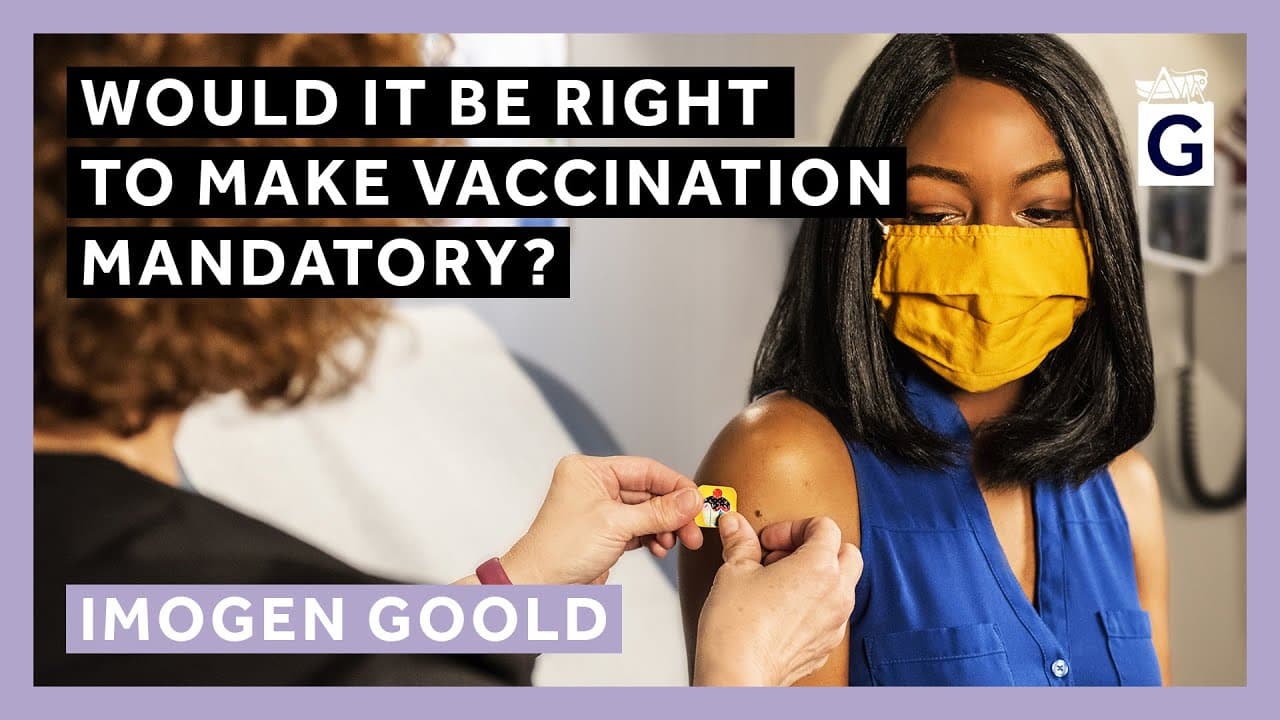
Would it be Right to Make Vaccination Mandatory?
TL;DR
This content explores the ethical dilemma of making vaccination mandatory, considering factors such as autonomy, disease severity, trust, and fairness.
Transcript
(swooshing sounds) - Welcome, thanks very much coming today. I'm going to talk to you today, I'm Imogen Goold. I'm from the University of Oxford. I'm going to talk to you today about whether it would be right to make vaccination mandatory. Now this is in the second lecture in my series of three lectures on medical or on ethics' this term. And I wan... Read More
Key Insights
- ❓ Vaccination has been successful in eradicating diseases like smallpox and significantly reducing the impact of polio, highlighting the benefits of widespread vaccination.
- ✳️ Concerns about vaccine risks, disease severity, mistrust in healthcare systems, and moral objections contribute to vaccine hesitancy and resistance.
- 🧑⚕️ Balancing autonomy and public health requires considering ethical principles such as autonomy, fairness, and beneficence.
- 🫡 Strategies to increase vaccination rates should address concerns, educate, build trust, and use measures that respect autonomy while promoting collective benefits.
Install to Summarize YouTube Videos and Get Transcripts
Explore YouTube Video Summarizer or Get YouTube Transcript Extractor
Questions & Answers
Q: Are vaccines completely risk-free?
Vaccines, like any medical intervention, carry some risks. While most risks are mild and infrequent, there are rare cases of severe adverse reactions associated with vaccines. However, comprehensive testing, monitoring, and safety protocols ensure that the benefits of vaccines outweigh the risks.
Q: Why do some people resist vaccination?
People may resist vaccination due to concerns about vaccine risks, the perception of disease severity, mistrust in healthcare systems, or moral objections to certain vaccine components. Understanding and addressing these concerns is crucial in encouraging vaccine acceptance.
Q: Is it justified to override individual autonomy for the sake of public health?
The decision to override individual autonomy should be based on the severity of the disease, the potential to protect vulnerable populations, and the goal of achieving collective benefits. It is a complex ethical dilemma that requires weighing autonomy against the larger public health interests and respecting the values of fairness and beneficence.
Q: Can mandatory vaccination policies backfire?
Overtly forceful or punitive mandatory vaccination policies may lead to social and political polarization, decrease trust in healthcare systems, and create resistance. It is important to implement strategies that balance the importance of vaccination with respecting individual autonomy, fair distribution of risks, and maintaining public trust.
Summary & Key Takeaways
-
The speaker discusses the importance of respectful and thoughtful dialogue in vaccination debates and emphasizes the need to consider trustworthy information and different perspectives.
-
The success stories of smallpox and polio vaccination are highlighted as examples of the benefits of vaccination in reducing disease and saving lives.
-
The content explores common concerns about vaccination, including risks, disease severity, personal autonomy, mistrust, and moral objections.
-
Different ethical principles, such as autonomy, fairness, and beneficence, are considered in the context of vaccination policies.
-
Various strategies to increase vaccination rates are discussed, from education campaigns to mandatory measures, with a focus on navigating autonomy and fairness.
Read in Other Languages (beta)
Share This Summary 📚
Summarize YouTube Videos and Get Video Transcripts with 1-Click
Try YouTube Summary with ChatGPT & Claude or YouTube Transcript Generator
Explore More Summaries from Gresham College 📚


Summarize YouTube Videos and Get Video Transcripts with 1-Click
Try YouTube Summary with ChatGPT & Claude or YouTube Transcript Generator