Plasma, The Most Common Phase of Matter in the Universe
TL;DR
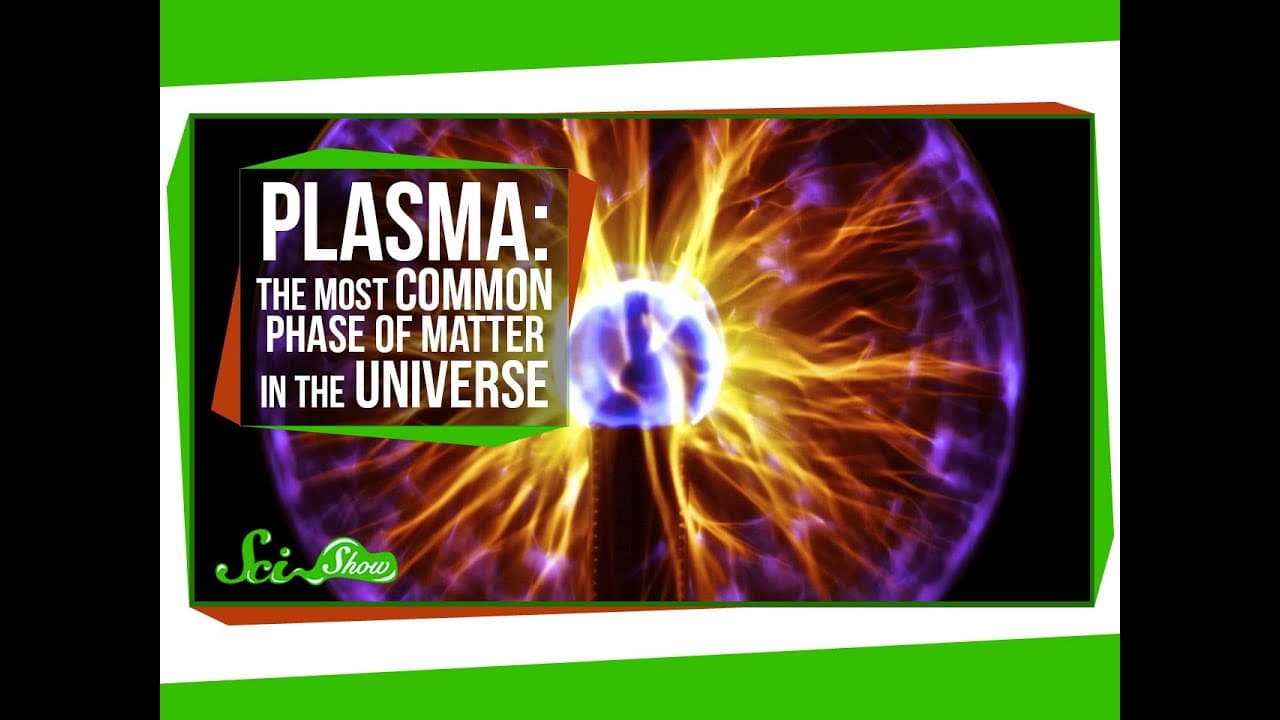
Plasma, the fourth state of matter, is a highly conductive substance made of ions and electrons. It is found in lightning, fluorescent lights, and even in space.
Transcript
I don’t know about you, but if I was on a ship and I saw a glowing sphere of light suddenly floating around the top of the mast, I would be … I think this is the proper term for it: freaked out. But for centuries, sailors saw that all the time! And they thought the mysterious blue glow was a good omen, because they associated it with the end of a s... Read More
Key Insights
- 🫢 Plasma, the fourth state of matter, is created when a gas is ionized, resulting in a highly conductive substance made of ions and free electrons.
- ❤️🔥 Plasma is responsible for phenomena such as Saint Elmo's fire and lightning, which are trails of plasma generated by electric currents.
- 🙂 Plasma has a wide range of practical applications in technology, including fluorescent lights and plasma TVs.
Install to Summarize YouTube Videos and Get Transcripts
Explore YouTube Video Summarizer or Get YouTube Transcript Extractor
Questions & Answers
Q: What is plasma and how is it different from gas?
Plasma is a state of matter where a gas is ionized, meaning electrons are knocked off of gas particles. It is different from gas because it is highly conductive and contains ions and free electrons.
Q: How is plasma created?
Plasma can be created by heating a gas, ionizing it using a powerful electric current, or subjecting it to other high-energy conditions which dislodge electrons from the gas particles.
Q: What are some practical applications of plasma?
Plasma is used in fluorescent lights, where electricity ionizes the gas inside the bulb and creates light through interaction with phosphor. It is also used in plasma TVs, etching microchips, and in plasma jets for medical and industrial purposes.
Q: Is plasma present in space?
Yes, plasma is abundant in space. Stars are giant balls of plasma, and the space between stars and galaxies contains pockets of plasma known as the intergalactic medium. Cosmologists estimate that up to 50% of the matter in the universe exists as plasma.
Summary & Key Takeaways
-
Saint Elmo's fire, a glowing sphere of light seen on ships, is actually a ball of plasma formed when a ship's mast interacts with charged air during a storm.
-
Plasma is the fourth state of matter, made up of ions and electrons instead of neutral atoms or molecules.
-
Plasma is highly conductive and is responsible for phenomena such as lightning. It is also used in everyday applications like fluorescent lights.
Read in Other Languages (beta)
Share This Summary 📚
Summarize YouTube Videos and Get Video Transcripts with 1-Click
Try YouTube Summary with ChatGPT & Claude or YouTube Transcript Generator
Explore More Summaries from SciShow 📚

Summarize YouTube Videos and Get Video Transcripts with 1-Click
Try YouTube Summary with ChatGPT & Claude or YouTube Transcript Generator