What Is Nickel and Its Importance in Industry?
TL;DR
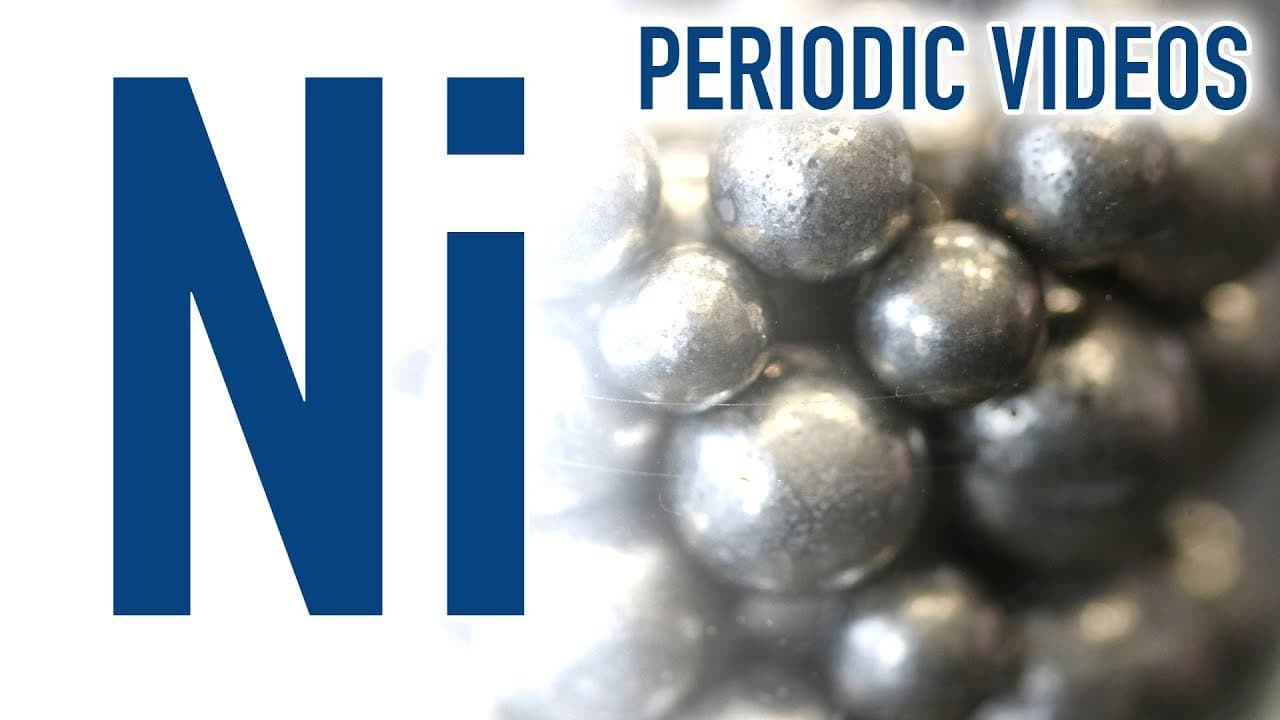
Nickel, discovered in Sweden in 1751, is crucial for strengthening steel armor plates, especially in maritime applications. Key to its industrial significance is its large deposit in Sudbury, Canada, likely linked to a meteorite impact. Additionally, nickel serves as a vital catalyst in hydrogenation processes, notably for producing margarine from vegetable oils.
Transcript
Nickel is element number 28 between Cobalt (27) and Copper (29) Nickel has been known for a long time as an element or as a mixture with other metals But it was only isolated as an element in 1751 by Axel Friedrich Cronstedt in Sweden. To begin with it didn't have really much use and the big breakthrough for Nickel came in the 19th century when it ... Read More
Key Insights
- 😒 Nickel's major breakthrough came from its use in strengthening steel armor plates for ships in the 19th century.
- 💄 Sudbury, Canada is a significant source of nickel, possibly due to a meteorite impact, making nickel a prominent element in Canadian industry.
- 👻 The discovery of Nickel Tetracarbonyl allowed for efficient purification of nickel ore, revolutionizing the refining process.
Install to Summarize YouTube Videos and Get Transcripts
Explore YouTube Video Summarizer or Get YouTube Transcript Extractor
Questions & Answers
Q: How did the discovery of adding nickel to steel revolutionize armor production?
By adding nickel to steel, armor plates for ships became stronger and more resistant to penetration by enemy shells, providing a strategic advantage in naval warfare.
Q: What is the significance of the nickel deposits in Sudbury, Canada?
The large nickel deposits in Sudbury are thought to have originated from a meteorite impact, making nickel a prominent element in Canada's mining industry.
Q: How did Ludwig Mond's discovery of Nickel Tetracarbonyl impact the refining process of nickel?
Nickel Tetracarbonyl, a compound discovered by Ludwig Mond, allowed for easy distillation and purification of nickel ore, resulting in the production of pure nickel and some iron.
Q: How does nickel serve as a catalyst for hydrogenation reactions?
Nickel acts as a catalyst by absorbing both hydrogen and organic compounds onto its surface, facilitating the transfer of hydrogen atoms to carbon double bonds, resulting in the hydrogenation of vegetable oils to produce substances like margarine.
Summary & Key Takeaways
-
Nickel was discovered in Sweden in 1751 and its major breakthrough came in the 19th century when it was found to strengthen steel armor plates for ships.
-
Sudbury in Ontario, Canada is a major source of nickel, possibly due to a meteorite impact in the region.
-
The refining process for nickel was revolutionized in 1890 by Ludwig Mond and his discovery of Nickel Tetracarbonyl, which enabled the purification of nickel ore.
-
Nickel also serves as a catalyst for hydrogenation reactions, such as the production of margarine from vegetable oils.
Read in Other Languages (beta)
Share This Summary 📚
Summarize YouTube Videos and Get Video Transcripts with 1-Click
Try YouTube Summary with ChatGPT & Claude or YouTube Transcript Generator
Explore More Summaries from Periodic Videos 📚




Summarize YouTube Videos and Get Video Transcripts with 1-Click
Try YouTube Summary with ChatGPT & Claude or YouTube Transcript Generator