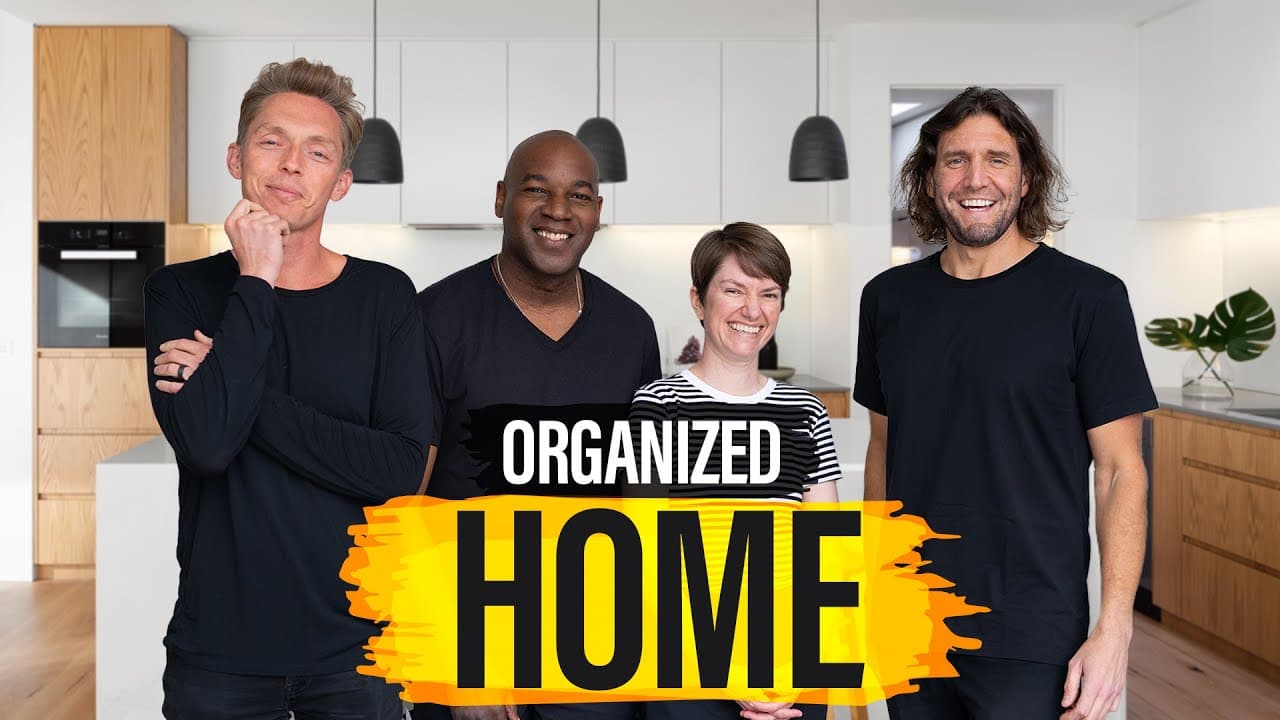
How to Organize Your Home Without Clutter
TL;DR
The key to organizing your home without adding clutter is to focus on minimizing possessions and only keeping items that are truly useful or beautiful. Emphasize authentic style by integrating form and function, and consider the space's natural features. Avoid the instinct to fill spaces with unnecessary items; instead, embrace subtraction and intentionality.
Transcript
foreign welcome to the minimalist podcast where we discuss what it means to live a meaningful life with less my name is Joshua Phillips Milburn and I'm Ryan Nicodemus and together we're the minimalists we're here with malabama hi everybody TK Coleman beautiful day it is oh we got the rest of our team here and a very special guest she'll be joining ... Read More
Key Insights
- Authentic style is not contrived; it focuses on useful and beautiful items.
- Merging form and function is essential for a clutter-free home.
- Subtraction can be a powerful approach to problem-solving and organization.
- Ask the space what it wants to be, considering its natural features.
- Visual sensitivity can guide how much decor is needed for a space.
- Minimalist design challenges involve creating beauty with fewer items.
- Container choices should be modular and versatile for long-term use.
- Letting go of excess can lead to clarity in other areas of life.
Install to Summarize YouTube Videos and Get Transcripts
Explore YouTube Video Summarizer or Get YouTube Transcript Extractor
Questions & Answers
Q: How can I style my home without adding more possessions?
Focus on identifying items that are useful, beautiful, or necessary. Merge form and function by selecting pieces that reflect your preferences and priorities rather than trends. When in doubt, subtract rather than add, and allow the space's natural features to guide your design choices.
Q: What is authentic style in home design?
Authentic style is about being true to your personal preferences and priorities, rather than following trends or acquiring items to impress others. It involves a focus on what feels good and functions well in your space, emphasizing genuine expression over superficial style.
Q: How do I enhance empty rooms without cluttering them?
Start by rearranging existing items to explore different layouts. Consider subtle changes that improve balance and function. Use natural elements like plants to add life without overwhelming the space. Experiment and play with different arrangements while being mindful of maintaining simplicity.
Q: What should I do with cherished items that don't fit my current design aesthetic?
Give it time to see if the item can be adapted to the new space. If it doesn't fit, consider letting it go or finding a new way to incorporate it. Focus on creating a harmonious relationship between the space and its contents, ensuring that each item serves a purpose or adds value.
Q: How can I determine a space's design potential?
Ask questions about the space's natural features and how they can be highlighted. Consider the functionality and flow of the room, and be open to rearranging or reimagining the layout. Experiment with different configurations to find the most balanced and aesthetically pleasing arrangement.
Q: What questions help clients discover their design needs and wants?
Key questions include: Do you love this item? Are you keeping it out of obligation? Does it serve a current purpose? By asking these questions, clients can identify what truly adds value to their space and make informed decisions about what to keep and what to let go.
Q: How do I decide on the best containers for my storage needs?
After minimizing possessions, choose containers that are modular, versatile, and interchangeable. Look for options that can adapt to changing needs over time. This approach ensures that your storage solutions remain functional and aesthetically consistent across different areas of your home.
Q: How can letting go of possessions impact other areas of life?
Letting go of excess possessions can lead to increased clarity and simplicity in other areas, such as finances, health, and lifestyle. It reduces decision fatigue and fosters a mindset of intentionality, allowing individuals to focus on what truly matters and create a more meaningful life.
Summary & Key Takeaways
-
To avoid clutter, focus on minimizing possessions and keeping only what is useful or beautiful. Authentic style should prioritize personal preferences over trends. Subtraction is a key strategy for creating a functional and peaceful space.
-
Consider the natural features of your home and ask what the space wants to be. Visual sensitivity can help determine the appropriate amount of decor, while minimalist design emphasizes beauty with fewer items.
-
Choose containers that are modular and versatile to accommodate changing needs. Letting go of excess possessions can lead to clarity and simplicity in other areas of life, reducing decision fatigue.
Read in Other Languages (beta)
Share This Summary 📚
Summarize YouTube Videos and Get Video Transcripts with 1-Click
Try YouTube Summary with ChatGPT & Claude or YouTube Transcript Generator
Explore More Summaries from The Minimalists Podcast 📚





Summarize YouTube Videos and Get Video Transcripts with 1-Click
Try YouTube Summary with ChatGPT & Claude or YouTube Transcript Generator