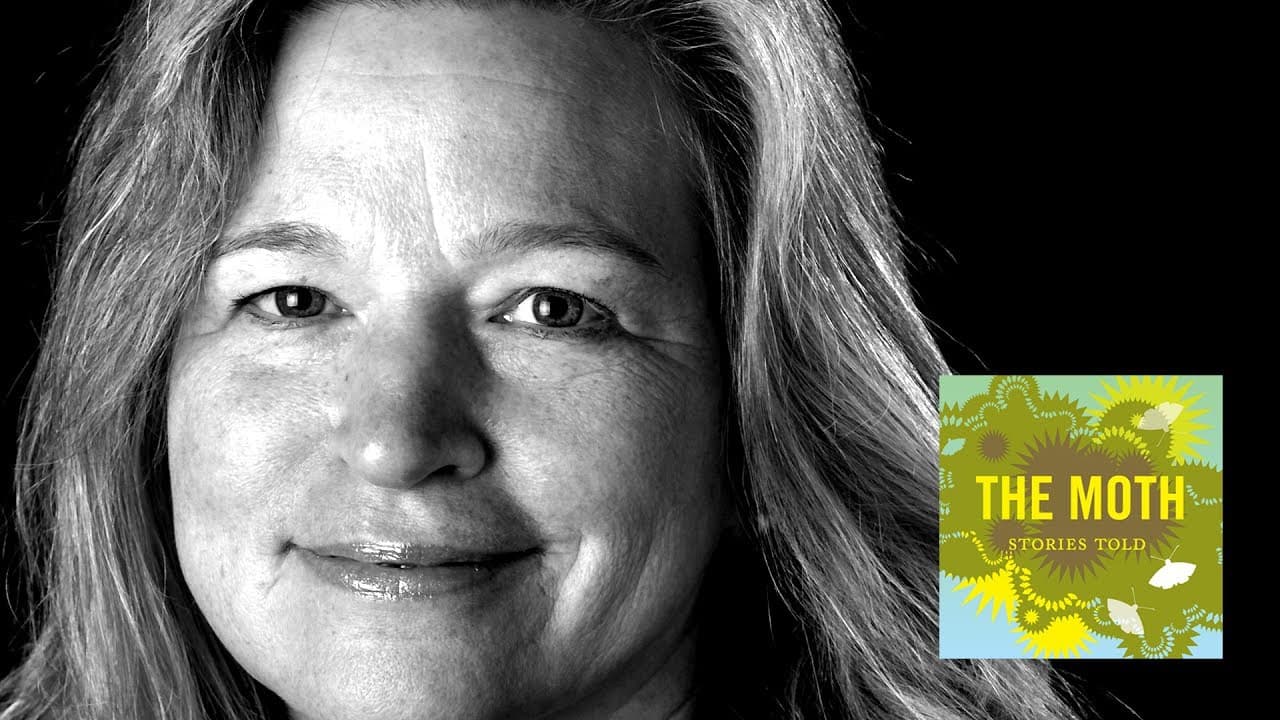
The Moth - Ellen Stofan: It's All Relative
TL;DR
A planetary geologist shares her journey from witnessing a rocket explosion as a child to studying volcanoes on other planets, and her current role as Chief Scientist of NASA.
Transcript
when I was 4 years old I went to my first rocket launch my father actually is a rocket scientist and he worked for NASA he was studying the sloshing of fuels in rocket tanks that was making rockets at that time tumble this was a really long time ago 1965 and so I'm all excited we live in Cleveland so I'm getting to go from bleak cold Cleveland to s... Read More
Key Insights
- 👶 Witnessing a rocket explosion as a child shaped the narrator's career path, steering her towards geology and planetary science.
- 🫠 The narrator's fascination with the ability to read Earth's history through rock layers led to a passion for geology and the study of other planets.
- 🧑🔬 The study of other planets helps scientists better understand Earth's processes by comparing and contrasting geological features and phenomena.
- 👽 The Cassini mission to Saturn, particularly the study of Titan's lakes, provided valuable insights into how alien environments can resemble Earth's processes.
- 🧑🏭 The proposed mission to Titan aimed to explore the interaction between liquids and the atmosphere, which is a crucial factor in understanding processes on Earth and other planets.
- 😣 The proposal's rejection provided a valuable learning experience, highlighting the need to adapt and persevere in the face of setbacks.
- 🔬 The narrator's journey from geology and planetary science to becoming Chief Scientist of NASA reflects her continued dedication to exploration and the pursuit of scientific knowledge.
Install to Summarize YouTube Videos and Get Transcripts
Explore YouTube Video Summarizer or Get YouTube Transcript Extractor
Questions & Answers
Q: What led the narrator to develop an interest in geology?
The narrator's interest in geology was sparked during a field trip, where she witnessed a geologist reading layers of rock like pages in a book and was fascinated by the understanding of Earth's history it provided.
Q: What mission did the narrator work on that she considers her favorite?
The narrator's favorite mission was the Cassini mission to Saturn, where she studied Saturn's moon, Titan, as part of the radar team. She found it fascinating to study the moon's lakes filled with liquid methane and ethane.
Q: What was the goal of the proposed mission to Titan?
The proposed mission aimed to send a boat-like probe to Titan's seas to study its depth, composition, wind, and waves. The mission intended to explore the interaction between liquid and atmosphere on Titan.
Q: Why did the narrator feel a sense of disappointment after the proposal was not selected?
The disappointment stemmed from the realization that the mission couldn't be proposed again until the mid-2030s due to the dark periods at Titan's poles. The narrator believed that by then, she would be too old to be part of the project she had worked on passionately.
Summary & Key Takeaways
-
The narrator's interest in space was sparked at a young age when she witnessed a rocket explosion during her father's work at NASA.
-
She developed a passion for geology during a field trip, fascinated by the ability to read Earth's history through rock layers.
-
Motivated by her interest in geology and space exploration, she became a planetary geologist and studied volcanoes on planets like Mars and Saturn's moon, Titan.
Read in Other Languages (beta)
Share This Summary 📚
Summarize YouTube Videos and Get Video Transcripts with 1-Click
Try YouTube Summary with ChatGPT & Claude or YouTube Transcript Generator
Explore More Summaries from World Science Festival 📚


Summarize YouTube Videos and Get Video Transcripts with 1-Click
Try YouTube Summary with ChatGPT & Claude or YouTube Transcript Generator