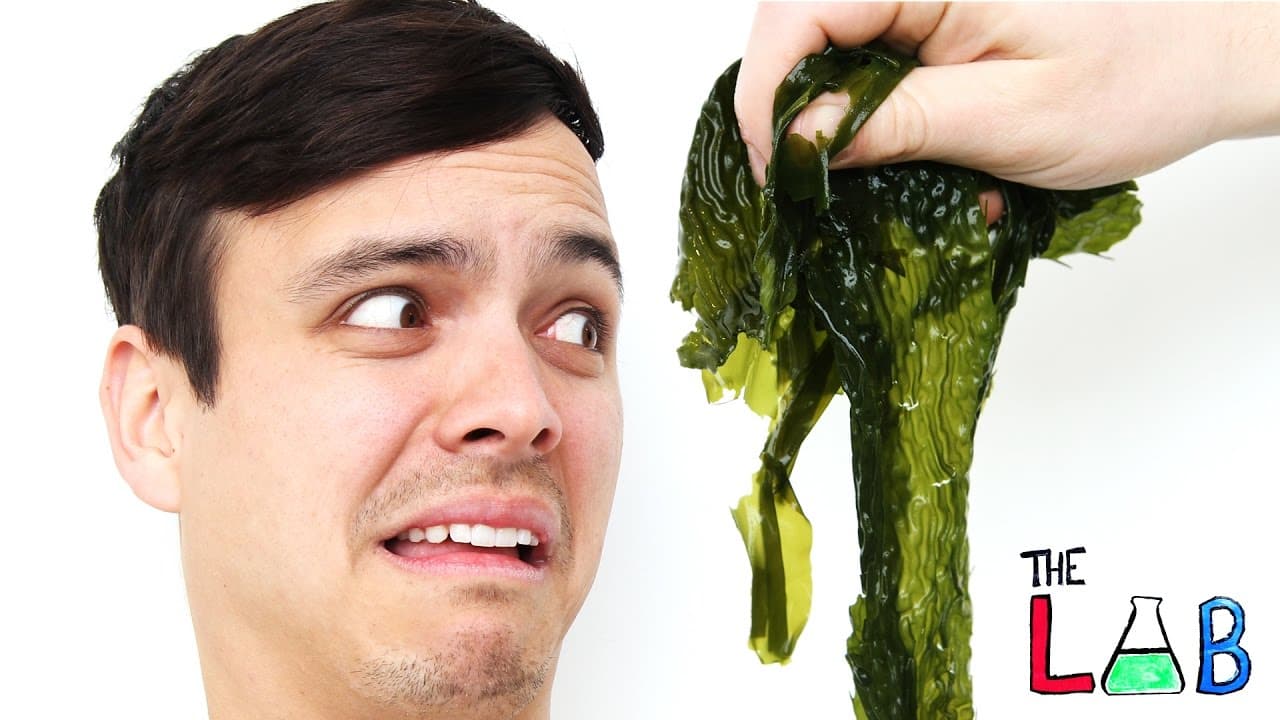
Can We Make This Taste Good? Ft. Hannah Hart (The LAB)
TL;DR
Kelp has the potential to be a sustainable and healthy superfood, but its slimy texture and lack of market interest pose challenges.
Transcript
Hello, and welcome back to the lab where we take your questions and turn them into experiments. My name is Mitch - and I'm Greg, and a lot of you been asking us about the next big superfood Which is kelp, and you know we're very skeptical superfood claims, but this one could be a miraculous Solution for climate change, and it's super healthy. There... Read More
Key Insights
- 👣 Kelp has the potential to be a sustainable superfood due to its negative environmental footprint.
- 🤑 Kelp is rich in nutrients such as iodine, magnesium, selenium, fiber, protein, Vitamin B12, and omega-3 fatty acids.
- 😋 Seaweed sugars, derived from kelp, have various industrial applications in food and personal care products.
- 💗 Kelp can be grown in polluted water without absorbing harmful substances, making it suitable for urban farming.
- 👅 Kelp can be used as a substitute for bacon, offering a similar taste and additional health benefits.
- 🫘 Kelp and beans may not be a suitable combination due to an overpowering fishy flavor.
- 🍬 Candied kelp can be a delicious and satisfying treat with a mild sweetness.
Install to Summarize YouTube Videos and Get Transcripts
Explore YouTube Video Summarizer or Get YouTube Transcript Extractor
Questions & Answers
Q: How is kelp beneficial for the environment?
Kelp helps reduce greenhouse gas emissions and does not require land, freshwater, fertilizers, or pesticides for growth.
Q: Can kelp be used as a substitute for bacon?
Yes, kelp can be fried and used as a bacon substitute, offering similar flavors and nutritional benefits.
Q: What are some industrial uses of seaweed sugars?
Seaweed sugars such as alginates, carrageenans, and agars are used to thicken and bind products like toothpaste, shampoo, skin cream, ice cream, and beer.
Q: Can kelp be grown in polluted water?
Yes, kelp can be grown in nutrient-rich water, even in areas with pollution, without absorbing heavy metals or toxins.
Summary & Key Takeaways
-
Kelp is a superfood with a negative environmental footprint as it absorbs dissolved nitrogen, phosphorus, and carbon dioxide, making it an eco-friendly alternative to land agriculture.
-
Kelp can be used as a substitute for bacon in recipes, as it contains iodine, magnesium, selenium, fiber, protein, Vitamin B12, and omega-3 fatty acids.
-
Seaweed sugars are used in various industrial products and can add thickness and flavor to food items like ice cream and beer.
Read in Other Languages (beta)
Share This Summary 📚
Summarize YouTube Videos and Get Video Transcripts with 1-Click
Try YouTube Summary with ChatGPT & Claude or YouTube Transcript Generator
Explore More Summaries from AsapSCIENCE 📚






Summarize YouTube Videos and Get Video Transcripts with 1-Click
Try YouTube Summary with ChatGPT & Claude or YouTube Transcript Generator