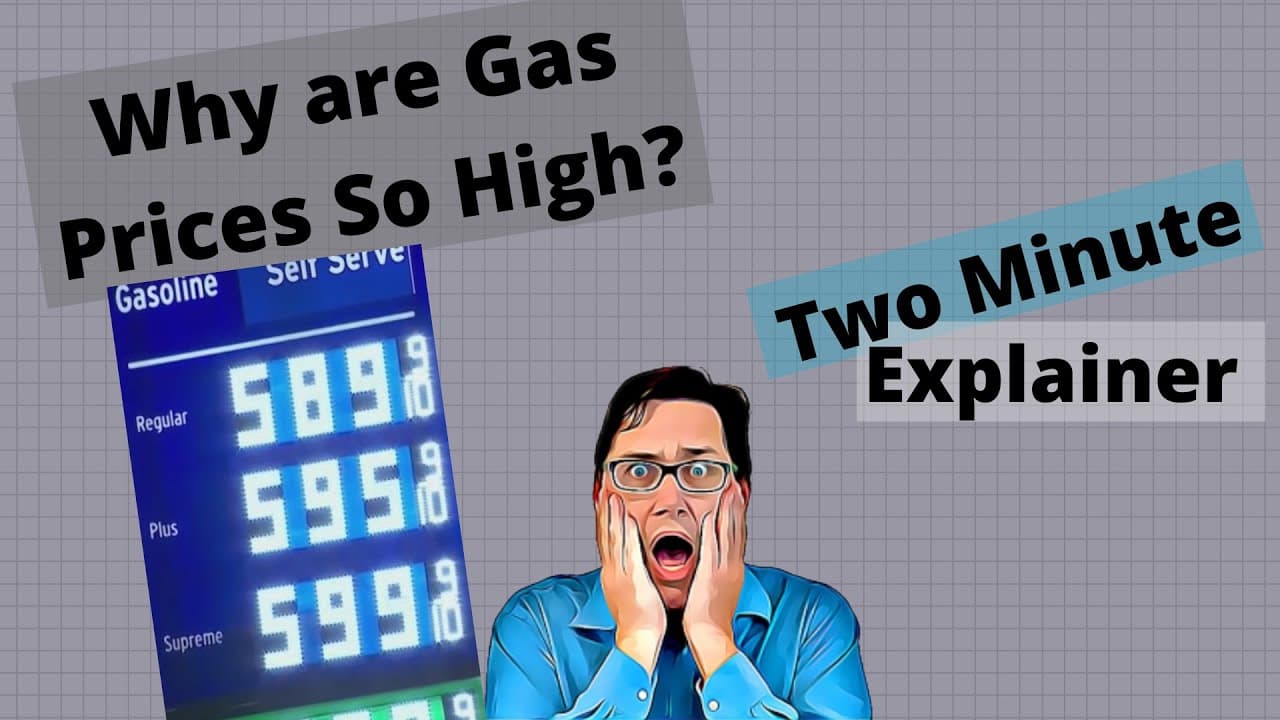
Two Minute Explainer: Why Are Gas Prices So High?
TL;DR
Gas prices have reached their highest point since 2014 due to factors such as the price of oil, refining capacity, consumer demand, tax policy, and decisions made by oil-producing countries like Russia and OPEC.
Transcript
Anyone who's been forced to fill up their tanks in recent weeks has probably noticed a sharp increase in prices at the pump. According to the American Automobile Association, gas prices are currently hovering around $3.40 a gallon. That's the highest they've been since 2014, but still below the peaks of 2008. And of course many American c... Read More
Key Insights
- 🔈 Gas prices have reached their highest point since 2014 but are still lower than the peak prices of 2008.
- 🫢 Decisions made by Russia and OPEC to limit oil production have contributed to higher gas prices.
- 🛢️ The COVID-19 pandemic has impacted oil production levels, with some states hesitant to invest in expanded production.
- 🫢 Increased consumer demand for gas and higher oil demand in Europe have also driven up prices.
- 🫢 Tax policy variations play a role, with consumers in different states paying different amounts in gas taxes.
- 🫢 Opening the US Strategic Petroleum Reserve would likely have limited impact on gas prices.
- 🫢 Shifting to sustainable energy production, fuel-efficient vehicles, and public transportation could help reduce gas demand and prices in the long term.
Install to Summarize YouTube Videos and Get Transcripts
Explore YouTube Video Summarizer or Get YouTube Transcript Extractor
Questions & Answers
Q: Why are gas prices so high currently?
Gas prices are influenced by several factors, including the price of oil, refining capacity, consumer demand, and tax policy. The decisions made by Russia and OPEC to limit production have also driven up prices.
Q: How do Russia and OPEC impact gas prices?
Russia and OPEC account for approximately half of global oil production. Their decisions to reduce production during the COVID-19 lockdowns and their reluctance to return to pre-pandemic levels have contributed to the increase in gas prices.
Q: How does consumer demand affect gas prices?
After a year in lockdown, there is increased demand for gas as people are eager to return to normal life and take to the roads. This surge in demand, combined with constrained supplies, has led to higher prices.
Q: Does tax policy play a role in gas prices?
Yes, tax policy influences gas prices. The average consumer pays about 48 cents per gallon in taxes, but this varies across states. Higher tax states like California and Pennsylvania have consumers paying almost a dollar per gallon, while some states like Missouri and Mississippi have lower tax rates.
Summary & Key Takeaways
-
Gas prices have spiked recently, currently hovering around $3.40 a gallon, the highest since 2014.
-
The price of a barrel of oil has also increased, reaching about $80 per barrel.
-
Factors contributing to higher gas prices include reduced production capacity, increased demand, and tax policy variations among states.
Read in Other Languages (beta)
Share This Summary 📚
Summarize YouTube Videos and Get Video Transcripts with 1-Click
Try YouTube Summary with ChatGPT & Claude or YouTube Transcript Generator
Explore More Summaries from Noah Zerbe 📚





Summarize YouTube Videos and Get Video Transcripts with 1-Click
Try YouTube Summary with ChatGPT & Claude or YouTube Transcript Generator