Genetic Basis for Free Will | Manolis Kellis and Lex Fridman
TL;DR
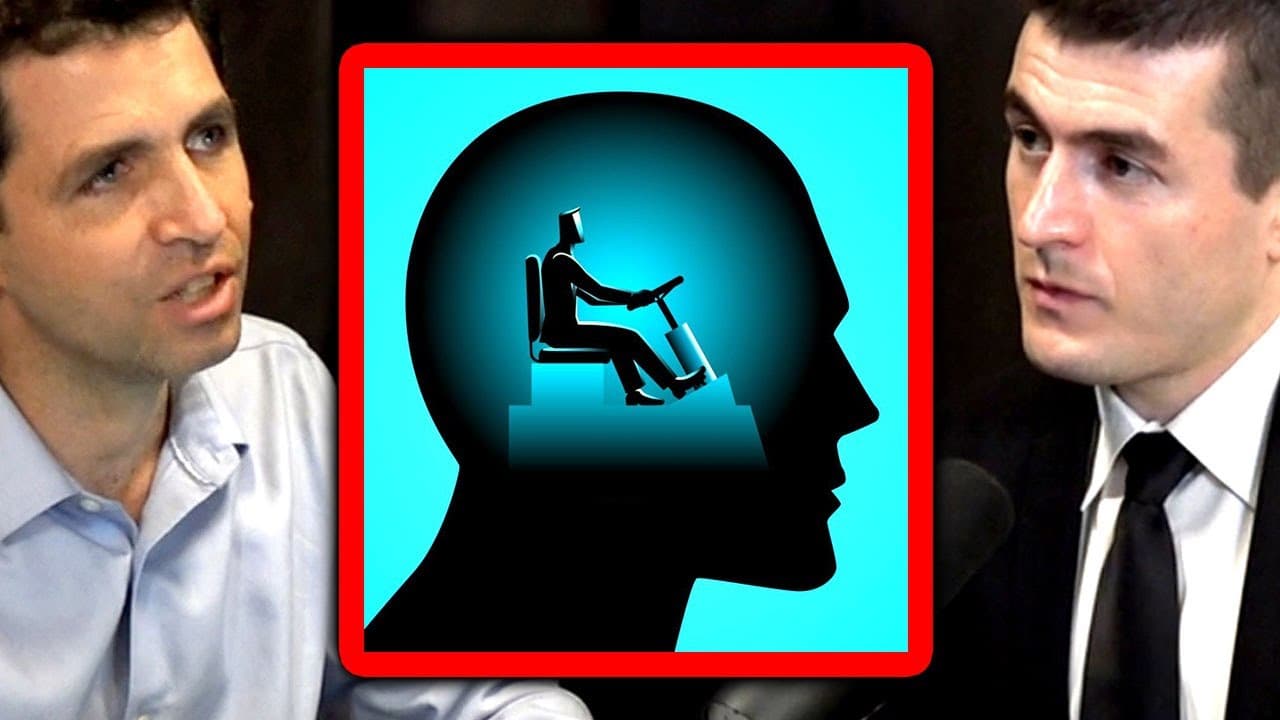
Human genetics has revealed a genetic basis for human cognition, emotions, and free will, challenging the concept of unencumbered choice.
Transcript
so if you look at the trend with and the speed with which human genetics has progressed we can now find thousands of genes involved in human cognition in human psychology in the emotions and the feelings that we used to think are uniquely learned turns out there's a genetic basis to a lot of that so the uh you know the the human genome has continue... Read More
Key Insights
- ❓ Human genetics has made significant progress in identifying genes associated with cognition, psychology, and emotions.
- 🥶 The idea of free will is being challenged as genetic factors are found to influence behaviors and choices.
- 🥶 The abundance of receptors in the brain, influenced by genetic variations, affects the perception of free will.
- 🥶 The distinction between deterministic systems and genuine free will is complex and difficult to empirically evaluate.
- 🥶 The true nature of free will and where it originates from, whether neuronal or spiritual, remains an empirical challenge.
- #️⃣ The number of variables involved in modeling human behavior may be vast, requiring an extensive simulation to predict actions accurately.
- 🥶 The existence and extent of free will may depend on the interplay between genetics, neuronal processes, and external factors.
Install to Summarize YouTube Videos and Get Transcripts
Explore YouTube Video Summarizer or Get YouTube Transcript Extractor
Questions & Answers
Q: How has human genetics research progressed and what has it revealed about cognition and emotions?
Human genetics has advanced greatly, uncovering thousands of genes linked to cognition, psychology, emotions, and learned behaviors, demonstrating a genetic basis for these aspects of humanity.
Q: How much freedom do we have to escape the constraints of our genome?
As developments in genetics continue, it becomes increasingly apparent that our genome encodes a significant portion of our behavior and choices. The abundance of receptors and genetic variations influence our so-called free will, limiting our freedom to escape these genetic constraints.
Q: Can we resist the influence of our genome and exercise true free will?
True free will would entail choosing to resist certain urges or behaviors consciously. However, chemical receptors and underlying genetic factors can ultimately dictate our choices, making it challenging to determine if our decisions are genuine acts of free will.
Q: How does the concept of free will compare to deterministic systems like weather patterns?
Weather patterns can be predicted up to a certain point but become increasingly uncertain because of complex interactions between different variables. Similarly, the existence of free will can be viewed as either a result of stochasticity and chaos or the limitations of current knowledge in fully understanding deterministic systems like the human brain.
Summary & Key Takeaways
-
Human genetics research has identified thousands of genes related to human cognition, psychology, and emotions, debunking the notion that these traits are solely learned.
-
Genetic variation studies have uncovered numerous processes previously thought to be determined by free will and individuality.
-
The influence of genetic factors on the abundance of receptors in the brain affects the perception of free will and the choices individuals make.
Read in Other Languages (beta)
Share This Summary 📚
Summarize YouTube Videos and Get Video Transcripts with 1-Click
Try YouTube Summary with ChatGPT & Claude or YouTube Transcript Generator
Explore More Summaries from Lex Clips 📚



Summarize YouTube Videos and Get Video Transcripts with 1-Click
Try YouTube Summary with ChatGPT & Claude or YouTube Transcript Generator