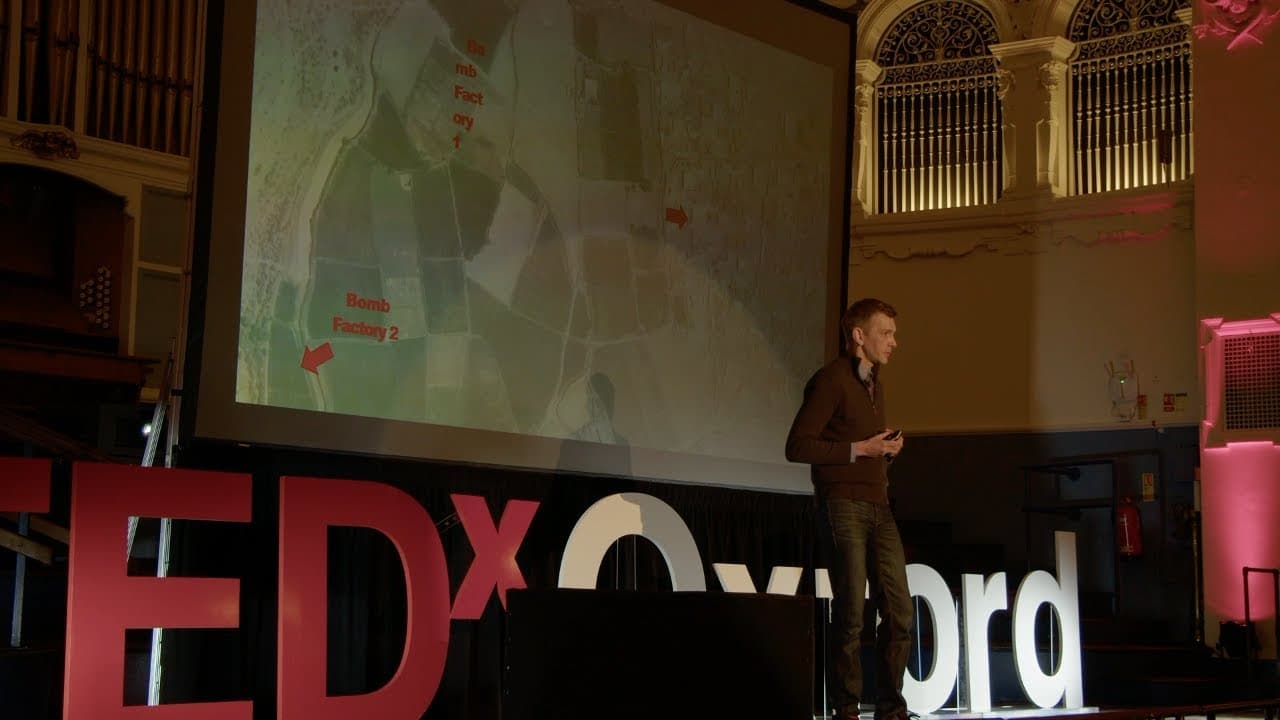
One Door, Two: What Special Forces Taught Me About Anger & Anxiety | Angus Fletcher | TEDxOxford
TL;DR
Counterfactual thinking, or the act of imagining alternative scenarios, can help manage fear and anger by creating new possibilities.
Transcript
you thank you Oxford I promise you I'm not that eminent but I'm honored to be here the first time I gave a talk to a large crowd like this I was 10 years old I was at school all I really remember is my heart racing my mind going blank I got off stage my teacher she races up to me and she goes don't you worry it won't be nearly so so scary next time... Read More
Key Insights
- 🥺 Fear and anger are common emotions that can harm mental well-being and lead to violence.
- 🤔 Counterfactual thinking allows for the exploration of alternative solutions and the creation of new possibilities.
- 💀 By shifting our mindset and embracing creativity, we can transform anxiety and anger into sources of growth and action.
- 🤔 Counterfactual thinking is a valuable tool in managing high-stress situations and promoting emotional resilience.
- 😨 It is important to recognize the importance of emotional intelligence and utilize it to address and overcome fear and anger.
- 🤔 The power of counterfactual thinking can be applied to various aspects of life, from personal relationships to professional environments.
- 🤔 Encouraging children to engage in counterfactual thinking can help them develop emotional resilience and problem-solving skills.
Install to Summarize YouTube Videos and Get Transcripts
Explore YouTube Video Summarizer or Get YouTube Transcript Extractor
Questions & Answers
Q: How are fear and anger related in the human brain?
Fear and anger both come from feeling threatened and activate the fight or flight response in the brain. They can be seen as responses to complex high-stress situations, where the brain perceives limited options and either freeze or becomes forceful.
Q: What are the negative consequences of trying to force others to do things?
Trying to force others to do things often leads to anger and hostility, as it erodes trust and autonomy. It can create a cycle of aggression where anger begets more anger, resulting in widespread anger and violence.
Q: How can counterfactual thinking help in managing fear and anger?
Counterfactual thinking, or imagining alternative scenarios, can create new doors and possibilities. By training oneself to think beyond existing data and creatively explore new solutions, anxiety and anger can be reduced and replaced by sustainable growth and action.
Q: Can counterfactual thinking be applied to everyday situations?
Yes, counterfactual thinking can be applied to everyday situations. By shifting our mindset and seeing anxiety and anger as cues to think creatively, we can open new doors and find innovative solutions to challenges we face.
Summary & Key Takeaways
-
Fear and anger are closely connected emotions that often stem from feeling threatened and can harm mental well-being and lead to violence.
-
Research on psychological resilience reveals that negative feelings like anxiety and anger can be transformed into sources of growth and action.
-
Counterfactual thinking, or exploring alternative solutions and creating new doors, can reduce anxiety and anger and promote creativity in high-stress situations.
Read in Other Languages (beta)
Share This Summary 📚
Summarize YouTube Videos and Get Video Transcripts with 1-Click
Try YouTube Summary with ChatGPT & Claude or YouTube Transcript Generator
Explore More Summaries from TEDx Talks 📚




Summarize YouTube Videos and Get Video Transcripts with 1-Click
Try YouTube Summary with ChatGPT & Claude or YouTube Transcript Generator