Are there dead alien civilizations on Mars? | Nathalie Cabrol and Lex Fridman
TL;DR
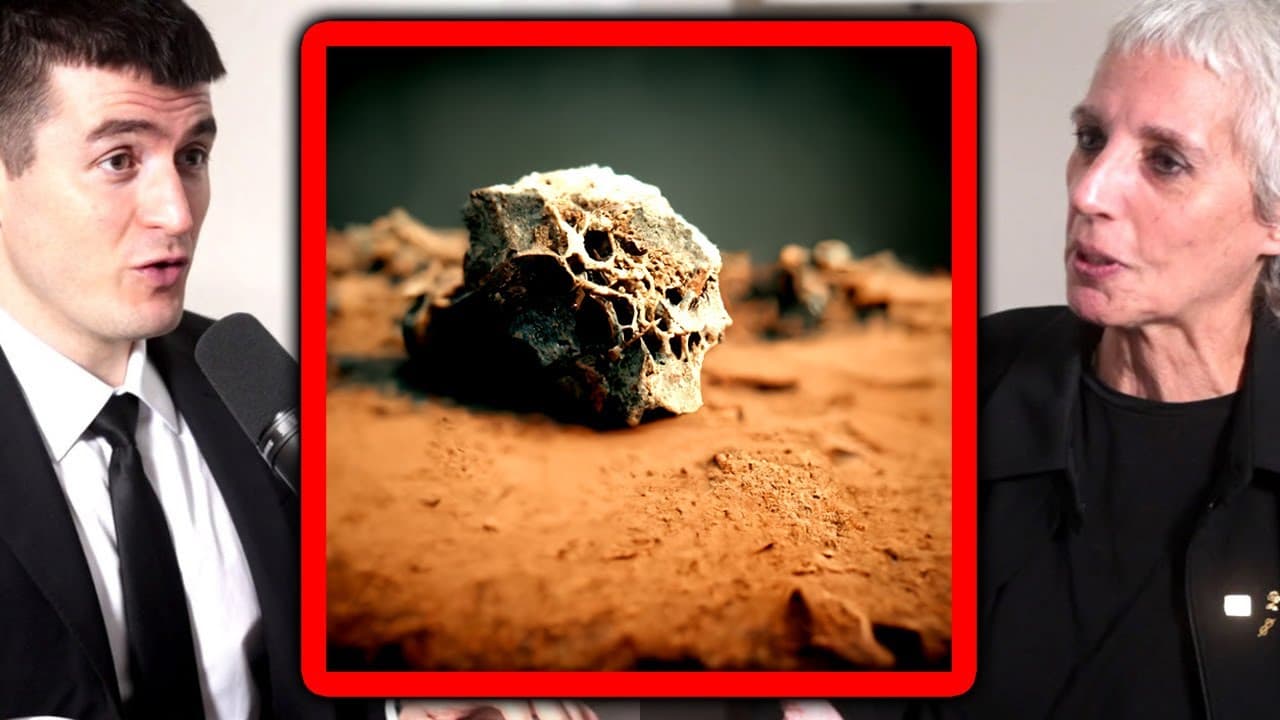
If life existed on Mars, the signs to look for would include morphological traces, stromatolites, chemical traces like carbon isotopes, ancient lakes, and impact craters.
Transcript
what if all life on Earth died and now we fast forward a billion years what would be the traces left it so the question I'm trying to ask is if life had existed on Mars what would be the signs we would look for that's a very good question the thing is that if you draw the parallel with Earth it took 82 percent of Earth's history geological history ... Read More
Key Insights
- 🛟 Life on Mars, if it exists or existed, would have likely been simple microbial life.
- 🍝 Morphological traces, such as stromatolites, and chemical traces like carbon isotopes could be indicators of past life on Mars.
- 🤘 Ancient lakes and impact craters are important locations to study for signs of past habitability and possible life.
Install to Summarize YouTube Videos and Get Transcripts
Explore YouTube Video Summarizer or Get YouTube Transcript Extractor
Questions & Answers
Q: What are stromatolites, and why are they important in the search for life on Mars?
Stromatolites are rock formations formed by microbial life on Earth. They are crucial in the search for life on Mars because they provide a model for recognizing morphological traces of life. If similar structures are found on Mars, it could indicate the presence of past microbial life.
Q: Are carbon isotopes a reliable bio signature for detecting life on Mars?
Carbon isotopes, particularly an abundance of C12, can be intriguing in the search for life on Mars. While C12 is commonly used by life on Earth, it can also be produced by other processes. Therefore, it is not a definitive bio signature in itself, but it suggests the possibility of life and warrants further investigation.
Q: Why are ancient lakes and impact craters important targets for studying Mars' past habitability?
Ancient lakes and impact craters provide unique opportunities to study Mars' past habitability. Lakes could have provided a suitable environment for life to thrive, and the sedimentary deposits within them may preserve signs of past life. Impact craters, while destructive, can also bring organic building blocks and energy necessary for life, potentially creating favorable conditions for the emergence of life.
Q: What is panspermia, and how does it relate to the search for life on Mars?
Panspermia is the idea that comets and asteroids carry the building blocks of life and can potentially seed life on other planets. In the context of Mars, if life were to be found or evidence of past life were discovered, panspermia could explain how life originated on Mars, as comets and asteroids could have delivered the necessary ingredients for life.
Summary & Key Takeaways
-
Life on Mars would have likely appeared shortly after the planet formed, but it would have been simple life forms.
-
Over time, the surface conditions on Mars degraded, resulting in the disappearance of most traces of life.
-
However, there may still be morphological and chemical traces of life's interaction with the environment, such as stromatolites and carbon isotopes.
-
The search for signs of past life on Mars focuses on ancient lakes, impact craters, and areas with very old rocks.
Read in Other Languages (beta)
Share This Summary 📚
Summarize YouTube Videos and Get Video Transcripts with 1-Click
Try YouTube Summary with ChatGPT & Claude or YouTube Transcript Generator
Explore More Summaries from Lex Clips 📚




Summarize YouTube Videos and Get Video Transcripts with 1-Click
Try YouTube Summary with ChatGPT & Claude or YouTube Transcript Generator