Human Dentition | Teeth | Don't Memorise
TL;DR
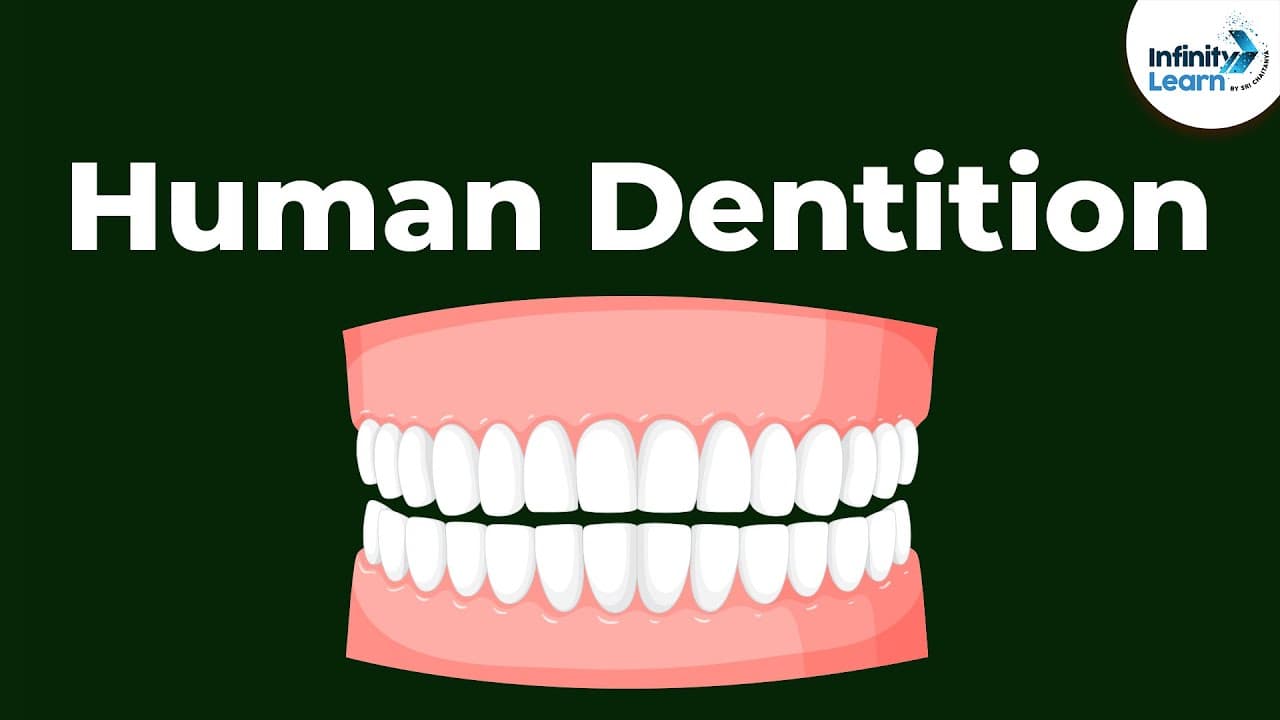
Human dentition is the study of teeth patterns and functions in humans, including the arrangement, size, and number of teeth.
Transcript
we concluded the previous video with a new term it's called the human dentition any idea what it could mean something related to teeth I know but what exactly is it let's understand the definition of human dentition first it's defined as the study of the teeth pattern and their functions in humans okay so what we've been studying so far is dentitio... Read More
Key Insights
- 🦷 Human dentition involves studying teeth patterns and their functions in humans, including the arrangement, size, and number of teeth.
- 🦷 Humans have two sets of teeth: deciduous (baby teeth) and permanent teeth.
- 🦷 The number and arrangement of teeth in adults are fixed and can be determined using dental formulas.
- 😘 The dental formula for an adult human mouth is 2 1 2 3 by 2 1 2 3, representing the number of incisors, canines, premolars, and molars on each side of both the upper and lower jaws.
- 🦷 Infants have a different dental formula for their primary or milk teeth, which typically consists of 20 teeth.
- 🤕 The growth of the entire set of milk teeth is generally completed by the age of 2 or 3, and the next set of permanent teeth starts developing around 5 years of age.
- 💨 The dental formula provides a standardized way to understand and compare the dentition patterns in different animals, including humans.
Install to Summarize YouTube Videos and Get Transcripts
Explore YouTube Video Summarizer or Get YouTube Transcript Extractor
Questions & Answers
Q: What is human dentition?
Human dentition refers to the study of teeth patterns and their functions in humans, including their arrangement, size, and number.
Q: How many sets of teeth do humans have?
Humans have two sets of teeth: deciduous (baby teeth) and permanent teeth.
Q: When do deciduous teeth appear and when do permanent teeth start developing?
Deciduous teeth start appearing a few months after birth, and permanent teeth start developing at around 5 years of age.
Q: How many teeth do humans have in total?
Humans usually have 32 permanent teeth, including two incisors, one canine, two premolars, and three molars on each side of both the upper and lower jaws.
Q: How is the number and arrangement of teeth determined in humans?
The number and arrangement of teeth in humans are determined using dental formulas. The dental formula for an adult human mouth is 2 1 2 3 by 2 1 2 3, representing the number of incisors, canines, premolars, and molars on each side of both the upper and lower jaws.
Q: Are the number and arrangement of teeth the same in infants?
No, infants have a different dental formula for their primary or milk teeth. They typically have a total of 20 milk teeth, but the dental formula may vary.
Summary & Key Takeaways
-
Human dentition is the study of teeth patterns and their functions in humans.
-
Humans have two sets of teeth: deciduous (baby teeth) and permanent teeth.
-
The number and arrangement of teeth in humans are fixed and can be determined using dental formulas.
Read in Other Languages (beta)
Share This Summary 📚
Summarize YouTube Videos and Get Video Transcripts with 1-Click
Try YouTube Summary with ChatGPT & Claude or YouTube Transcript Generator
Explore More Summaries from Infinity Learn NEET 📚


Summarize YouTube Videos and Get Video Transcripts with 1-Click
Try YouTube Summary with ChatGPT & Claude or YouTube Transcript Generator