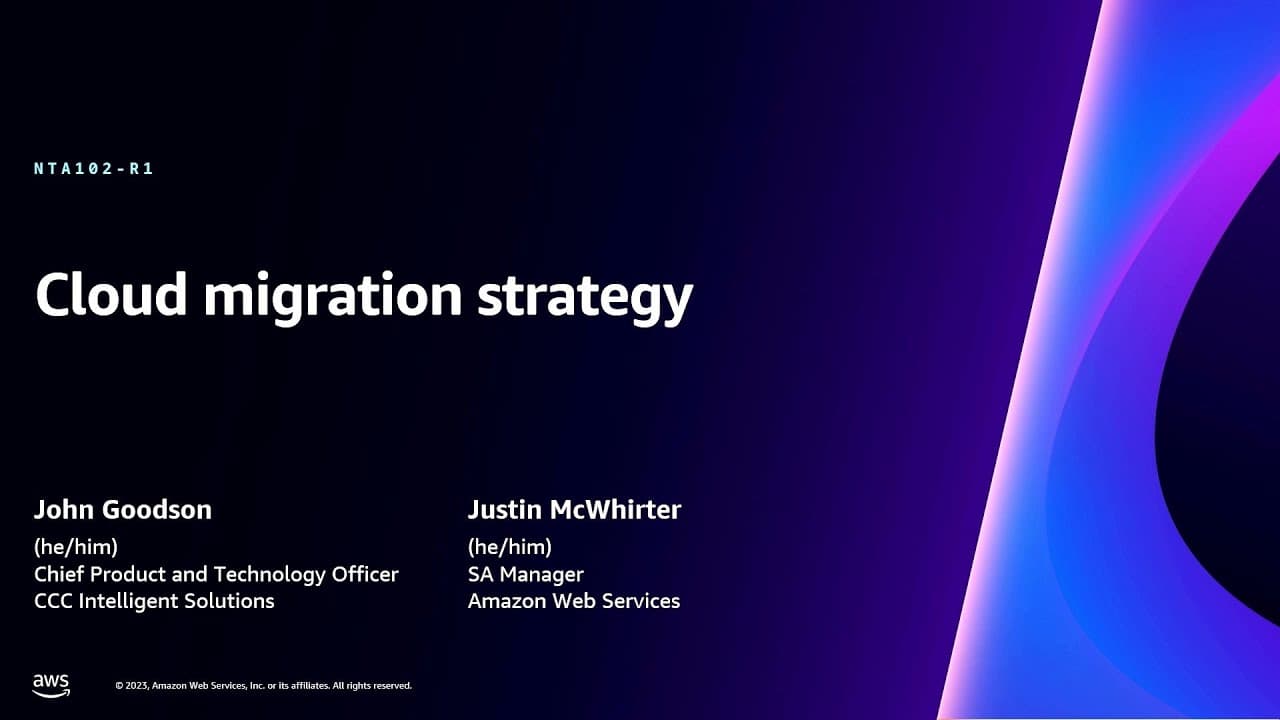
How to Develop an AWS Cloud Migration Strategy
TL;DR
The key to a successful AWS cloud migration is a well-structured business plan that highlights agility, security, and cost benefits. Engaging stakeholders, selecting the right partners, and managing both financial and operational aspects are essential. Post-migration, monitoring and optimizing the cloud environment ensures long-term success and cost efficiency.
Transcript
cool well nothing like a uh a little fire drill before uh we we present we uh think that there might be some RF issues with other clickers so um I appreciate you all being here today thank you for choosing to be with us this morning uh you're in NTA 102 that's new to AWS 102 we're going to talk about um some Cloud migration ... Read More
Key Insights
- Cloud migration requires a solid business plan that emphasizes agility, security, and cost efficiency.
- Engaging stakeholders early and often is crucial for gaining buy-in and ensuring a smooth transition.
- Selecting the right partners, including AWS Professional Services, can streamline the migration process.
- Understanding the financial implications, such as capitalization and cost management, is vital for success.
- Leveraging AWS managed services can reduce the need for large IT teams and lower long-term costs.
- Conducting a pilot migration helps validate the approach and identify potential issues before full-scale implementation.
- Communicating the benefits of AWS migration to customers can enhance their perception and acceptance.
- Post-migration, it's important to monitor, optimize, and adapt the cloud environment to maintain efficiency and performance.
Install to Summarize YouTube Videos and Get Transcripts
Explore YouTube Video Summarizer or Get YouTube Transcript Extractor
Questions & Answers
Q: How to create a business plan for AWS cloud migration?
Creating a business plan for AWS cloud migration involves outlining the benefits of agility, security, and cost efficiency. The plan should include a high-level concept of the migration process, financial implications, and how it aligns with company goals. Engaging stakeholders early and providing clear, concise information, such as a few slides, can help gain necessary approvals.
Q: What are the financial considerations for AWS migration?
Financial considerations for AWS migration include understanding capitalization, managing dual environments, and leveraging AWS's Migration Acceleration Program (MAP). It's crucial to plan for both initial expenses and long-term cost savings. Engaging with finance teams to capitalize modernization expenses and using AWS funding mechanisms can ease the financial burden of migration.
Q: Why is stakeholder engagement important in cloud migration?
Stakeholder engagement is crucial in cloud migration as it ensures buy-in from key decision-makers and aligns the migration with organizational goals. Engaging stakeholders early helps address concerns, build confidence in the migration plan, and secure necessary funding. Continuous communication throughout the process fosters collaboration and support, which are vital for a successful migration.
Q: What role do partners play in AWS cloud migration?
Partners play a critical role in AWS cloud migration by providing expertise, resources, and support throughout the process. AWS Professional Services and secondary partners can help design, implement, and optimize the migration strategy. Choosing partners that prioritize your best interests and have a proven track record with AWS migrations can significantly enhance the success of the project.
Q: How to manage costs post AWS migration?
Managing costs post AWS migration involves continuous monitoring and optimization of the cloud environment. Educating development teams on cost implications of their decisions, leveraging AWS's cost management tools, and regularly reviewing resource usage can help control expenses. Transitioning to managed services and optimizing compute resources are effective strategies for maintaining cost efficiency.
Q: What are the benefits of AWS managed services?
AWS managed services offer significant benefits, including reduced IT overhead, enhanced security, and increased operational efficiency. By using managed services like RDS or SageMaker, organizations can offload infrastructure management to AWS, allowing IT teams to focus on innovation and strategic initiatives. This approach also facilitates cost savings and scalability, key advantages of cloud migration.
Q: How to communicate AWS migration benefits to customers?
Communicating AWS migration benefits to customers involves highlighting the enhanced security, agility, and performance improvements that the cloud offers. Customers should be informed of the long-term advantages, such as better service reliability and faster response times. Transparency about the migration process and its positive impact on customer experience can foster trust and acceptance.
Q: What are common challenges in AWS cloud migration?
Common challenges in AWS cloud migration include managing dual environments, unexpected costs, and resistance from stakeholders. Addressing these challenges requires a well-structured plan, effective communication, and leveraging AWS's support and resources. Conducting pilot migrations, educating teams on cost management, and maintaining stakeholder engagement are crucial for overcoming these obstacles.
Summary & Key Takeaways
-
A successful AWS cloud migration hinges on a comprehensive business plan that underscores agility, security, and cost benefits. Engaging stakeholders and selecting the right partners are crucial steps in the process. Additionally, understanding financial implications and managing costs effectively are essential for long-term success.
-
The migration process involves socializing the plan, choosing partners wisely, and conducting a pilot to test the approach. AWS managed services can significantly reduce IT overhead, while effective communication with customers enhances acceptance and perception. Post-migration monitoring and optimization are critical for maintaining efficiency.
-
Organizations must anticipate and manage risks associated with unexpected costs during and after migration. By leveraging AWS's support and services, companies can ensure a smooth transition and long-term benefits. Continuous adaptation and optimization of the cloud environment are key to sustaining performance and cost-effectiveness.
Read in Other Languages (beta)
Share This Summary 📚
Summarize YouTube Videos and Get Video Transcripts with 1-Click
Try YouTube Summary with ChatGPT & Claude or YouTube Transcript Generator
Explore More Summaries from AWS Events 📚
Summarize YouTube Videos and Get Video Transcripts with 1-Click
Try YouTube Summary with ChatGPT & Claude or YouTube Transcript Generator