Why Do We Eat Spoiled Food?
TL;DR
Microbes play a crucial role in creating the tastes, smells, and textures we love in foods like coffee, bread, cheese, beer, and chocolate.
Transcript
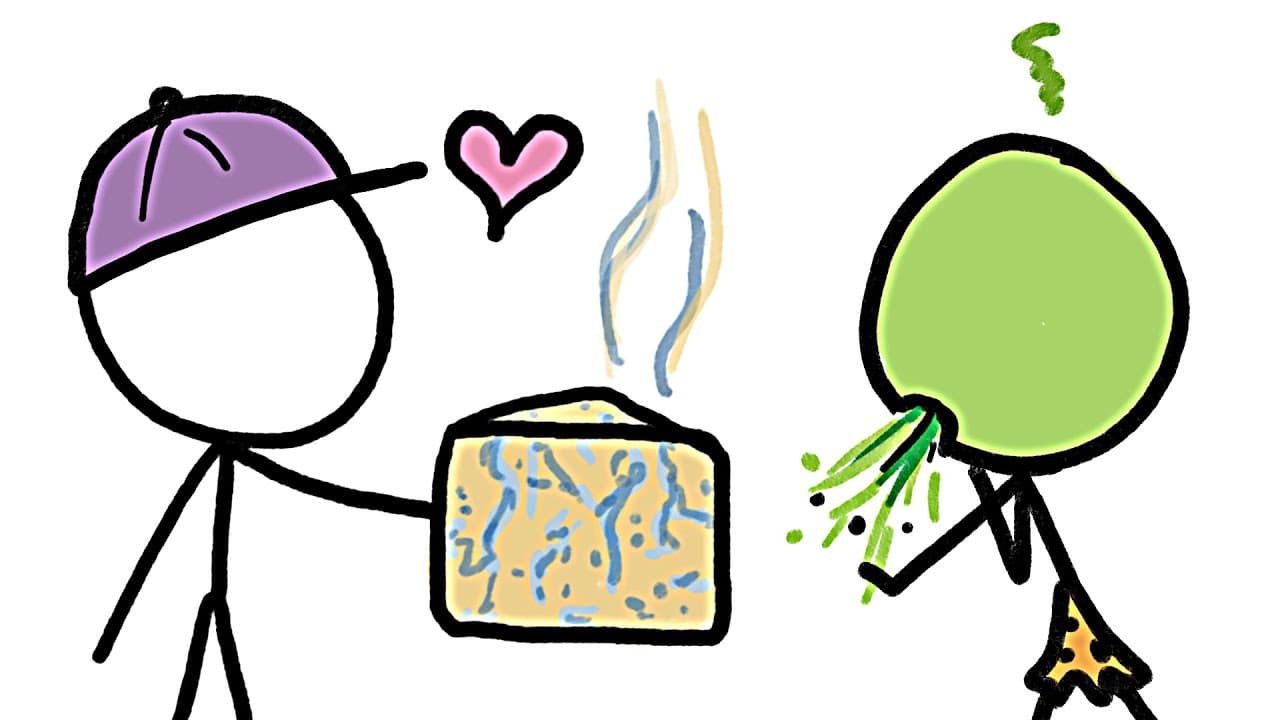
Some of our very favorite foods are closer to this than this. That’s because coffee, bread, cheese, beer – even chocolate! – are home to millions of microbes. In fact, these foods only acquire the tastes, smells, and textures we love because of tiny bacteria and fungi. The vast majority of microbes – about 99% – are actually quite harmless to human... Read More
Key Insights
- 🥰 Microbes are responsible for the tastes, smells, and textures we love in foods like coffee, bread, cheese, beer, and chocolate.
- 😋 Most microbes are harmless, but our aversion to rotten food is an evolutionary response to potential harm.
- 🤩 Intentionally spoiling food through controlled spoilage has been practiced for thousands of years and is a key part of culinary culture worldwide.
- 😅 Friendly microbes can outcompete harmful pathogens and keep our food safe to eat.
- 🤕 The flavors we are exposed to from an early age shape our preferences for specific microbial compounds.
- 😋 Fermentation is a common process in culinary traditions worldwide, leading to foods like sauerkraut, pickles, soy sauce, and prosciutto.
- 🥰 Spoiled food may have played a significant role in human history, with the love for bread or beer potentially driving the shift from a nomadic to agricultural lifestyle.
Install to Summarize YouTube Videos and Get Transcripts
Explore YouTube Video Summarizer or Get YouTube Transcript Extractor
Questions & Answers
Q: How do microbes contribute to the flavors and textures of our favorite foods?
Microbes like yeast in bread dough produce carbon dioxide, giving the bread its lift. In cheese caves, mold and bacteria break down proteins and fats, creating rich flavors and smooth textures.
Q: Why do humans have a natural aversion to rotten food?
Our ancestors evolved this aversion to protect themselves from harmful pathogens that could be present in rotting food, as many microbes can cause illness.
Q: How can we prevent the growth of pathogens in meat left at room temperature?
By adding salt, we can encourage the growth of salt-tolerant and harmless microbes like Lactobacillus, outcompeting the salt-sensitive dangerous ones.
Q: How has the intentional spoiling of food through controlled spoilage benefited humans?
Intentionally spoiling food keeps it safe to eat and also allows the cultivated microbes to transform it into deliciousness, enhancing flavors and textures.
Summary & Key Takeaways
-
Various foods, such as coffee, bread, cheese, beer, and chocolate, acquire their desirable qualities because of the presence of millions of microbes.
-
While most microbes are harmless, the 1% that are potentially harmful led our ancestors to evolve a natural aversion to rotten food.
-
By allowing friendly microbes to consume our food first, we can prevent the growth of harmful pathogens and transform our food into deliciousness.
Read in Other Languages (beta)
Share This Summary 📚
Summarize YouTube Videos and Get Video Transcripts with 1-Click
Try YouTube Summary with ChatGPT & Claude or YouTube Transcript Generator
Explore More Summaries from MinuteEarth 📚






Summarize YouTube Videos and Get Video Transcripts with 1-Click
Try YouTube Summary with ChatGPT & Claude or YouTube Transcript Generator