The Search for Tasmanian Tigers Continues
TL;DR
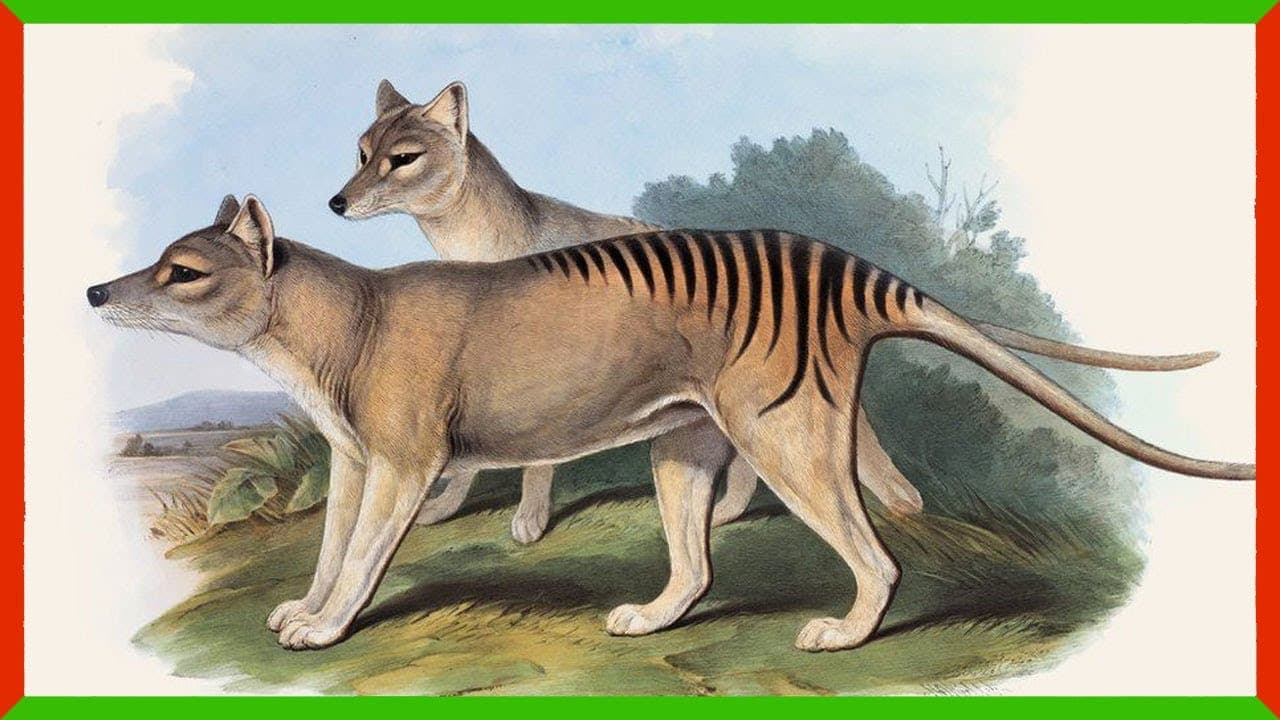
Thylacines, also known as Tasmanian tigers or marsupial wolves, have not been confirmed to exist for over 80 years. Mistaken sightings and human impact caused their extinction.
Transcript
in february 2021 the president of the thylacine awareness group of australia claimed online to have captured footage of living thylacines aka tasmanian tigers aka marsupial wolves and that was pretty bold considering there have been no confirmed sightings of these animals in over 80 years according to experts in tasmanian wildlife biology the anima... Read More
Key Insights
- 🐺 Thylacines were marsupials and the largest marsupial carnivores, resembling tigers and wolves.
- 🛩️ Their hunting style was different, possibly specialized for smaller prey rather than large animals.
- 🌸 Human hunting, habitat loss, and disease were the main reasons for thylacines' extinction.
- ❓ Alleged thylacine sightings still occur, but no conclusive evidence has been found.
- 👯 Confirmation bias and the longing to see these unique creatures may contribute to people's belief in their existence.
- 🍝 If thylacines were to be found, it would be crucial to protect them and learn from past mistakes.
- 🛟 Thylacines serve as a reminder of the permanent consequences of human actions on species.
Install to Summarize YouTube Videos and Get Transcripts
Explore YouTube Video Summarizer or Get YouTube Transcript Extractor
Questions & Answers
Q: Are thylacines truly extinct?
Thylacines were officially declared extinct in 1986, and while some alleged sightings have occurred, no conclusive evidence has been found. However, experts believe they are long gone.
Q: What caused the extinction of thylacines?
The main factors that contributed to the extinction of thylacines were human hunting and persecution, habitat loss, and potential competition with introduced dingoes. Disease may have also played a role.
Q: How did thylacines hunt?
Thylacines had a unique hunting style, potentially specializing in hunting smaller prey. They had flexible forelimbs for ambushing prey, teeth for slicing rather than crushing, and no retractable claws.
Q: What is confirmation bias in relation to thylacine sightings?
Confirmation bias is a psychological phenomenon where people tend to see what they want to see. In the case of thylacine sightings, people's hope and desire to find them may lead to mistaken sightings.
Summary & Key Takeaways
-
The Thylacine Awareness Group of Australia claimed to have captured footage of living thylacines, but experts believe the animals in the footage are paddy melons, a species of wallaby-like creatures.
-
Thylacines were large marsupial carnivores, resembling tigers and wolves, but had unique hunting styles and specialized in hunting smaller prey.
-
Human hunting, habitat loss, and disease caused the downfall of thylacines, and the last known thylacine died in 1936.
Read in Other Languages (beta)
Share This Summary 📚
Summarize YouTube Videos and Get Video Transcripts with 1-Click
Try YouTube Summary with ChatGPT & Claude or YouTube Transcript Generator
Explore More Summaries from SciShow 📚


Summarize YouTube Videos and Get Video Transcripts with 1-Click
Try YouTube Summary with ChatGPT & Claude or YouTube Transcript Generator