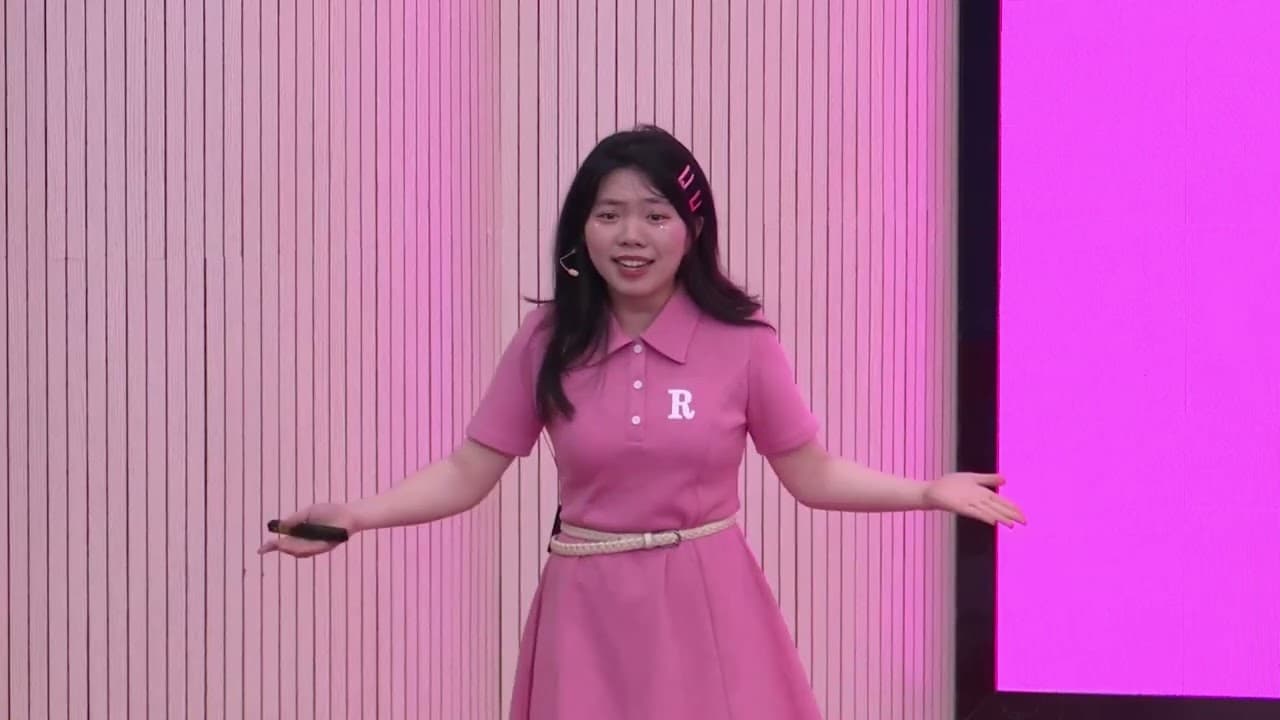
Thinking About Pink: The Implicit Costs of Being a Women | Enyang Chen | TEDxYouth@JLHS
TL;DR
The "pink tax" and gender stereotypes result in financial, physical, and mental costs for women, widening the gap between genders.
Transcript
tell you and today my topic today is to think about the pink first of all I want to invite you all to a guessing game and here are two bottles of tablets which are used as a painter like stomach ache or toothache or something and obviously right but but on the contrary the pink one has a woman's image on it we have pictures on the box isn't everyth... Read More
Key Insights
- 💅 The pink tax refers to women paying more than men for similar products, starting from childhood toys to personal care items.
- 🤑 Women spend more money but receive less in terms of product quality and functionality.
- 🤑 The pink tax leads to a vicious circle of women trying to find better products with more money.
- 🧔♀️ Being a woman is costly financially, with an estimated $100,000 spent on the pink tax throughout a woman's lifetime.
- ⚧️ Gender stereotypes and societal expectations contribute to the pink tax and widen the gap between genders.
- 😨 Women face physical costs as safety equipment and car safety features are often designed based on male body shapes.
- 😘 Beauty standards portrayed on social media contribute to the mental cost of being a woman, leading to anxiety, depression, and low confidence.
Install to Summarize YouTube Videos and Get Transcripts
Explore YouTube Video Summarizer or Get YouTube Transcript Extractor
Questions & Answers
Q: What is the pink tax?
The pink tax refers to the tendency for women to pay more for products compared to men, even when the items have similar functions or qualities. This could range from toys and clothing to personal care items and household products.
Q: Why do women spend more but receive less?
The pink tax arises from gender stereotypes and societal expectations. Women's products are often marketed as more luxurious or aesthetically pleasing, leading to higher prices. Additionally, products designed for women may have inferior quality or functionality compared to similar products for men.
Q: How does the pink tax create a vicious circle for women?
Due to the lower quality or functionality of products marketed towards women, women often need to purchase additional items to supplement what they already have. This constant pursuit of adequacy leads to women spending more and more money on products that are more expensive but still do not fully meet their needs.
Q: Are there physical costs associated with being a woman?
Yes, the physical differences between men and women can result in additional costs. For example, safety equipment like bulletproof vests or car safety features are often designed based on male body shapes, leading to higher injury rates for women in certain situations.
Summary & Key Takeaways
-
The pink tax refers to the phenomenon of women paying more than men for similar products, starting from childhood toys to clothing and personal care items.
-
Women spend more money but receive less in terms of product quality and functionality, leading to a vicious circle of trying to find better products with more money.
-
Being a woman comes with significant financial costs, as women are estimated to spend $100,000 on the so-called "pink tax" throughout their lifetime.
Read in Other Languages (beta)
Share This Summary 📚
Summarize YouTube Videos and Get Video Transcripts with 1-Click
Try YouTube Summary with ChatGPT & Claude or YouTube Transcript Generator
Explore More Summaries from TEDx Talks 📚






Summarize YouTube Videos and Get Video Transcripts with 1-Click
Try YouTube Summary with ChatGPT & Claude or YouTube Transcript Generator