Surviving a Box Jellyfish Attack | Something Bit Me!
TL;DR
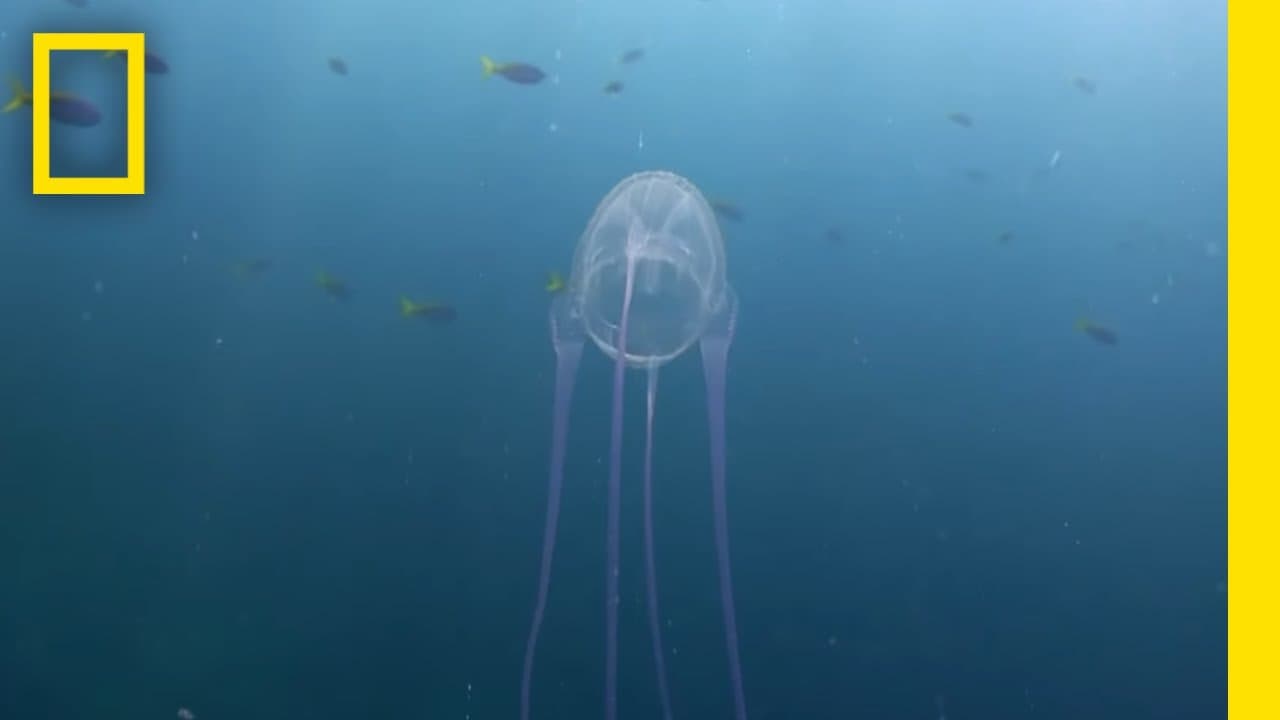
Dr. Yanagihara's personal experience with a box jellyfish attack leads her to dedicate her life to studying the creature, making breakthrough discoveries and creating a topical treatment used by the US Navy special ops teams.
Transcript
NARRATOR: After surviving a box jellyfish attack, Dr. Yanagihara recovers at home. The process is slow and painful. After three days of brutal agony and a week total, there was no sustained relief. My skin became terribly inflamed all along these different tracks. Around my neck was like rope burns. I tried the topical steroids and some other thing... Read More
Key Insights
- 🪼 Dr. Yanagihara's personal experience drove her to study box jellyfish venom and contribute to public safety.
- 🪼 Box jellyfish follow a lunar cycle for spawning and can be predicted to appear after the full moon.
- 🤗 The topical treatment developed based on Dr. Yanagihara's research is now used by the US Navy special ops teams.
- 🥵 The recommended first aid for jellyfish stings involves vinegar application and heat therapy.
- 🪼 Understanding the importance of coexisting with marine creatures like jellyfish is crucial, as they have been around for millions of years.
- 💀 Dr. Yanagihara's work highlights the dangers of entering the marine ecosystem without proper knowledge and precautions.
- 🪼 By studying box jellyfish, researchers can gain insights into the biochemistry and physiology of their venom.
Install to Summarize YouTube Videos and Get Transcripts
Explore YouTube Video Summarizer or Get YouTube Transcript Extractor
Questions & Answers
Q: Why did Dr. Yanagihara dedicate her life to studying box jellyfish after surviving an attack?
Dr. Yanagihara's personal experience sparked her curiosity to understand the physiology and biochemistry behind the excruciating pain caused by the venom. She wanted to unravel the secrets of box jellyfish and improve public safety by preventing stings.
Q: What significant discovery did Dr. Yanagihara make about box jellyfish behavior?
Dr. Yanagihara's study revealed that box jellyfish follow a lunar cycle. They appear like clockwork along Waikiki, 8 to 10 days after the full moon, triggering their spawning process in the predawn hours.
Q: How did Dr. Yanagihara's research help prevent jellyfish stings?
Dr. Yanagihara's research led to the development of a topical treatment, currently used by the US Navy special ops teams, to inactivate the venom capsules and prevent them from firing. This treatment is effective in reducing the severity of jellyfish stings.
Q: What are the recommended first aid steps after being stung by a jellyfish?
The best first aid for jellyfish stings is to flood the sting site with vinegar to neutralize the venom capsules. Then, applying heat at a temperature of 42 to 45 degrees Celsius (112 to 115 Fahrenheit) for 45 minutes can irreversibly inhibit the venom and aid in the body's healing process.
Summary & Key Takeaways
-
Dr. Yanagihara's painful recovery at home after a box jellyfish attack prompts her curiosity to study the physiology and biochemistry of the venom.
-
Her research reveals that box jellyfish follow a lunar cycle, appearing 8 to 10 days after the full moon to spawn.
-
Her findings contribute to the development of a topical treatment and provide two simple steps for first aid after a jellyfish sting: vinegar application and heat therapy.
Read in Other Languages (beta)
Share This Summary 📚
Summarize YouTube Videos and Get Video Transcripts with 1-Click
Try YouTube Summary with ChatGPT & Claude or YouTube Transcript Generator
Explore More Summaries from National Geographic 📚



Summarize YouTube Videos and Get Video Transcripts with 1-Click
Try YouTube Summary with ChatGPT & Claude or YouTube Transcript Generator